





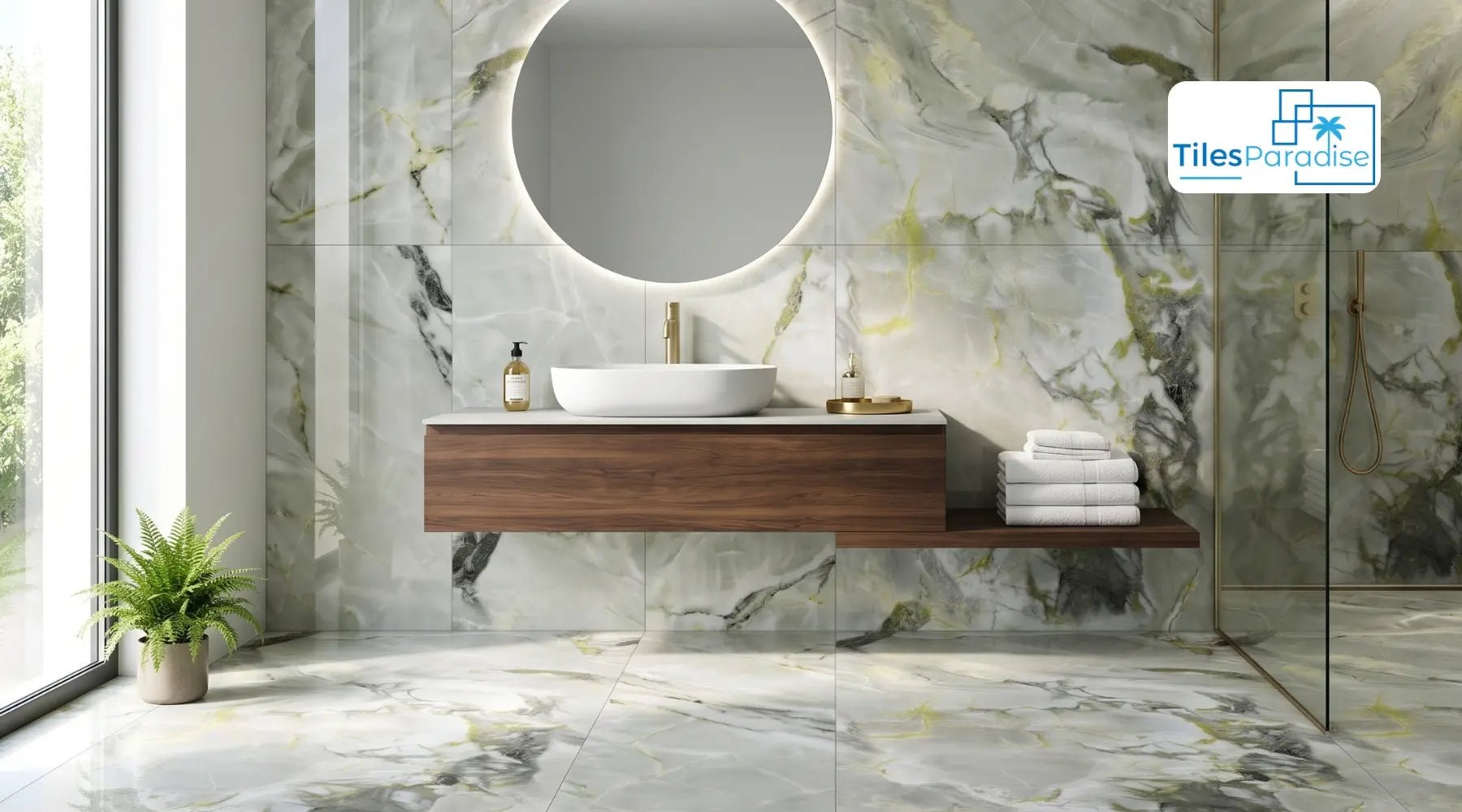
Green marble tiles bring a rich, nature-inspired look into any home, and demand for green marble effect porcelain tiles for small bathrooms has grown fast among UK homeowners planning a renovation. Real green marble and porcelain versions differ in cost, care and performance, and picking the right one shapes how a space looks and lasts.
This guide compares real stone against effect tiles, explains finish and slip rating choices, and covers sizing, cost and maintenance for kitchens and bathrooms alike. Every section answers a specific buying question so a decision can be made with confidence rather than guesswork.
What Makes Green Marble Tiles A Popular Choice For UK Homes
Green marble tile appeals through natural veining that ranges from soft sage to deep emerald, giving every slab a unique pattern that no two rooms share. Marble and green together create a calm, nature-led palette that suits both traditional and modern interiors, working equally well as a feature wall or a full floor covering. Interest in green tile floor designs has grown alongside a wider shift toward earthy colour schemes across UK homes.
Marble tiles flooring in green also photographs well under natural light, which is one reason estate agents often flag it as a strong resale feature. Buyers researching marble tiles design tend to compare green against grey, cream and black before settling on a final palette, since undertone affects how a room reads through the day.
Green Marble Effect Porcelain Tiles For Small Bathrooms: Real Stone Or Porcelain
Choosing between real marble and green marble effect tiles often comes down to weight, budget and upkeep rather than looks alone. Porcelain versions replicate the veining of dark green marble without the sealing that real stone requires, making them a practical fit for a compact ensuite or shower room. The marble effect bathroom tiles range covers formats suited to small spaces, where fewer grout lines help a room read larger.
How Does Green Marble Tile Compare With White Marble Tile And Black Marble Tile
Pairing green with white marble tile creates a bright, contrast-led scheme, while black marble tile pushes a bathroom or kitchen toward a darker, more dramatic finish. Green sits between these two extremes, offering depth without the stark contrast that all-black or all-white schemes bring to a small room. Many buyers comparing tiles black marble against greener alternatives settle on green precisely because it pairs with both lighter and darker fixtures. The black gold marble effect tiles range gives a useful reference point for how veining depth changes a finished room.
Which Finish Suits Marble Wall Tiles In A Bathroom Or Kitchen
Polished finishes reflect light and suit walls, while honed or matte options reduce slip risk and work better underfoot. Marble wall tiles for bathroom walls generally favour a gloss finish, since walls carry no foot traffic and benefit from the extra shine. Floors, particularly in wet rooms, call for a textured or matte surface regardless of whether the tile is real stone or porcelain.
Slip Resistant Matte Grey Marble Effect Bathroom Floor Tiles
A matte finish with a rated slip resistance value suits wet bathroom floors far better than a polished surface, and grey-based marble effect options offer this without sacrificing the marble look. UK installations should check the pendulum test or R-rating value before fitting a floor tile in a shower room or family bathroom. The guide on slip resistant grey marble effect bathroom floor tiles breaks down which finishes carry adequate traction for wet areas.
Black Marble Bathroom Floor Tiles UK Cost And Maintenance Guide
Black marble tile flooring carries a higher price point than green or grey alternatives due to sourcing and the difficulty of matching veining across large areas. Real black marble also needs regular sealing to resist staining, while a porcelain version needs only standard cleaning. Full pricing and upkeep detail sits in the black marble bathroom floor tiles cost guide for anyone weighing real stone against an effect alternative.
What Sizes Work Best For Marble Tiles Flooring And Walls
Large format tiles reduce the number of grout lines and can make a small bathroom feel bigger, while smaller marble mosaic tiles suit borders, niches and feature strips. A 60x120cm format is now common for marble tiles floor and wall projects, since it balances visual impact with manageable handling during installation. The 60x120cm rectangular tiles collection covers this format across several marble effect colourways.
|
Format |
Best Use |
|
60x60cm |
Kitchen floors, medium bathrooms |
|
60x120cm |
Feature walls, open-plan floors, big marble tiles look |
|
Mosaic / small marble tiles |
Niches, borders, splashback accents |
Can Green Marble Tiles Work In A Small Kitchen Or As A Splashback
A green marble effect splashback brings colour into a kitchen without committing to painted cabinetry, and pairs well with white or pale worktops. Medium format square tiles suit kitchen walls and floors where a smaller grid pattern fits room proportions better than an oversized plank. The kitchen medium format square tiles range and kitchen tiles collection both include green and marble-effect options sized for these layouts.
How To Maintain Marble Bathroom Tiles And Marble Mosaic Tiles Long Term
Real marble bathroom floor tile needs a pH-neutral cleaner and periodic resealing, since acidic products etch the stone surface over time. Marble mosaic tile grout lines collect more residue than large format bathroom floor tiles marble buyers often choose instead, so a soft brush during weekly cleaning keeps the surface fresh. Porcelain green marble effect tiles skip sealing entirely, cutting bathroom marble tiles maintenance down to routine mopping.
A simple weekly routine keeps both real and effect marble tiles bathroom surfaces looking new for years.
• Wipe floor tiles marble surfaces with a soft, damp mop rather than an abrasive pad.
• Reseal real marble tile every six to twelve months depending on foot traffic.
• Avoid vinegar or citrus-based cleaners on real stone, since they etch the calcite surface.
• Check grout on bathroom tiles marble installations yearly and reseal if it darkens or absorbs water.
What Does Real Marble Floor Tile Cost Compared With Porcelain Alternatives
Real marble floor tiles typically cost more per square metre than porcelain, due to quarrying, cutting and the sealing products needed after installation. Porcelain green marble effect tiles cost less upfront and carry lower lifetime maintenance spend, since no sealant or specialist cleaner is required. Bulk orders across the floor tiles collection and wall tiles collection can also reduce per-tile cost on larger rooms.
Ceramic Or Porcelain: Choosing The Right Base For Marble Tiles Design
Ceramic options suit lower-traffic walls, while porcelain suits floors and wet areas thanks to lower water absorption. The ceramic tiles collection and porcelain tiles collection both stock marble tiles design ranges in green, alongside white marble tile and pink marble tiles alternatives for softer schemes. Premium bathroom tiles combine both bases in a single palette for consistent design throughout a room.
Which Green Marble Tile Products Suit Different Rooms
Different rooms call for different veining, tone and finish, and matching the right product avoids costly reordering after a partial installation.
• Astro Green polished porcelain suits statement bathroom walls and feature panels.
• Verona Jade Green marble effect works well across larger open-plan floors.
• Cosmos Black Blue onyx effect suits darker kitchens paired with brass fixtures.
• Alhambra Grey matt anti-slip porcelain fits bathroom floors needing extra traction.
Final Insights
Green marble tiles suit UK homes seeking a natural, versatile material that works across kitchens, bathrooms and hallways. Real marble delivers unmatched veining, while porcelain versions offer easier upkeep and lower cost, making both real marble tiles and effect alternatives valid depending on budget and room use.
Small bathrooms benefit most from large format or matte, slip-rated floors, while walls can carry a polished finish for extra shine. Checking size, finish and slip rating before ordering samples from the Tiles Paradise UK range helps avoid costly mismatches once installation begins.