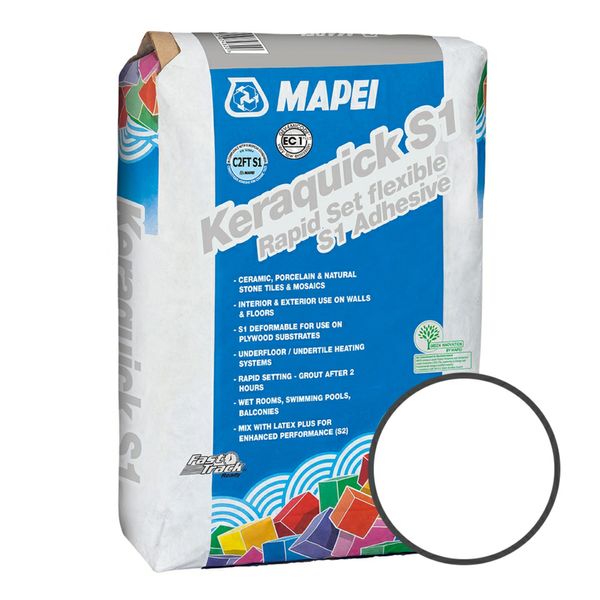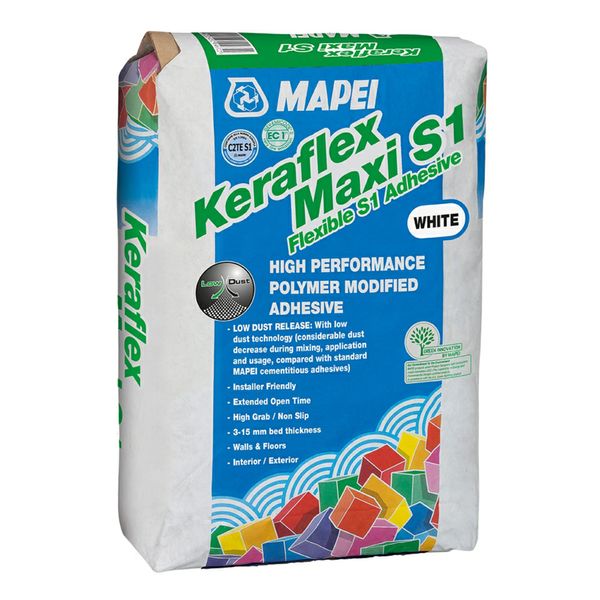


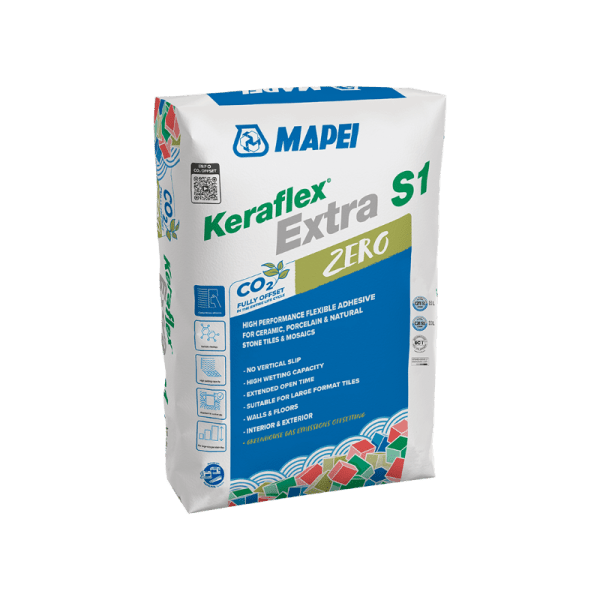
Mapei Keraflex Extra S1 Grey Adhesive 20kg
£23.99
 Rated 4.8★
 Fast, Free Delivery Over £499
 0% interest-free finance
Discover versatile adhesive solutions for flooring at Tiles Paradise. Compatible with different heating systems & built for extended durability. Explore now.
Strong bonding compounds bring lasting stability, crack prevention, and peace of mind to British homes. Consequently, UK DIY homeowners and professional trade fitters buy high-performance adhesive for dependable tiling projects. Polymer-modified cement powders lock heavy porcelain, ceramic, and natural stone tiles securely onto masonry or timber substrates. Furthermore, rapid-setting options allow fast same-day grouting to speed up busy bathroom and kitchen renovations. Orders ship out fast to your front door with free UK mainland delivery. Therefore, choosing trade-grade bonding formulas prevents debonding tiles while ensuring pristine, long-lasting surface finishes.
Selecting the correct bonding bed depends on your specific substrate and room moisture levels. For example, flexible standard-setting S1 adhesives absorb minor subfloor movements across screeds and timber floorboards. Advanced S2 ultra-flexible formulas provide maximum grab over heated floors and areas with high vibration. Additionally, read our comprehensive guide on
Estimating accurate bag quantities prevents messy project delays and keeps site material costs low. Accordingly, standard twenty-kilogram bags yield four to five square metres when using an eight-millimetre floor trowel. Smaller four-millimetre notched trowels on smooth walls use less paste per square metre. Also, clean, long-lasting tiling always follows these simple trade steps:
Prime bare plaster walls and dusty concrete screeds to control substrate suction.
Mix powdered cement with clean, cold water using a mechanical paddle mixer.
Spread the mortar with a notched trowel to create parallel, uniform ridges.
Press tiles firmly with a gentle twisting motion to collapse adhesive ribs.
Importantly, back-buttering large format tiles ensures solid adhesive coverage without hollow pockets underneath. So, careful trade fitting stops cracked tiles and keeps floor surfaces rock-solid under heavy footsteps.
Matching your fixing materials helps create waterproof foundations across the whole family home. Alternatively, explore our combined range of
Warm indoor room temperatures can cause mixed mortar to skin over rapidly inside the bucket. For instance, testing the adhesive ribs with a dry finger ensures the compound remains tacky before embedding tiles. Cleaning excess mortar off glazed tile faces using a damp sponge prevents stubborn dried cement haze. Meanwhile, scraping out fresh grout joints before the compound cures saves hours of hard chiselling later. Routine quick cleanup keeps tile edges sharp without scratching delicate polished surfaces. Ultimately, reliable adhesive uk packs give trade fitters and DIY renovators strong, worry-free tile installations for years.
Ready-mixed tub paste dries through air evaporation and suits smaller ceramic wall tiles in low-moisture areas. Consequently, trade tilers prefer cement-based powdered bags because they cure chemically through hydration. Powdered adhesives form a rigid, waterproof bond capable of supporting heavy porcelain slabs on walls and floors. Therefore, powdered formulas provide the superior bonding strength required for demanding wet rooms and heavy floor traffic.
Adhesive coverage depends on the tile dimensions, subfloor flatness, and the trowel notch size selected. As a result, standard wall tiling typically consumes two to three kilograms of powder per square metre. Larger floor tiles requiring deeper ten-millimetre trowel beds use roughly four to five kilograms per square metre. Thus, calculating total room area helps DIYers order the exact number of bags with minimal material waste.
Tiling directly over bare timber subfloors often causes cracked grout due to seasonal moisture expansion and flexing. In addition, trade tilers always secure structural marine plywood or cement backer boards over loose joists first. Applying a flexible S1 or S2 polymer-modified adhesive absorbs residual timber deflection without shearing the tile bond. So, proper subfloor preparation prevents hollow sounds and stops tiles from lifting over time.
Rapid-set cement formulas cure quickly, allowing trade fitters to walk on tiles within two to three hours. Furthermore, fast-curing compounds let homeowners grout floor joints on the very same day of installation. This rapid curing process minimises downtime and allows busy households to restore functioning bathroom access quickly. For this reason, rapid-setting adhesive remains the top choice for emergency repairs and fast trade turnarounds.