





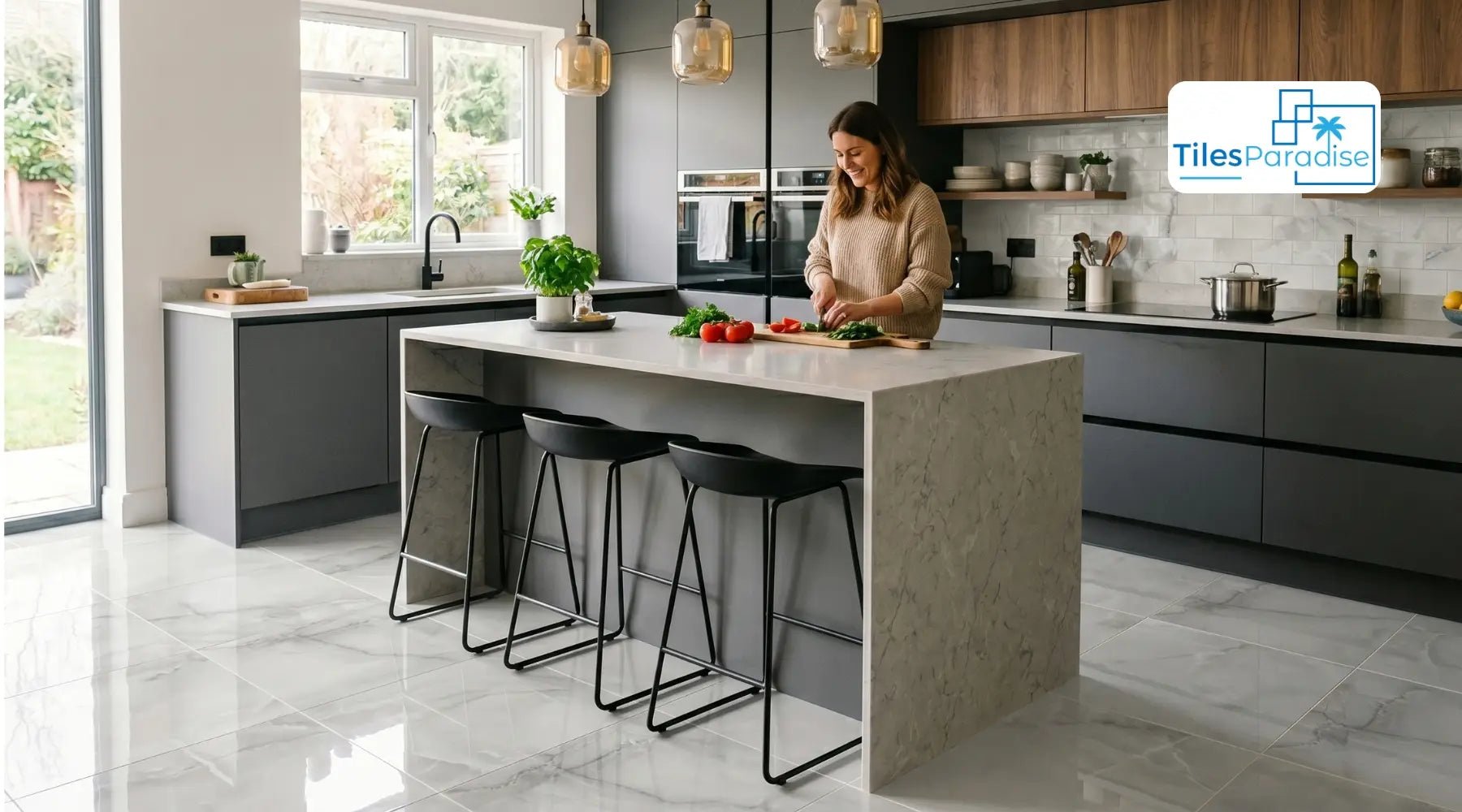
Grey kitchen tiles remain one of the most enduring choices in UK homes, offering a neutral base that adapts to both contemporary and classic kitchen styles. For kitchens with pale cabinetry, light grey matte porcelain kitchen floor tiles for white cabinets strike the ideal balance between visual warmth and practical durability. Whether working with a compact galley layout or a generous open-plan space, grey tiles carry remarkable design versatility from floor to wall.
Choosing the right grey tile involves far more than selecting a colour. Shade, finish, material, and tile format each play a distinct role in how a kitchen feels underfoot and on the eye. This guide covers every key decision, from pale pebble tones to deep charcoal slate effects, so the final choice holds up in daily use and long-term style.
Why Is Grey the Most Adaptable Kitchen Tile Colour?
Grey sits naturally between warm and cool tones, making it one of the few colours that pairs equally well with timber, brass, chrome, and painted cabinetry. A grey kitchen with grey tiles layered in tonal steps creates a calm, cohesive interior without the clinical edge of an all-white scheme. Both light grey kitchen tiles and dark grey kitchen tiles sit comfortably alongside stone worktops, quartz surfaces, and wood-effect laminate finishes.
Grey also hides everyday grease, dust, and limescale marks more effectively than white tiles, which reduces daily cleaning effort in a busy kitchen environment. As a neutral, grey never truly dates, which makes it a sound long-term investment whether renovating to sell or to stay.
Light Grey vs Dark Grey Kitchen Tiles: Which Shade Works Best?
Light grey kitchen tiles open up smaller rooms, reflect natural light effectively, and complement pale kitchen units without competing. Dark grey kitchen floor tiles add visual weight and drama to larger kitchens, grounding open-plan layouts without overwhelming surrounding finishes.
The decision between light and dark ultimately comes down to ceiling height, the level of natural light entering the room, and the tone of the surrounding joinery. As a guide:
|
Shade |
Best Suited To |
Light Requirement |
|
Light Grey |
Small kitchens, white or cream cabinets |
Low to moderate |
|
Mid Grey |
Shaker-style, transitional kitchens |
Moderate |
|
Dark Grey |
Large kitchens, navy or anthracite units |
Bright natural light |
Browse kitchen floor tiles and kitchen wall tiles to compare full shade ranges across both surfaces.
Matte vs Gloss Finish: Which Grey Tile Performs Better in a Kitchen?
Grey gloss tiles reflect ambient light and create the illusion of additional space, which makes them a popular choice for narrow or galley kitchens where brightness matters. Matte finishes, by contrast, conceal everyday scuffs, grease marks, and footprints far more effectively on high-traffic kitchen floors. For a kitchen floor in particular, matte grey porcelain offers a more practical and lower-maintenance surface than high-gloss alternatives.
On walls, grey gloss tiles work well behind hobs and sinks where wipeable surfaces are a priority. The porcelain kitchen tiles range includes both finishes across multiple grey tones, making it straightforward to mix matte floors with gloss wall tiles in the same kitchen scheme.
Matte Black Kitchen Wall Tiles: Ideas for Small Kitchens
Matte black wall tiles work alongside grey flooring to introduce strong contrast in compact kitchens, particularly when combined with brushed brass or matte nickel hardware. Limiting black tiles to a defined splashback zone, rather than full-height walls, prevents a small kitchen from feeling enclosed or oppressive.
For a broader look at matte black kitchen wall tile ideas, including layout patterns and cabinet colour combinations, the black kitchen tiles design guide covers installation, finish options, and styling in full detail.
Porcelain vs Ceramic: Which Material Suits Grey Kitchen Tiles?
Porcelain kitchen tiles are denser and significantly more water-resistant than ceramic, making them the preferred material for grey kitchen floor tiles in busy family households. Ceramic options provide a more cost-effective route for grey kitchen wall tiles, where heavy foot traffic and prolonged water exposure are less of a daily concern.
Both materials are available across a wide range of grey tones, finishes, and sizes. The ceramic kitchen tiles collection and porcelain kitchen tiles range each carry options suited to walls, floors, and splashbacks, enabling a consistent grey palette across the entire kitchen.
Grey Kitchen Floor Tile Sizes: Matching Format to Kitchen Footprint
Large format grey kitchen floor tiles, such as 60x60cm squares and 60x120cm rectangles, suit open-plan kitchens well by minimising grout lines and producing a cleaner, more expansive visual effect. Smaller formats including metro tiles and mosaic sheets work effectively in traditional or compact kitchens, and often deliver better slip resistance through tighter grout joint coverage.
Matching tile format to kitchen size keeps proportions balanced and avoids the disproportionate effect that large slabs can create in smaller rooms. Consider:
• 60x60cm grey squares: open-plan and mid-size kitchens
• 60x120cm grey rectangles: large galley and island kitchens, fewer grout lines
• 30x60cm grey wall tiles: versatile format for splashbacks and full walls
• Metro (10x20cm or 7.5x15cm): traditional, farmhouse and Shaker-style kitchens
Explore the 60x60cm square kitchen tiles and 60x120cm large format tiles for size-specific browsing.
Grey Kitchen Wall Tiles: Metro, Large Format and Pattern Options
Grey metro tiles in a kitchen have remained a consistent choice for splashbacks and full-height wall runs, particularly in modern farmhouse, industrial, and Shaker-style interiors. Larger format grey kitchen wall tiles from 30x60cm upwards create a more minimal, hotel-style finish with far fewer grout lines to maintain or clean.
Patterned grey wall tiles bring graphic interest to an otherwise neutral kitchen without the commitment of a bold colour. The metro tiles collection and patterned kitchen tiles range both carry grey options across traditional and contemporary profiles.
Mosaic Kitchen Splashback Tiles: Texture and Detail in Grey
Grey mosaic tiles bring texture and fine visual detail to kitchen splashbacks without introducing loud colour or pattern. Stone-effect and glazed mosaic options in grey tones work alongside both light and dark cabinetry, forming a focal point that holds interest without competing with worktop veining or cabinet colour.
For a full breakdown of mosaic splashback materials, grout sizing, and installation guidance, the mosaic kitchen tiles splashback guide covers every option across ceramic, glass, and stone mosaic formats.
Grey and White Kitchen Tiles: Shade Combinations and Grout Colour
Grey and white kitchen tiles are among the most frequently selected combinations in UK homes, offering clear contrast without the visual severity of black and white schemes. White tile with grey grout in a kitchen is a particularly effective design detail: it frames each tile cleanly, reduces visible discolouration over time, and adds a quiet graphic quality to both walls and floors.
For floors, white and grey kitchen tiles in a chequerboard or herringbone layout introduce pattern and movement without requiring any additional colour. The white kitchen tiles collection pairs naturally with any shade of grey tile, from pale pearl to deep slate.
Grey Marble Effect Kitchen Tiles: Stone Aesthetics Without the Upkeep
Marble effect kitchen tiles in grey and white tones now represent some of the most visually refined options in the UK market, reproducing the veined character of natural stone within a fully vitrified porcelain body. Unlike genuine marble, grey marble effect porcelain resists staining, acid damage from food and drink, and thermal shock from heat exposure on kitchen floors.
The best marble effect tiles replicate the natural variation of real stone across multiple printed panels, preventing the repetitive visual pattern common in lower-grade options. Browse the marble effect kitchen tiles collection to explore grey-toned veined options for both floors and walls.
Onyx Effect and Textured Grey Tiles for Statement Kitchen Spaces
Onyx effect grey kitchen tiles introduce dramatic translucent veining and depth that standard grey porcelain cannot replicate, making them a distinctive choice for kitchen island sides, feature splashbacks, or statement wall panels. Textured grey tiles, including concrete effect and stone effect finishes, add tactile interest underfoot without the long-term maintenance demand of natural materials.
Both onyx and textured finishes perform especially well in kitchens where the tile is intended to carry the decorative weight of the space rather than act as a background. Explore the full onyx kitchen tiles collection for statement grey options.
How to Match Grey Kitchen Tiles to Cabinet Colours
Grey kitchen tiles adapt to virtually any cabinet colour, but the specific shade and undertone of grey determines which pairing performs best over time. Light grey matte floor tiles sit naturally beneath white, cream, beige, or sage green cabinetry, while dark grey tiles provide grounding contrast below navy, anthracite, or rich natural wood units.
For more unusual cabinet colour choices, consider:
• Blue cabinets: mid-grey wall tiles keep the scheme calm and cohesive
• Gold or warm-toned hardware: warm grey or greige tiles prevent the space feeling cold
• Black matte cabinets: light grey floor tiles provide essential contrast and lift
• Green cabinets: cool grey tiles complement sage, olive, and forest green without clashing
Explore by cabinet tone across blue kitchen tiles, green kitchen tiles, gold kitchen tiles, beige kitchen tiles, and cream kitchen tiles for complementary palettes across the full grey spectrum.
Final Insights
Grey kitchen tiles work across every kitchen size, style, and budget because grey is not a single colour but a full spectrum. From pale pebble finishes and warm greige tones to deep charcoal slate effects, each shade carries a different visual weight. Pairing the right shade with the correct finish, tile material, and tile format produces results that hold their appeal long after installation.
Decisions on shade depth, gloss level, and tile size affect not only how a kitchen looks on day one but how it performs across years of daily use. Prioritising material density for kitchen floors, finish practicality for kitchen walls, and grout colour as a considered design detail ensures the completed space is as liveable as it is visually refined.