





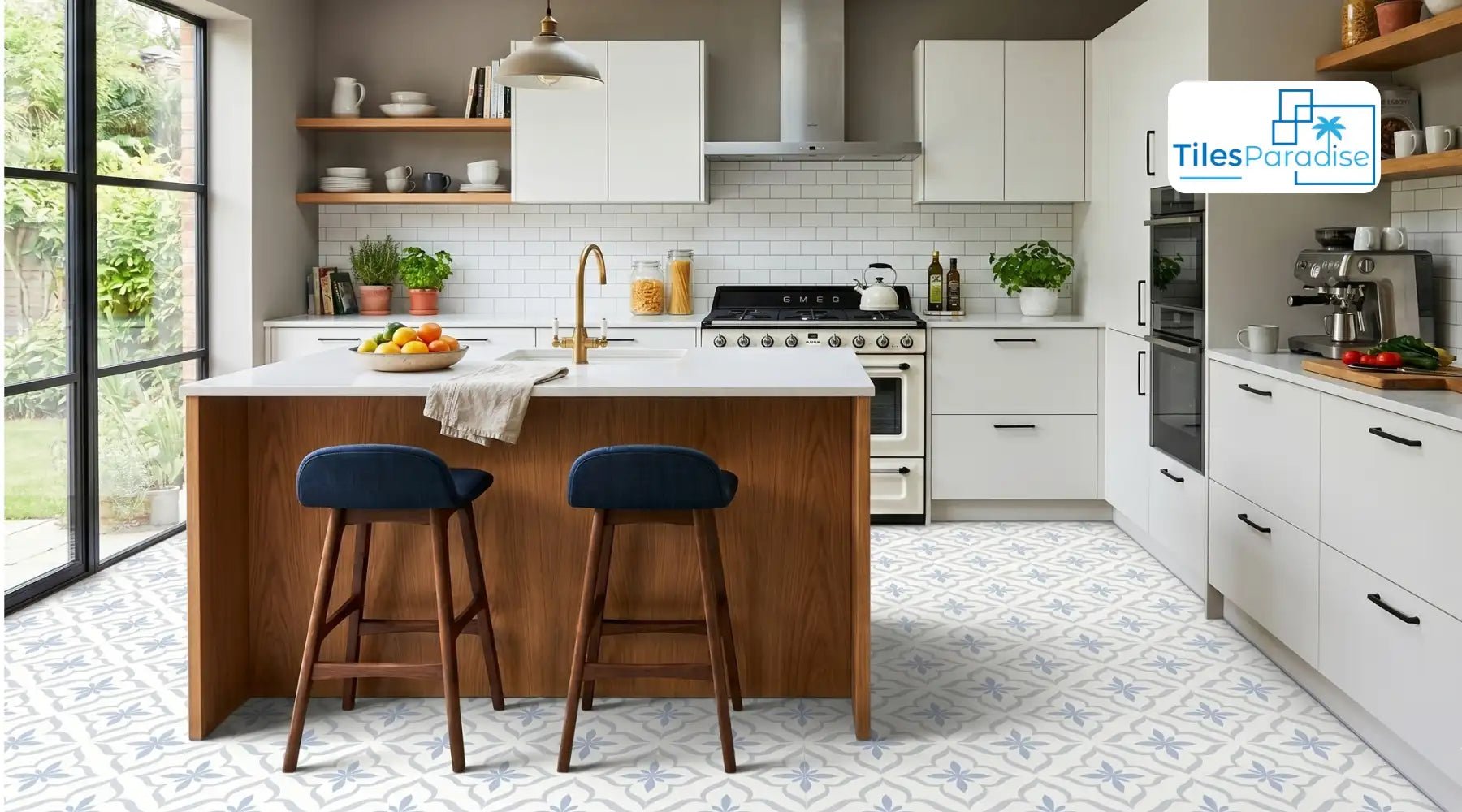
Mosaic kitchen splashback tiles bring colour, pattern and texture into one of the most visible walls in a kitchen, the strip behind a hob or sink. Hundreds of small glass, ceramic or stone pieces sit pre-fixed on a single sheet, so a detailed design goes up almost as fast as one large tile.
This guide covers material choice, ideal placement, grout colour pairing, size formats and UK pricing, so a confident decision gets made before adhesive goes on the wall.
What Are Mosaic Kitchen Tiles?
Mosaic kitchen tiles are small-format pieces, generally under 5cm a side, fixed onto a mesh or paper backing sheet for fast coverage. The format suits curved corners, narrow upstands and tight spaces around sockets, areas where one large tile mosaic kitchen design cannot bend or fit cleanly. A full kitchen tiles range groups every shape, colour and material together for direct comparison before any kitchen mosaic decision gets made.
Why Choose Mosaic Tiles for a Kitchen Splashback?
Mosaic tiles in the kitchen handle steam, grease and daily splashes without losing colour or finish over time. Mosaic tiles on kitchen walls sit comfortably alongside the wider kitchen wall tiles already used through the rest of the room, keeping the look consistent from worktop to ceiling. Cleaning needs only a damp cloth and mild detergent, since most mosaic surfaces resist staining, grease build-up and mould.
Which Materials Work Best for Mosaic Kitchen Splashback Tiles?
Glass mosaic tiles for kitchen walls reflect light and intensify colour, making a compact splashback look brighter than its actual size. Ceramic kitchen tiles and porcelain kitchen tiles ranges cost less and resist scratching, while natural stone adds texture but needs periodic sealing to stay watertight. Shell-based pieces, including mother of pearl back splash designs, bring a soft shimmer suited to a coastal or contemporary scheme.
Material at a glance:
• Glass: bright, light-reflective, easy to wipe clean
• Ceramic: budget-friendly, wide colour range
• Porcelain: low porosity, very durable
• Natural stone: textured, needs annual sealing
• Mother of pearl: decorative shimmer for accent areas
Where Should Mosaic Tiles Be Placed in a Kitchen?
A mosaic kitchen splashback covers the wall directly behind a hob or sink, the section most exposed to heat, grease and water. Tiling splashback in kitchen projects often extends the same sheet up to a narrow upstand along the worktop edge, tying the mosaic back splash into the rest of the design without a visible seam. Splashback mosaic tiles kitchens projects also work well above a breakfast bar or island, where mosaic tile backsplashes, mosaic tile back splash panels or full mosaic backsplashes add contrast without covering an entire wall.
What Colours Suit Mosaic Kitchen Wall Tiles Best?
White mosaic tiles kitchen schemes keep a small room feeling open and bright, and the wider white kitchen tiles range covers plain and patterned options for the rest of the wall. Grey mosaic kitchen tiles from the grey kitchen tiles collection suit both contemporary and farmhouse styles thanks to a neutral base that pairs with most cabinet colours. Green kitchen tiles and gold kitchen tiles bring richer accent colour for a single feature wall.
Beige kitchen tiles or cream kitchen tiles pair naturally with wood cabinetry and warm lighting, giving a softer alternative to a bright white scheme. Many buyers comparing grey bathroom mosaic tiles or small mosaic tiles for bathroom end up choosing the same glass finish for the kitchen, since both rooms share similar moisture and cleaning demands. Matching tones between rooms keeps a small home feeling joined-up rather than tiled in two unrelated styles.
Navy and Cobalt Blue Kitchen Wall Tile Ideas to Pair With White, Grey and Wood Cabinets
Deep blue kitchen tiles ranging from navy through cobalt create strong contrast against white or grey cabinetry, and a warmer pairing against natural wood fronts. Shade selection, layout and cabinet pairing get covered in full inside the navy cobalt blue guide, alongside the wider blue kitchen tiles range stocked for kitchen walls.
Matte Black Kitchen Wall Tiles Ideas for Small Kitchens
Matte finishes on black kitchen tiles soften light reflection, helping a small kitchen feel less boxed in than a high-gloss surface manages. Finish choice, grout pairing and layout advice for compact rooms sit inside the matte black tile ideas guide, built around the same black kitchen tiles colour range used through the rest of the kitchen.
How to Pair Grout Colour With Mosaic Splashback Tiles?
Light grout against a dark mosaic sharpens every joint line and shows off the full layout, while grout matched closely to tile colour gives a quieter, more uniform finish across the wall. Mid-grey grout works as a safe middle ground across most colour palettes, particularly behind a patterned kitchen tiles design with several shades sitting in one sheet. Epoxy-based grout resists staining far better than standard cement grout, which matters most directly behind a hob or sink.
What Size and Format Options Exist for Mosaic Kitchen Tiles?
Classic mosaic pieces sit in the 2 to 5cm range, while metro style tiles bring a longer brick-shaped piece for a different rhythm across the same wall. Larger formats, including medium format tiles and large format tiles, often run alongside a mosaic feature strip rather than replacing it outright. Marble effect tiles and onyx effect tiles repeat the same decorative detail in a bigger format, giving a similar look with noticeably less grout to maintain over time.
|
Format |
Typical piece size |
Best use in a kitchen |
|
Mosaic sheet |
2-5cm pieces |
Splashback and feature wall |
|
Metro |
10 x 20cm |
Half-tiled walls |
|
Medium format |
60 x 60cm |
Larger walls and floors |
|
Large format |
60 x 120cm |
Minimal-grout statement wall |
Are Mosaic Kitchen Floor Tiles a Good Choice?
Mosaic kitchen floor tiles handle daily foot traffic well when made from porcelain or unglazed ceramic, both noticeably more chip-resistant than glass. A kitchen floor mosaic tile layout still needs a slip-resistant finish, since a glossy mosaic tile floor kitchen surface turns dangerous the moment water or oil reaches it. The kitchen floor tiles range works as a safer everyday option for most working kitchens, while a small mosaic kitchen floor accent, kitchen mosaic floor tile choice or mosaic kitchen tile floor strip near a sink or island adds pattern without covering the whole room.
How to Install and Maintain a Mosaic Kitchen Splashback?
Mesh-backed sheets go up row by row, working from the most visible point outward so cut pieces land at the edges rather than the centre of the wall. Standard tile adhesive and a notched trowel suit most ceramic and porcelain sheets, while glass mosaic needs a white adhesive to stop colour show-through once it dries. A confident DIY fitter can finish tiling splashback in kitchen work over a single weekend, though uneven walls, electrical sockets or detailed patterns are usually better left to a tiler.
How Much Do Mosaic Kitchen Splashback Tiles Cost in the UK?
Mosaic sheets typically run from around £15 to £60 per square metre depending on material, with glass and natural stone sitting toward the higher end of that range. Shoppers comparing prices against Topps Tiles kitchen ranges or other high-street suppliers often find UK warehouse stock works out cheaper once delivery and sample costs get weighed up. A typical splashback area, usually 2 to 4 square metres, keeps total project cost manageable even with a premium material choice.
|
Material |
Approx price per m² |
|
Ceramic |
£15 to £25 |
|
Porcelain |
£20 to £35 |
|
Glass |
£30 to £55 |
|
Natural stone |
£35 to £60 |
Final Insights
Choosing mosaic kitchen tiles comes down to matching material, placement and grout colour to how a kitchen gets used day to day. Glass and stone suit a feature splashback, while porcelain and ceramic handle floors and high-traffic walls with less maintenance.
A small mosaic kitchen floor accent or a full wall splashback delivers strong visual impact within a sensible budget once size, finish and grout get planned ahead. Settling the details early avoids costly changes once tiling is already under way.