





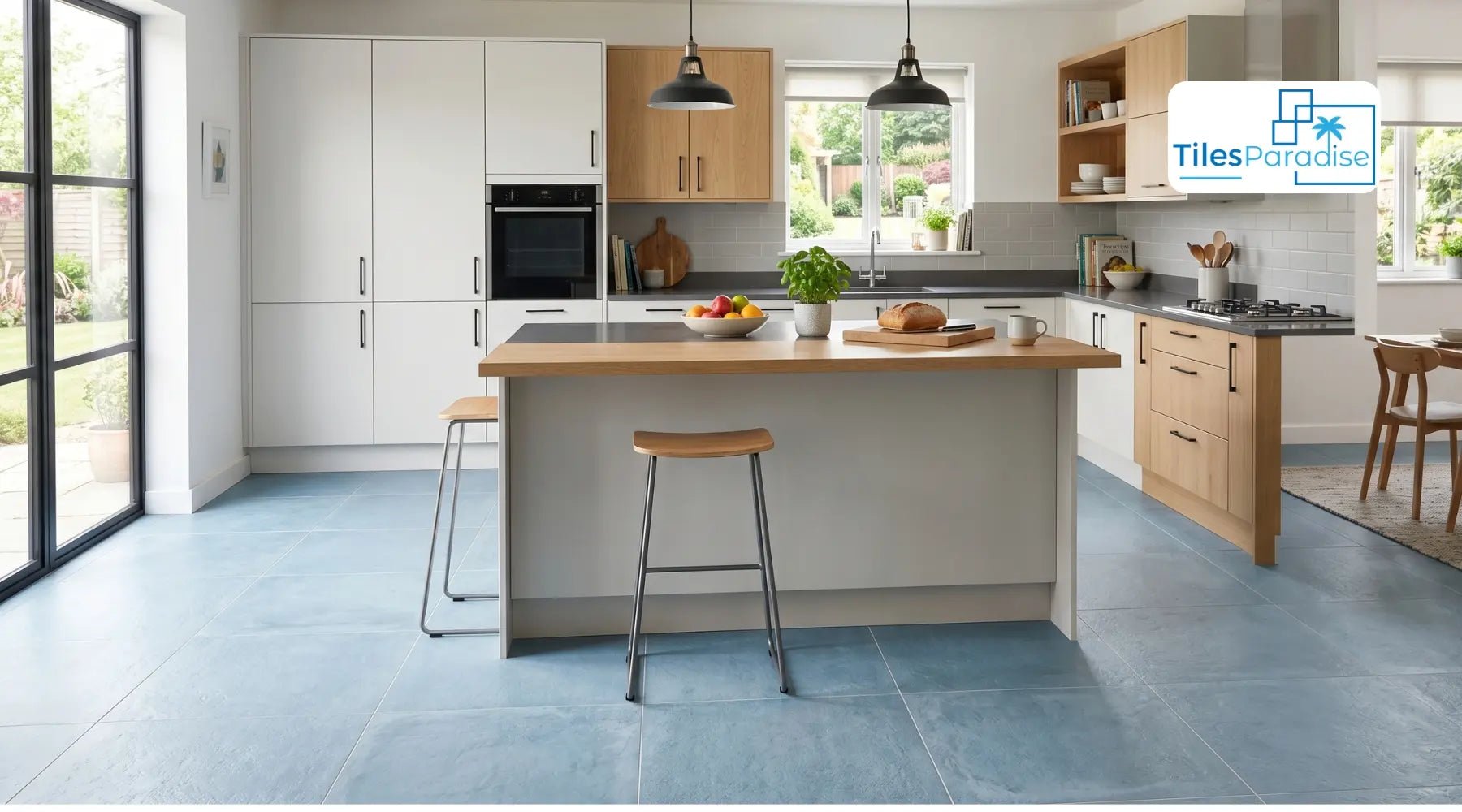
Blue remains one of the most versatile colours in UK kitchen design, and navy and cobalt blue kitchen wall tile ideas to pair with white, grey and wood cabinets are among the most searched renovation topics. From bold cobalt blue splashbacks to soft duck egg feature walls, blue kitchen tiles bridge the gap between calm, considered interiors and confident, personality-led colour choices.
Choosing the right shade, finish, and layout makes all the difference between a kitchen that looks polished and one that feels unresolved. This guide covers shade selection, cabinet pairing, grout colour, and material decisions, giving homeowners and renovators across the UK everything needed to commit to blue with full confidence.
Which Blue Shade Suits the Kitchen Style Best?
Shade selection is the first and most important decision when choosing blue kitchen wall tiles. Navy brings depth and drama to contemporary kitchens, cobalt delivers bold Mediterranean energy, while duck egg and sky blue add softness to traditional or Scandi-inspired schemes. Teal and blue-grey hybrids deserve consideration too, particularly in kitchens where cool neutrals already dominate.
Each shade responds differently to natural and artificial light. Darker blues like navy and indigo absorb light, making them better suited to larger kitchens or well-lit spaces. Lighter shades, including powder blue and duck egg, reflect light and work beautifully in compact UK galley kitchens.
Explore the full range of blue kitchen tiles to compare shades side by side before committing to a colour.
Navy Blue Wall Tiles with White Cabinets: Does High Contrast Work?
White cabinets and navy blue tiles create one of the cleanest, most enduring contrasts in kitchen design. The pairing works because white reflects and navy absorbs, producing visual balance without competing tones. A glossy navy blue backsplash tile positioned behind a white kitchen instantly draws the eye and defines the splashback zone as a deliberate design statement rather than an afterthought.
For the best results, match the navy tile finish to the cabinet door style. Gloss navy metro tiles complement flat-panel white units, while matte navy tiles sit better alongside shaker-style cabinetry. A navy blue metro tile in a vertical stack layout elevates a standard white kitchen without requiring a full renovation.
Using white kitchen tiles in adjacent zones prevents the navy from feeling overwhelming and keeps the overall atmosphere clean and open.
Cobalt Blue Splashback Tiles with Grey Cabinets: Tone and Finish Guide
Cobalt and grey is an unexpectedly powerful pairing that balances warm and cool tones without neutralising either. Cobalt blue splashback tiles placed against grey shaker units add vibrancy and prevent the palette from appearing flat or monotone. The key lies in choosing the right grey: warm mid-grey cabinets complement cobalt well, while very dark or green-leaning greys can create an unintended visual clash.
Finish matters considerably in this combination. A gloss cobalt tile bounces light and amplifies the intensity of the blue, while a matte cobalt surface reads more subdued and pairs elegantly with satin or matt grey cabinet finishes. A blue and white backsplash in cobalt with a horizontal brick bond layout is one of the most searched combinations in UK kitchen renovations currently.
Browse grey kitchen tiles alongside cobalt options to see how the combination shifts across different grey tones.
Duck Egg Blue Kitchen Tiles with Wood Cabinets: Natural Balance
Duck egg blue and wood cabinets create a kitchen that feels grounded, organic, and quietly stylish. The muted blue-green hue in duck egg tiles echoes the natural tones found in oak, walnut, and ash wood, making the combination feel intentional rather than accidental. This pairing is especially popular in farmhouse, Scandi, and coastal kitchen schemes across the UK.
Encaustic or handmade-look duck egg blue kitchen tiles add texture that complements wood grain particularly well. For a more polished finish, smooth ceramic duck egg metro tiles in a vertical stack layout pair cleanly with light or mid-oak cabinetry without overpowering the natural wood tone.
The kitchen wall tiles collection includes softer blues like duck egg that work with wood cabinets and eliminate the need for bold accessories to add warmth.
Gloss vs Matte Finish on Blue Kitchen Wall Tiles: Which Performs Better?
Finish choice affects both how blue kitchen tiles look and how they perform day to day in a kitchen environment. Gloss blue tiles reflect light, making them an excellent choice for smaller UK kitchens or north-facing rooms where natural light is limited. A light blue backsplash tile in a gloss finish can visually enlarge a compact cooking space without any structural changes to the room.
Matte blue tiles are more forgiving in high-use areas because fingerprints and water marks are far less visible on a non-reflective surface. Behind a hob or around the sink, a matte dark blue backsplash is both a practical and stylish long-term choice.
Porcelain kitchen tiles in a matte navy finish offer better durability than ceramic in moisture-heavy zones, making them the preferred option for splashbacks that take daily heat and steam.
Metro, Herringbone or Vertical Stack: Layout Impact on Blue Tiles
The same blue tile can look completely different depending on the laying pattern chosen. Classic horizontal brick bond remains the most popular layout for blue subway tile backsplash installations across UK kitchens, offering a familiar and timeless result that works across most kitchen styles. Vertical stack creates a taller, more contemporary feel and makes a splashback appear higher than it actually is.
Herringbone layouts introduce movement and energy to blue and white kitchen tiles, working particularly well on feature walls or full-height splashback runs. Basketweave and diagonal grids add further complexity for those seeking a more decorative outcome.
Explore metro tiles in navy and cobalt to see how each laying direction changes the visual weight of the same tile format.
Ceramic vs Porcelain Blue Kitchen Tiles: Material Selection Guide
Both ceramic and porcelain deliver excellent results on kitchen walls, but the choice depends on budget, finish requirements, and installation area. Ceramic tiles are lighter, easier to cut, and generally more affordable, making them the popular choice for wall-only splashback installations where heavy foot traffic is not a concern.
Ceramic kitchen tiles in blue are ideal for splashbacks and feature walls where water exposure is limited and a lightweight fix to the wall is preferred.
Porcelain is denser, harder, and more moisture-resistant, making it the better material for both wall and floor use in the same blue colourway. For continuity across both surfaces, kitchen floor tiles in matching porcelain blue offer the most cohesive and hardwearing result.
Best Non-Slip Porcelain Kitchen Floor Tiles
Blue kitchen floor tiles in porcelain must meet R-rating slip resistance standards for safe use in UK kitchens. R10-rated porcelain provides sufficient resistance for domestic kitchen environments, while R11 is recommended for larger or commercial-adjacent spaces. Read the full guide on non-slip kitchen floor tile R10 and R11 ratings to match the correct specification to the layout and budget before purchasing blue floor tiles.
What Grout Colour Works Best with Blue Kitchen Tiles?
Grout colour dramatically changes how blue kitchen tiles read on the wall, yet it remains one of the most overlooked decisions in kitchen tiling. White grout with blue tiles creates a defined grid effect, sharpening each tile edge and adding a clean, graphic quality ideal for metro and subway formats. It works particularly well with navy blue metro tiles and blue and white tile backsplash combinations.
Dark grout in charcoal or slate tones allows the blue to dominate without interruption, making individual tiles less distinct and the surface read as a continuous field of colour. For blue-grey backsplash tile installations, a matching mid-grey grout produces the most seamless and considered finish.
Coloured grout in warm metallic or brass tones adds a decorative layer particularly effective with patterned kitchen tiles in blue, amplifying the decorative quality of each tile rather than fading into the background.
Quick reference: blue tile shade and grout colour pairings
|
Blue Tile Shade |
Recommended Grout |
Visual Effect |
|
Navy Blue |
White |
High contrast, sharp grid lines |
|
Cobalt Blue |
Charcoal grey |
Bold, seamless, dramatic |
|
Duck Egg Blue |
Warm sand or soft grey |
Soft, cohesive, organic |
|
Light Blue |
White or pale grey |
Fresh, airy, open feel |
|
Blue-Grey |
Matching mid grey |
Seamless, tonal, minimal |
How to Mix Blue Kitchen Tiles with Other Colours: Pairings That Work
Blue is one of the few tile colours that pairs naturally with both warm and cool tones in a kitchen. Blue and gold backsplash combinations bring a luxe, high-contrast quality to kitchens fitted with brass hardware or gold light fittings, a combination growing quickly in UK interiors. Blue and white kitchen tiles remain a classic pairing rooted in Delft and Mediterranean ceramics, delivering a timeless look that never reads as purely trend-led.
Gold kitchen tiles used as accents within a predominantly blue scheme add warmth and prevent a blue-dominant palette from reading as cold or sterile.
Blue green backsplash tile combinations using teal or aqua shades bridge two dominant tile colours. Blue kitchen tiles also pair naturally with green kitchen tiles when used in adjacent zones of the same kitchen, particularly where an island or breakfast bar creates a natural colour boundary.
Gloss vs Matte Sage Green Kitchen Tiles for Splashbacks
When comparing sage green tiles to blue kitchen wall tiles in a shared scheme, finish selection becomes twice as important to the overall result. Gloss sage green reflects light and reads brighter against blue, while matte sage green absorbs more tone and sits quieter within the colour balance. Read the full breakdown of gloss vs matte sage green kitchen tile finishes for splashbacks before making a final decision on either colour in a shared kitchen scheme.
Blue Tiles in Small UK Kitchens: Scale, Format and Layout Decisions
Scale and format selection matters more in smaller UK kitchens than almost any other design factor when choosing blue tiles. Larger format tiles in medium blue shades create fewer grout lines and produce a quieter, more expansive visual field, ideal for compact cooking spaces that can feel busy with too much tile detail.
Kitchen medium format 60x60cm square tiles in light or mid blue work well in open-plan galley kitchens where the tile carries across both the splashback and part of the floor for a unified, uninterrupted look.
Smaller format tiles such as metro or mosaic increase the apparent detail in a compact space, adding richness but also visual noise. In very small UK kitchens, a single run of light blue backsplash tile behind the hob and sink is far more effective than full-wall tiling. That targeted approach keeps the blue anchored as a design decision without making the room feel busier or smaller.
Final Insights
Blue kitchen tiles cover one of the broadest shade and finish ranges of any colour in the UK tile market. From a light blue backsplash tile in a compact galley kitchen to full-wall navy blue kitchen tiles in an open-plan space, the right combination of shade, finish, and layout determines how successfully blue integrates with the rest of the scheme.
The pairing decisions around cabinetry, grout, and material type are as important as the tile colour itself. Narrowing down to a specific shade and testing it against existing cabinet and countertop tones in natural light is always the most reliable route to a result that holds up over years of daily use in the kitchen.