





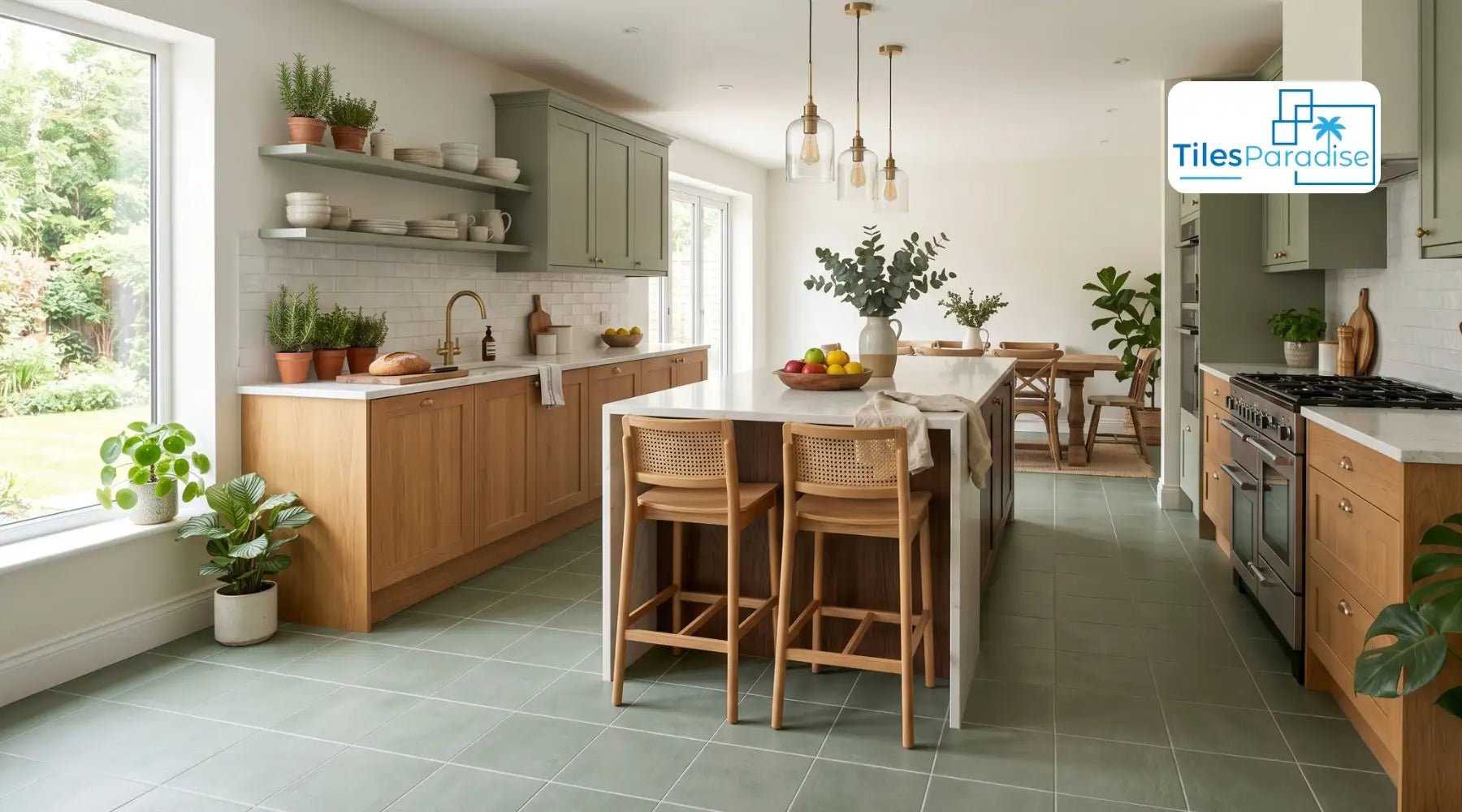
Selecting the correct materials for culinary spaces requires evaluating both aesthetic appeal and practical functionality. Analysing gloss vs matte sage green kitchen tiles for splashbacks reveals significant differences in light distribution and daily maintenance routines. Finding the perfect balance ensures long-lasting structural integrity behind busy cooking stations.
Natural lighting conditions dictate how different surface finishes perform in interior environments. Matte finishes absorb excessive glare near large windows, while high-shine options reflect ambient light to brighten shadowed corners effectively. Exploring versatile modern kitchen tiles provides endless architectural possibilities.
Light Reflectance Value of Sage Green Kitchen Tiles
Understanding Light Reflectance Value metrics helps identify the optimal green kitchen tiles for specific sun orientations. South-facing rooms receive intense natural illumination, making matte sage kitchen tiles an excellent choice to reduce harsh reflections. The non-reflective surface softens the visual impact and creates a calm culinary atmosphere.
North-facing rooms typically suffer from cooler, restricted daylight. Installing a highly reflective green tile backsplash kitchen design compensates for the lack of sun by bouncing available light across the room. Proper illumination transforms narrow spaces entirely.
Selecting premium quality ceramic kitchen tiles guarantees excellent colour consistency across large installations. Consistent pigment distribution prevents patchy shadows and maintains the intended design aesthetic throughout the space. Applying durable kitchen wall tiles prevents underlying moisture damage.
Splashback Surface Friction and Grease Splatter Maintenance
Cooking zones generate airborne oils, requiring splashback surfaces with minimal friction coefficients. A smooth green splashback naturally repels heavy grease splatters, allowing rapid cleaning with standard household detergents. The lack of surface pores stops oil from penetrating the material body.
Matte finishes possess a microscopic texture that excels at hiding dried water droplets behind sink stations. While a matte green backsplash kitchen installation conceals hard water marks beautifully, removing heavy cooking oils requires slightly more physical effort. Careful placement dictates long-term satisfaction.
Optimal maintenance routines require specific approaches:
• Utilize soft microfibre cloths for daily gloss wiping.
• Apply mild non-abrasive detergents to preserve protective glazes.
• Choose glazed porcelain kitchen tiles for maximum resistance to acidic food spills and high heat output from hobs.
Grout Colour Contrast for Green Metro Tiles Kitchen Designs
The mathematical grid formed by grout lines drastically alters the geometric perception of a green subway tile kitchen installation. Dark grey or charcoal grout diminishes the boundaries between individual pieces, creating a unified wall appearance. This smooth look suits contemporary architecture perfectly.
Conversely, crisp white grout frames each individual piece, highlighting the classic rectangular shapes. Pairing bright grout with an emerald green tile backsplash accentuates the brickwork pattern and draws immediate attention to the cooking zone. The strong contrast provides striking visual definition.
Integrating classic ceramic metro tiles with contrasting grout lines requires precise spacing and levelling. Pairing the design with sleek grey kitchen tiles balances the vibrant colours perfectly.
Evaluating Dark Green Tile Backsplash Illumination Metrics
Installing a dark green backsplash absorbs a significant percentage of ambient room light. Rooms lacking expansive windows benefit from targeted under-cabinet LED lighting to illuminate dark green kitchen tiles properly. Strategic lighting prevents the worktop area from appearing gloomy during evening food preparation.
Rich, deep tones like an emerald green backsplash create a sophisticated, moody atmosphere in open-plan living arrangements. The intense colour saturation grounds the room and serves as a strong focal point against neutral cabinetry. The visual weight adds architectural depth.
Introducing elegant onyx kitchen tiles nearby can introduce subtle organic patterns that break up solid dark green surfaces. The natural veining adds visual interest without overpowering the primary colour scheme. Incorporating vibrant green kitchen tiles elsewhere maintains thematic consistency.
Material Durability for Green Glass Tile Backsplash Zones
Glass materials offer unparalleled luminosity and depth compared to standard clay products. A green glass tile backsplash reflects light from behind the surface, giving the colour a brilliant, glowing quality. This optical illusion makes the room feel exceptionally vibrant and energetic.
Maintaining a green glass backsplash involves avoiding abrasive cleaning pads that might scratch the delicate surface. Soft microfibre cloths and specialized glass cleaners maintain the pristine, flawless reflection over decades of daily culinary use. Careful upkeep is essential for longevity.
Pairing reflective glass with luxurious marble effect kitchen tiles on adjacent walls creates a highly sophisticated material palette. The combination of pristine glass and organic stone aesthetics delivers a timeless interior finish.
Grounding Culinary Spaces Using Green Floor Tiles Kitchen Alignments
Coordinating vertical splashbacks with horizontal surfaces establishes a cohesive design language throughout the property. Matching a sage green tile backsplash with complementary flooring materials creates a smooth visual transition from the worktops down to the ground. Continuity enhances spatial flow.
Installing large format green floor tiles kitchen designs reduces the total number of grout lines on the ground. Utilizing robust porcelain kitchen floor tiles makes floor maintenance far simpler and helps small spaces feel significantly broader and less cluttered.
Designers often implement 60x120cm rectangular large tiles to achieve this expansive, uninterrupted surface area. The elongated dimensions draw the eye outward, maximizing the perceived square footage of the room.
patterned porcelain kitchen floor and wall tiles geometric encaustic and Victorian designs
For heritage properties, integrating patterned porcelain kitchen floor and wall tiles geometric encaustic and Victorian designs adds immense historical character. Intricate motifs pair beautifully with a simple olive green tiles kitchen wall scheme. Designers frequently source traditional geometric patterned floors to establish authentic classical aesthetics. Installing matching patterned decorative kitchen tiles ties the whole room together effortlessly.
best non-slip porcelain kitchen floor tiles
Safety remains paramount in environments prone to liquid spills and dropped food. Selecting the best non-slip porcelain kitchen floor tiles prevents dangerous accidents around sink and dishwasher zones. Certified R10 non-slip floor options provide necessary friction without compromising the overall visual design of the culinary space.
Tonal Combinations with Blue Green Backsplash Tile Layouts
Blending oceanic hues introduces a calming, aquatic element to busy food preparation areas. A blue green backsplash tile acts as a versatile bridge between cool metallic appliances and warm timber cabinetry. Incorporating adjacent ocean blue kitchen tiles enhances this aquatic theme beautifully.
Pairing this specific hue with neutral base colours prevents the room from feeling overly saturated. Surrounding the colourful splashback with soft beige kitchen tiles provides a calm, understated canvas that allows the central green feature to stand out prominently.
Alternatively, incorporating subtle cream kitchen tiles into the adjacent dining area maintains warmth while supporting the primary colour palette. The soft contrast ensures the overall environment remains inviting and highly relaxing.
Expanding Spatial Perception via Light Green Backsplash Installations
Compact culinary environments benefit immensely from pale, luminous colour palettes. A light green backsplash reflects maximum available light, instantly making narrow galley layouts appear wider and more accommodating. The airy tone eliminates feelings of claustrophobia in confined cooking spaces.
To further enhance this expansive illusion, designers often select specific square tile formats. Using contemporary kitchen medium format 60x60cm square tiles creates a balanced, proportionate grid that visually stretches the wall dimensions. The symmetrical geometry brings order to the room.
Introducing crisp white kitchen tiles alongside pale sage hues establishes a fresh, botanical aesthetic. The sharp white boundaries amplify the soft green tones, resulting in a vibrant, highly energizing morning environment.
Evaluating Moisture Resistance in Green Kitchen Wall Tiles
Splashbacks endure constant exposure to boiling water condensation and sink splashes. Selecting a completely waterproof green backsplash tile kitchen installation prevents underlying plasterboard degradation. Vitrified ceramics provide excellent moisture barriers against daily humidity.
When utilizing a sage green backsplash tile, the colour remains perfectly stable even under constant steam exposure. The protective glaze prevents water ingress, ensuring the structural integrity of the wall remains intact. A well-planned sage tile backsplash requires waterproof epoxy grout for maximum longevity.
An emerald green backsplash tile requires similar moisture-resistant grouting to maintain its sharp visual clarity. Proper installation techniques stop mold formation within the joints completely, maintaining hygienic food preparation areas.
Organic Aesthetics and Dark Hue Perimeter Framing
Earth tones bring an immediate sense of natural tranquility indoors. Incorporating olive green kitchen tiles behind the main cooking station grounds the interior architecture with deep, organic pigmentation. The muted tone pairs exceptionally well with raw brass hardware and natural oak worktops.
For a luxurious contrast, bordering the installation with striking gold kitchen tiles adds instant glamour. The metallic accents catch the light, elevating the earthy greens into a highly sophisticated design scheme.
To achieve maximum visual impact, some layouts incorporate contrasting dark zones. Framing the green installation with sleek black kitchen tiles creates a dramatic, theatrical perimeter that outlines the cooking zone. A dark green tile backsplash framed by dark borders looks exceptionally refined.
Final Insights
Finalising the exact specifications for culinary splashbacks demands rigorous attention to both colour psychology and material science. Balancing aesthetic desires with daily maintenance realities guarantees a functional, beautiful cooking environment that withstands rigorous daily use.
Prioritising surface friction ratings and light reflectance values ensures the chosen materials perform optimally under specific environmental conditions. Strategic selection ultimately creates a timeless, durable interior structure that elevates the entire culinary experience daily.