





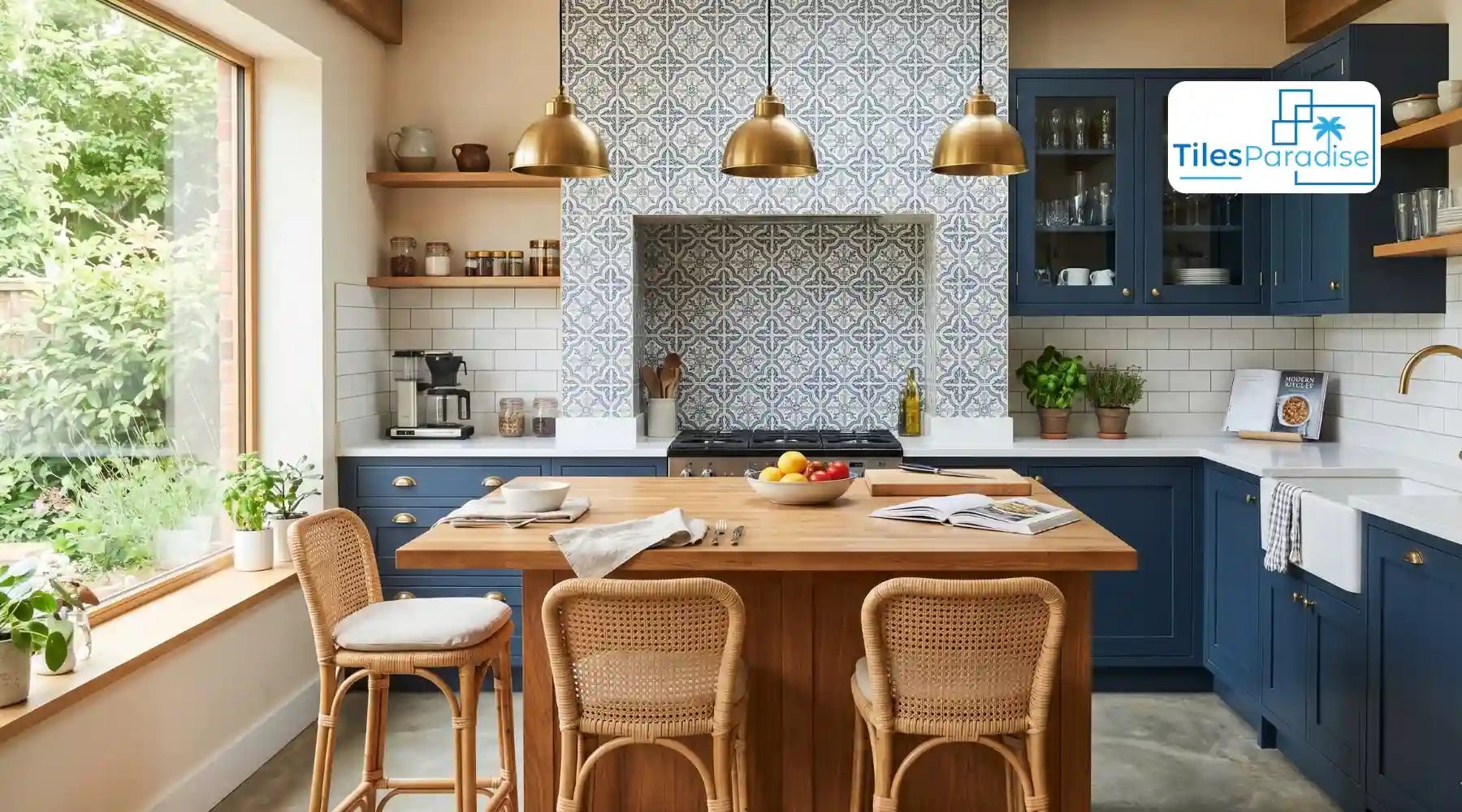
Kitchen renovation projects demand durable surface materials that simultaneously offer aesthetic impact. Integrating patterned porcelain kitchen floor and wall tiles, geometric encaustic and Victorian designs, transforms ordinary culinary spaces into architectural masterpieces. High-quality surface finishes protect against moisture, stains, and daily wear while defining spatial character.
Balancing intricate motifs requires careful spatial planning and precise material selection. Modern manufacturing techniques replicate historical aesthetics with advanced technical properties. Such engineering creates beautiful yet highly functional splashbacks, walls, and reliable flooring solutions.
Patterned Kitchen Wall Tiles Material Composition and Design Zoning
Design zoning involves isolating specific vertical areas to establish visual focal points within culinary environments. Utilizing intricate beautiful kitchen wall tiles creates distinct boundaries between cooking stations and dining sectors seamlessly. Combining durable kitchen tiles with plain surrounding surfaces achieves a popular pattern splicing trend, balancing intense motifs with minimalist spaces perfectly.
Premium ceramic kitchen tiles provide excellent substrates for high-definition digital printing techniques that replicate hand-painted artwork. Advanced manufacturing processes produce vivid patterned backsplash tile variations that resist fading from UV exposure or rigorous daily cleaning routines. Applying a patterned kitchen backsplash creates an immediate design anchor that commands attention upon entering the room.
Properly specified wall coverings drastically reduce maintenance requirements behind active cooking zones. Strategic placement of heavily decorated elements prevents visual fatigue while maximizing aesthetic impact across key sightlines.
Geometric Kitchen Tiles Spatial Scaling and Format Selections
Scaling motifs correctly depends heavily on total room square footage, ceiling height, and available natural light. Small rooms benefit immensely from kitchen medium format 60x60cm square tiles, which reduce grout lines while displaying complete, uninterrupted geometric kitchen tiles configurations. Expansive open-plan layouts easily accommodate continuous patterned kitchen floor tiles without visually overwhelming surrounding decor or cabinetry.
For continuous architectural flow across massive areas, 60x120cm rectangular large tiles establish expansive, seamless base layers. Symmetrical shapes, intersecting lines, and abstract polygons create modern dynamism across both horizontal and vertical planes effortlessly. Large format slabs minimize visual interruptions, allowing complex linear structures to dominate the aesthetic narrative.
Matching motif proportions to room dimensions prevents spatial distortion and maintains harmonious interior balance. Oversized geometrics in compact rooms often feel claustrophobic, whereas miniature patterns in massive halls lose definition completely.
Encaustic and Victorian Kitchen Floor Tiles Durability Characteristics
Historical 19th-century motifs traditionally relied on pigmented cement, requiring extensive sealing protocols to prevent destructive moisture ingress. Modern manufacturing replicates intricate historical aesthetics using sturdy kitchen floor tiles crafted from high-density clay mixtures baked at extreme temperatures. This modern engineering creates an impervious surface that easily withstands heavy foot traffic, dropped utensils, and acidic culinary spills.
Deploying authentic-looking porcelain kitchen tiles ensures absolute zero maintenance requirements compared to highly porous traditional encaustic materials. Authentic stylish patterned kitchen tiles feature baked-in designs that never wear away, guaranteeing decades of uncompromised structural and visual integrity.
Advanced glazing technologies lock colors beneath a protective vitreous layer, preventing scratches from pet claws or moving furniture. Selecting vitreous ceramics guarantees that vibrant Victorian color palettes remain pristine long after initial installation.
vinyl floor tiles for kitchen with underfloor heating
Alternative flooring systems include advanced luxury composite materials designed specifically for high thermal conductivity and rapid temperature adjustment. Installing vinyl floor tiles for kitchen with underfloor heating ensures rapid heat transfer while maintaining incredibly comfortable underfoot temperatures year-round. Superior thermal stability prevents material warping or structural delamination during extreme temperature fluctuations.
Herringbone Tile Backsplash and Chevron Configurations Layout Techniques
Angled installation patterns dramatically alter spatial perception by drawing the human eye upwards or outwards across flat surfaces. A classic herringbone tile backsplash utilizes standard versatile metro tiles laid at 90-degree interlocking angles, adding profound textural depth to ordinary walls. Conversely, chevron tile backsplash layouts require precise 45-degree angled cuts to form continuous, uninterrupted zigzag lines.
Installing pristine classic white kitchen tiles in a herringbone pattern backsplash tile arrangement introduces subtle elegance without overpowering color saturation. Creating a herringbone subway tile backsplash behind cooktops establishes an immediate focal point that anchors overhead ventilation hoods. Implementing specific kitchen tiles herringbone formats maximizes vertical space perception effortlessly.
Common angular installation variants provide multiple aesthetic pathways for bespoke interior customization:
-
Standard 90-degree herringbone tiles kitchen formats for classic texture
-
Sharp 45-degree chevron backsplash configurations for modern, aggressive lines
-
Diagonal herringbone pattern backsplash layouts for asymmetrical intrigue
Marble Effect and Onyx Designs Aesthetic Attributes
Natural stone aesthetics inject unbridled luxury and organic movement into modern culinary interior design schemes. High-end marble effect kitchen tiles capture authentic veining patterns without enduring the porous vulnerabilities of genuine metamorphic rock. A spectacular white marble herringbone backsplash combines classic stone elegance with dynamic geometric installation methods harmoniously.
Integrating translucent luxurious onyx kitchen tiles introduces dramatic banding and cloud-like visual formations across vertical planes. Coupling natural stone visuals with shimmering gold kitchen tiles accents elevates the entire decorative scheme significantly. This specific combination blends organic textures with high-end metallic sophistication flawlessly.
Floral, Fish Scale, and Diamond Shape Backsplash Visual Impacts
Organic and curved silhouettes provide an elegant counterpoint to rigid cabinet structures and perfectly straight-edged countertops. A stunning fish scale backsplash, also known as scalloped or fan-shaped, creates fluid, undulating rhythms inspired heavily by oceanic movements. Utilizing vibrant green kitchen tiles in curved formats amplifies natural, biophilic design elements brilliantly.
Alternatively, a diamond shape backsplash offers sharp, harlequin-style tessellations that bounce ambient light dynamically across dark work surfaces. A soft floral backsplash tile or an intricate pattern backsplash paired with calming serene blue kitchen tiles establishes a tranquil yet visually captivating culinary environment.
Curved and non-rectilinear shapes break visual monotony and inject distinct personality into otherwise clinical cooking zones. Choosing intricate shapes demands meticulous cutting around electrical outlets and cabinetry borders to maintain flawless visual continuity.
Brick Effect and Monochromatic Grey Patterned Kitchen Tiles Coordination
Industrial aesthetics frequently rely on exposed structural elements alongside muted, highly utilitarian color palettes. Installing realistic brick effect tiles kitchen formats introduces rugged texture while successfully maintaining a fully cleanable, hygienic surface. Authentic brick effect wall tiles kitchen options pair flawlessly with raw timber shelving units and matte black plumbing fixtures.
For a highly contemporary monochromatic approach, integrating sophisticated grey kitchen tiles anchors the room naturally without absorbing necessary ambient light. Matching sophisticated grey patterned kitchen tiles with striking black kitchen tiles creates high-contrast boundaries that define specific preparation zones flawlessly.
Darker hues effectively conceal everyday culinary splashes behind stovetops and sink basins. Layering various shades of grey establishes profound architectural depth while avoiding chaotic color clashes.
Neutral Tones: Beige and Cream Kitchen Tiles Color Psychology
Warm, understated palettes cultivate welcoming atmospheres while simultaneously maximizing perceived spatial dimensions within confined layouts. Incorporating soft warm beige kitchen tiles reflects ambient light gently, completely avoiding harsh glare sometimes associated with pure white surfaces. Layering elegant cream kitchen tiles provides a versatile foundation that adapts seamlessly to changing cabinet colors and seasonal decors over time.
For added texture within neutral interior schemes, a greecian white herringbone or a luminous white glass herringbone backsplash introduces highly reflective qualities. Integrating neutral kitchen herringbone tiles or white herringbone tiles kitchen layouts guarantees timeless architectural appeal that resists transient interior design trends effectively.
beige porcelain kitchen floor and wall tiles with matt finish
Surface gloss levels drastically dictate both safety metrics and stylistic outcomes within high-moisture environments. Selecting beige porcelain kitchen floor and wall tiles with matt finish guarantees superior slip resistance underfoot while brilliantly hiding dried water spots. A non-reflective surface absorbs ambient light naturally, producing a heavily grounded, sophisticated earthy aesthetic.
Mixing Plain and Patterned Finishes for Visual Balance
Implementing the popular trend of pattern splicing requires a strategic balance between heavy ornamentation and calm, solid-colored relief areas. Introducing highly decorative elements alongside minimalist surfaces prevents visual overload while highlighting specific architectural features. Utilizing plain borders around intense geometric centers creates structured, carpet-like effects across expansive flooring layouts.
Contrasting matte base layers with high-gloss decorative accents introduces dynamic light reflection that changes dynamically from morning until evening. Framing vibrant Victorian motifs with subtle, muted tones establishes clear spatial hierarchies within multi-functional culinary environments. Methodical mixing guarantees that intricate designs remain striking focal points rather than chaotic distractions.
Patterned Kitchen Tiles Installation and Grout Selection Strategies
Execution precision ultimately dictates the total success of complex motif installations across both horizontal and vertical planes. Setting a backsplash herringbone or complex geometric backsplash tile demands exact calculation of sightlines, always starting from a central focal point and meticulously working outwards. Proper adhesive selection prevents dangerous slippage during vertical applications of heavy, dense porcelain slabs.
Grout color dramatically influences the final visual output and perceived texture of intricate designs.
|
Grout Tone |
Visual Impact on Installed Pattern |
Recommended Design Application |
|
High Contrast |
Emphasizes tile shape and bold geometry |
herringbone wall tiles kitchen |
|
Color Matched |
Blends layout into a smooth, seamless texture |
floral backsplash tile |
|
Neutral Grey |
Highlights motif without aggressive grid lines |
patterned kitchen wall tiles |
Applying premium epoxy grouts ensures total stain resistance behind rigorous culinary preparation zones. Professional leveling systems prevent lippage between adjacent pieces, ensuring a perfectly flat, easily cleanable surface finish.
Insights
Selecting premium surface materials fundamentally dictates the operational longevity and aesthetic value of modern culinary spaces. Integrating precise geometric layouts, historic motifs, and resilient porcelain substrates guarantees a flawless balance of architectural form and practical function. Correct spatial planning transforms basic utility areas into captivating, highly functional architectural focal points effortlessly.
Strategic material investments yield decades of absolutely maintenance-free performance while aggressively resisting destructive moisture and heavy daily foot traffic. Coordinating complex patterns, appropriate formats, and correct grout colors ensures lasting structural integrity alongside undeniable visual sophistication.