





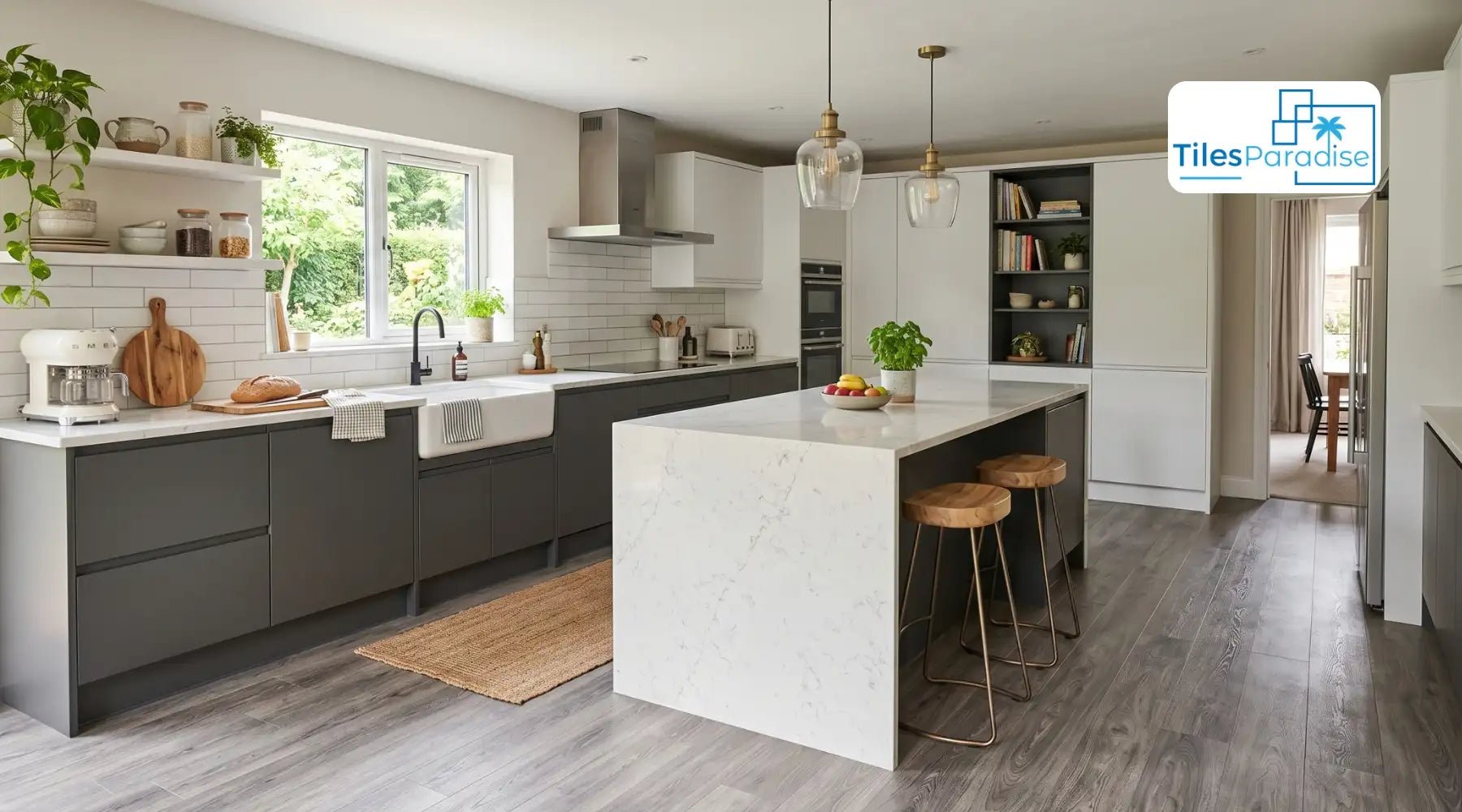
Finding the ideal floor involves balancing resilience and style. Installing high-performance vinyl floor tiles for kitchen with underfloor heating ensures long-term comfort and structural stability.
Modern culinary spaces demand surfaces that resist spills, foot traffic, and temperature shifts. This comprehensive guide explores optimal specifications for waterproof security, slip resistance, and thermal efficiency.
Vinyl Tiles for Kitchen: Why Is Waterproofing Critical?
Selecting resilient vinyl tiles for kitchen environments protects subfloors from structural moisture damage. Unlike standard kitchen floor vinyl roll alternatives, modern modular units feature tight seams that prevent water penetration. Structural moisture resistance prevents the growth of mold or mildew beneath the floor surface.
Traditional options like lino for kitchens often struggle with standing water near sinks or dishwashers. Modern luxury vinyl for kitchen applications utilizes advanced synthetic layers to achieve total water impermeability. Exploring specialized kitchen floor tiles provides excellent comparisons regarding waterproof ratings.
Waterproofing also simplifies maintenance routines by allowing regular wet mopping without risk of warping. Spillages from cooking oils or dropped ingredients remain on the surface for easy cleanup. This performance level makes lvt kitchen floor tiles a highly practical choice for busy households.
Luxury Vinyl Tile Kitchen Floor: What Is the Optimal Wear Layer Thickness?
Durability within a busy luxury vinyl tile kitchen depends heavily on the top protective layer. The wear layer thickness determines how well the floor resists scratches, scuffs, and deep dents. Heavy domestic foot traffic requires a minimum thickness specification of 0.55mm to guarantee longevity.
Commercial-grade variants often feature a 0.7mm wear layer, providing maximum protection against dropped utensils or pet claws. Identifying the best luxury vinyl tile for kitchen performance requires checking this scratch-resistant top coat. High-traffic culinary zones inevitably experience wear, making thick protective coatings absolutely essential for long-term satisfaction.
Thinner wear layers found in low-cost options may wear through within a few years, exposing the printed design underneath. Investing in premium luxury vinyl tile kitchen floor solutions prevents premature replacement costs. Proper specification choice matches the daily demands of the cooking environment.
LVT Kitchen Flooring: How Do Anti-Slip Ratings Prevent Accidents?
Slip resistance is a paramount safety consideration when installing lvt kitchen flooring in wet zones. Standard European tests categorize slip resistance using R-ratings, ranging from R9 up to R13. Kitchen environments require a minimum rating of R10 to prevent slips on occasional liquid spills.
Selecting an appropriate kitchen lvt flooring style with textured surfaces enhances foot traction significantly. Comparing options against non slip lino for kitchen products reveals superior structural stability in modular vinyl forms. Safety ratings remain a critical attribute when specifying flooring for homes with elderly residents or young children.
Spillages occur frequently during food preparation, making matte or textured finishes highly desirable. Investing in safe kitchen vinyl tiles flooring minimizes slips without compromising aesthetic appeal. Prioritizing safety specifications creates a secure cooking environment for everyone.
Vinyl Floor Tiles for Kitchen with Underfloor Heating: What Are the Thermal Limits?
Combining lvt kitchen floor systems with modern heating requires careful adherence to manufacturer temperature limits. Most luxury vinyl tile flooring kitchen variants safely tolerate a maximum surface temperature of 27 degrees Celsius. Exceeding this thermal threshold can cause structural distortion, plank separation, or adhesive failure.
Efficient heat transfer depends on the total thickness and thermal resistance of the lvt for kitchen floors. System installers must verify that the combined tog rating of the vinyl and underlay does not exceed 0.15 tog. For alternative heated areas, evaluating specialized porcelain kitchen tiles offers enhanced thermal conductivity without temperature restrictions.
|
Material Type |
Max Temperature Limit |
Optimal Tog Rating |
Heat Retention Level |
|
Luxury Vinyl Tiles (LVT) |
27°C |
0.10 to 0.15 |
Moderate |
|
Porcelain Materials |
No Limit |
0.05 to 0.08 |
High |
|
Ceramic Elements |
No Limit |
0.06 to 0.09 |
Moderate to High |
Uniform heat distribution prevents hot spots that could compromise the integrity of kitchen lvt installations. Electric mesh systems require a suitable smoothing compound layer to protect the vinyl underside from direct contact. Water-based underfloor heating arrays integrate perfectly with vinyl plank tiles for kitchen use due to gradual temperature regulation.
Kitchen Luxury Vinyl Plank vs Porcelain Options: Which Durability Wins?
Choosing between luxury vinyl plank kitchen options and traditional ceramics requires evaluating life-cycle durability. While luxury vinyl plank for kitchen designs offers a softer underfoot feel, stone-based alternatives provide superior scratch resistance. Hardwearing ceramic kitchen tiles resist extreme heat and sharp impacts without scratching.
Heavy cast iron pans can dent or gouge lvp kitchen flooring if dropped from counter height. Comparing lvp flooring kitchen choices with masonry options highlights clear trade-offs regarding structural hardness. Maintenance preferences also vary, as vinyl requires specific cleaners to maintain the factory wear layer coating over time.
Porcelain also eliminates worries regarding chemical discoloration from spilled vinegars or strong citrus juices. For open-plan zones, combining different materials provides balanced performance characteristics. Selecting the right foundation ensures structural longevity across the entire food preparation zone.
Kitchen Flooring LVT Aesthetics: What Design Options Enhance Open Plan Layouts?
Modern kitchen flooring lvt styles replicate natural wood grains, stones, and abstract geometric patterns with striking realism. Open-plan layouts benefit from cohesive flooring that flows seamlessly from the cooking zone into living spaces. Combining varied textures creates distinct functional zones within a single wide expanse.
Selecting coordinated wall claddings balances the expansive floor area and enhances the complete design aesthetic. Utilizing kitchen wall tiles creates beautiful vertical focal points that complement the chosen floor colors. Thoughtful design integration ensures a sophisticated look across all surfaces.
cream gloss kitchen wall tiles splashback
Creating a luminous cooking area often involves reflecting light via polished vertical surfaces. Installing a cream gloss kitchen wall tiles splashback pairs beautifully with neutral kitchen lino tiles or warmer wood-effect planks. The glossy finish enables quick wipe-clean maintenance behind cookers while adding visual depth to small kitchens.
best large format porcelain kitchen floor tiles for open plan kitchens with underfloor heating
Large open spaces often achieve a more premium feel when using minimal grout lines. Specifying the best large format porcelain kitchen floor tiles for open plan kitchens with underfloor heating optimizes both thermal output and spatial continuity. These large slabs retain heat for extended periods, reducing overall energy consumption in large modern homes.
Self Adhesive Kitchen Floor Tiles: Are Peel and Stick Solutions Reliable?
Homeowners seeking fast renovations often consider self adhesive kitchen floor tiles for budget-friendly updates. These sticky floor tiles for kitchen application require an incredibly smooth, dust-free subfloor to ensure long-term adhesion. Any residual moisture or unevenness in the substrate will cause the edges to lift over time.
While adhesive floor tiles for kitchen projects offer convenience, the bond can degrade under heavy foot traffic. Exposure to ambient heat from ovens or direct sunlight can also soften the pre-applied glue backing. For areas requiring absolute permanence, traditional glue-down lvt tiles kitchen products provide a far more robust solution.
Temporary installations benefit from peel-and-stick convenience, but long-term kitchen environments demand stronger mechanical or chemical bonds. Evaluating full-spread adhesives ensures the flooring remains immovably flat during daily kitchen activities. Choosing heavy-duty alternatives protects the initial property investment.
Interlocking Vinyl Floor Tiles Kitchen: How Does Click-Lock Flooring Perform?
Floating installations utilizing interlocking vinyl floor tiles kitchen designs offer a weld-free glueless alternative. These kitchen floor vinyl planks clip together securely, creating a continuous waterproof surface across the room. The click-lock mechanism allows for rapid installation without the mess of spreadable glues.
Subfloor preparation remains vital, as uneven floorboards can cause the delicate click joints to break under pressure. Utilizing a dense, compression-resistant underlay helps cushion the lvp flooring for kitchen planks against minor subfloor imperfections. This structural approach ensures the joints remain tightly closed against surface spills.
Click-lock luxury vinyl flooring for kitchen use provides excellent sound dampening compared to loose-laid sheets. Damaged planks can also be unclicked and replaced individually if severe scratching occurs over time. This repairability adds considerable value to active family households.
Vinyl Tiles for Kitchen Walls: Can Floor Coverings Be Used Vertically?
Applying lightweight vinyl tiles for kitchen walls is a growing trend among DIY decorators seeking rapid transformations. Standard vinyl kitchen tiles wall installations offer excellent wipe-clean utility around dining tables or seating zones. However, proximity to high-heat hobs requires heat-resistant barriers to prevent melting or warping of the synthetic vinyl material.
Traditional ceramics like classic metro tiles remain superior for direct stove backsplashes due to absolute fireproofing. Comparing vertical vinyl options with wet zone coverings highlights clear performance boundaries. For bathrooms, using specialized luxury bathroom vinyl or heavy-duty luxury bathroom vinyl flooring ensures moisture protection.
Understanding material limitations prevents costly installation mistakes in high-heat zones. While vinyl serves floor surfaces excellently, walls benefit most from rigid, temperature-resistant claddings. Balancing these materials delivers both safety and aesthetic longevity.
Kitchen Luxury Vinyl Tile Flooring Palette: Which Color Choices Maximize Light?
Spatial perception depends heavily on the selected tones within the kitchen luxury vinyl tile flooring layout. Installing light-reflective white kitchen tiles expands tight floor plans, making narrow cooking zones feel significantly airier. Coordinated palettes bridge the gap between floor surfaces and cabinetry finishes beautifully.
For a softer look, sophisticated grey kitchen tiles provide a contemporary backdrop that hides minor dust tracking efficiently. Neutral preferences often favor warm beige kitchen tiles or classic cream kitchen tiles to build a cozy, welcoming atmosphere. These subtle tones absorb light gently while maintaining a clean, open aesthetic.
Color Palette Visual Guide:
White --> Maximizes brightness and expands small rooms
Grey --> Delivers modern, neutral, low-maintenance backdrops
Beige --> Generates warmth and timeless organic textures
Dark --> Provides high-contrast drama for large spaces
Bold design statements can be achieved by introducing deep black kitchen tiles or rich blue kitchen tiles for high-contrast drama. Unique options like green kitchen tiles or accents of gold kitchen tiles create unforgettable focal zones. Selecting the appropriate hue alters the mood and spatial dynamics of the heart of the home.
Final Insights
Selecting the ideal floor involves balancing underfloor heating compatibility, moisture safety, and long-term wear resistance. Aligning material specifications with household traffic patterns guarantees a highly functional cooking environment.
Choosing premium vinyl plank configurations or durable ceramic alternatives requires careful subfloor preparation. Selecting verified slip ratings and proper wear layer thicknesses ensures a stunning surface that withstands daily domestic demands over decades.