





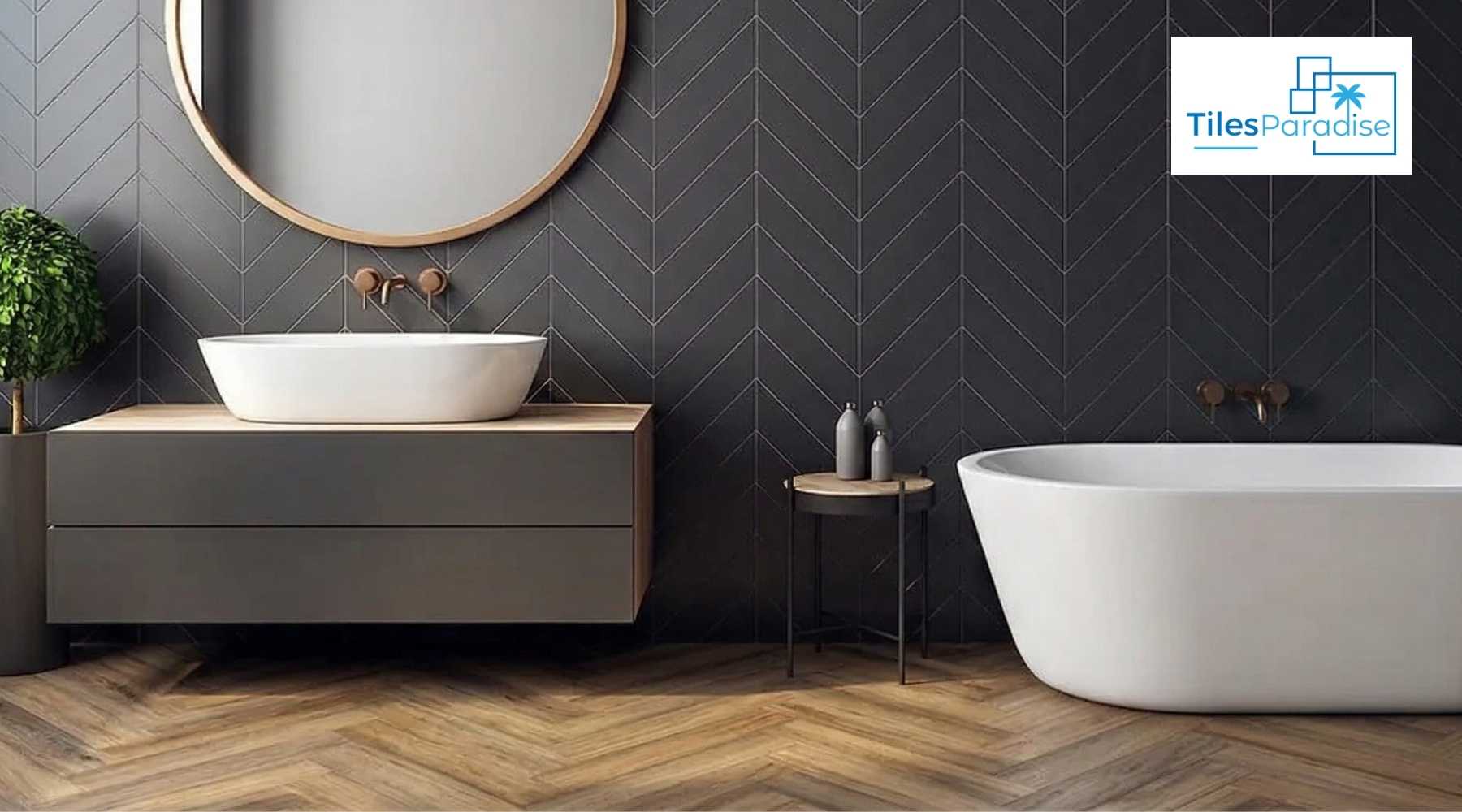
Few tile layouts match the craftsmanship and visual energy of a herringbone tiles bathroom design. The interlocking V-shaped zigzag pattern, named after the skeletal bone structure of a herring fish, transforms ordinary rectangular tiles into a statement surface that suits everything from compact UK en-suites to full-width family bathrooms. Whether the goal is a sleek modern shower enclosure or a period-style wet room, the herringbone arrangement elevates both floor and wall tiles beyond a standard grid lay.
The appeal of the herringbone bathroom tile pattern has only grown in recent years, driven by its appearance in boutique hotels, interior design magazines, and renovation projects across the UK. Available in ceramic, porcelain, marble effect, stone effect, and wood-effect finishes, herringbone tiles cover a wide price range, making the look accessible to homeowners, trade contractors, and bathroom designers working to very different budgets.
Herringbone Pattern Mechanics: Angle, Direction & Visual Effect
A herringbone layout is created by placing rectangular tiles at a 45-degree angle in alternating directions, so each tile end meets the mid-point of the adjacent tile's long edge. The result is a continuous, interlocking V-shape that reads very differently from a brick-bond or straight lay.
The direction of the pattern significantly changes the perceived proportions of a bathroom:
• Horizontal herringbone draws the eye across a narrow wall, making tight spaces feel wider.
• Vertical herringbone carries the eye upward, increasing the apparent ceiling height.
• Diagonal herringbone at 90 degrees delivers a graphic, contemporary twist on the standard 45-degree angle.
• Double-stack herringbone uses pairs of tiles per row, adding visual weight and depth, suited to longer plank formats.
Herringbone differs from chevron tiling: a true chevron uses tiles cut at a mitre angle so the zigzag joins in a clean, unbroken point. Herringbone uses straight-cut rectangular tiles with a stepped overlap, meaning standard metro tiles, porcelain planks, and SPC vinyl formats all work without custom cuts at every joint.

Best Tile Materials for a Herringbone Tiled Bathroom
Material selection is the most consequential decision in a herringbone tiled bathroom project. Each material brings distinct performance characteristics, surface finishes, and price points.
|
Material |
Best Use |
Slip Rating |
Price Range (per m²) |
Key Benefit |
|
Ceramic |
Walls |
R9 |
£10–£30 |
Lightweight, easy to cut |
|
Porcelain |
Floors & walls |
R10–R11 |
£25–£70 |
High density, moisture-resistant |
|
Marble effect porcelain |
Feature walls |
R10 |
£35–£80 |
Luxury look, no sealing needed |
|
Natural stone |
Walls & wet rooms |
R11 (textured) |
£50–£150+ |
Genuine texture, unique veining |
|
Wood-effect porcelain |
Floors |
R10 |
£30–£65 |
Warm aesthetic, fully waterproof |
|
SPC click vinyl |
Floors |
High |
£20–£45 |
Floating fit, ideal for renovations |
|
Glass mosaic |
Shower feature walls |
N/A |
£40–£90 |
Light reflective, colour depth |
For UK bathrooms with underfloor heating, porcelain is the preferred material: low thermal resistance, high density, and no risk of warping under heat cycles. Natural stone offers genuine texture and unique veining but requires pre-sealing before grouting, a step many fitters highlight to avoid grout staining the porous surface.
Herringbone Bathroom Wall Tiles: Feature Walls, Showers & Half-Height Layouts
Applying herringbone bathroom wall tiles delivers the most immediate visual impact for the least floor area disruption, making wall treatments the most popular starting point for bathroom renovations in the UK.
Common wall applications include:
• Full-height herringbone behind a freestanding bath or basin creates a dedicated focal point without tiling the entire room.
• Shower enclosure herringbone, typically in a glossy or marble-effect porcelain, adds depth to a wet zone and is easy to maintain on a flat, contained surface.
• Half-height herringbone wall tile, finished with a coordinating tile trim at the dado level, is a practical solution for smaller UK bathrooms where a full surround would feel overwhelming.
• Vertical herringbone on a narrow chimney breast or awkward alcove elongates the architectural feature and adds character without structural changes.
For herringbone wall tiles bathroom projects, metro tiles in 10x20cm and 7.5x15cm formats remain the most widely used option in the UK. The compact proportions of metro tiles produce a high tile count per square metre, increasing the density and intricacy of the zigzag. Larger porcelain planks, such as 300x600mm or 200x1200mm formats, produce a bolder, more contemporary herringbone with fewer grout lines.

Wood-Effect Herringbone Bathroom Flooring: SPC Vinyl Formats
A herringbone wood tile bathroom floor draws on the tradition of parquet flooring, reinterpreted with modern waterproof materials suited to a wet environment. Wood-effect SPC (Stone Polymer Composite) click vinyl in herringbone plank formats delivers the warmth and character of hardwood without the moisture sensitivity — making it one of the most practical flooring solutions for UK bathrooms.
The 640x128mm plank format is the standard UK herringbone tile size for SPC products, producing a true 5:1 length-to-width ratio that replicates traditional parquet proportions. Available finishes cover the full tonal spectrum of contemporary interior design:
• Luxura Toranto Oak — a warm mid-oak colourway with subtle grain movement, well suited to neutral and Japandi-style bathrooms.
• Luxura Riverside Oak — a cooler, greyed oak tone that pairs naturally with anthracite sanitaryware and matte black fixtures.
• Luxura Ash Grey SPC — a pale, light-reflective ash tone that maximises perceived space in compact UK en-suites and cloakrooms.
• Luxura Seagrove Oak — a coastal-toned driftwood finish with pronounced grain texture, ideal for relaxed or organic interior schemes.
• Luxura Portofino Oak — a rich, deep-toned oak suited to darker, contrast-led bathroom palettes.
• Luxura Coral Oak — a warm blonde-to-amber gradient that brings earthy, biophilic character to contemporary bathroom floors.
• Luxura Beachfront Oak — a whitened, bleached-oak effect that works with white sanitaryware and cool-toned grout finishes.
At 6.5mm thickness, the Luxura SPC range sits within the range compatible with most UK bathroom door clearances without sub-floor build-up. The click-lock system eliminates the need for adhesive, reducing installation time and making the product suitable for a floating installation over existing sound substrates.
Grout Colour Selection: How It Changes the Herringbone Pattern's Character
Grout colour is often an afterthought in a herringbone tile bathroom project, yet it may be the single decision with the greatest visual impact on the finished result. The same tile can deliver completely different aesthetics depending on grout selection.
|
Grout Colour |
Tile Colour Pairing |
Aesthetic Effect |
Ideal Bathroom Style |
|
Bright white |
White gloss metro |
Seamless, airy, minimal grout visibility |
Scandi, minimalist, all-white |
|
Soft grey |
White or pale grey tile |
Subtle definition, low contrast |
Contemporary, Japandi, neutral |
|
Mid grey |
Stone effect porcelain |
Pattern visible without drama |
Modern classic, neutral |
|
Anthracite / dark grey |
White or light tiles |
High contrast, bold zigzag definition |
Industrial, modern, graphic |
|
Black |
White tiles |
Maximum contrast, vintage-industrial feel |
Art Deco, statement, boutique hotel |
|
Warm putty/beige |
Warm stone or terracotta |
Tonal harmony, recessive grout |
Mediterranean, organic, warm-neutral |
|
Sage green |
Off-white or ivory tiles |
Soft contrast, biophilic character |
Botanical, contemporary, 2025 trend |
For herringbone bathroom tiles laid on floors where slip resistance matters, a mid-toned grout that blends with the tile surface is preferable to high-contrast colours, which can accentuate any minor alignment variance in the zigzag. On walls, contrast grout works in favour of the pattern's geometry.

Herringbone Tile Size vs Bathroom Dimensions: What Works in Small UK Spaces
Tile size proportionality to room size is a frequently overlooked variable. In the UK, where bathroom dimensions are typically constrained, the average family bathroom measures approximately 2.4m x 1.7m; tile size decisions directly affect the visual density and spatial perception of the finished room.
• 75x150mm and 100x200mm tiles: High tile count creates intricate, detailed herringbone suited to compact cloakrooms and en-suites.
• 150x300mm tiles: The most versatile mid-range size. Produces a balanced herringbone scale for standard UK family bathrooms.
• 200x400mm and 300x600mm tiles: Fewer grout lines, more graphic zigzag. Best suited to larger bathrooms and wet rooms where the oversized geometry can breathe.
• 600x1200mm planks: Only suitable for very large walk-in wet rooms. Requires high-precision levelling and significantly increases material waste at cut edges.
In small bathrooms, a common design solution is to reserve the herringbone pattern for a single feature wall or shower zone, while using a larger-format plain tile on the remaining surfaces. This reduces visual complexity without sacrificing the pattern's impact, and controls the overall tile budget.
Herringbone Bathroom Tile Cost: Material & Labour Budgeting in the UK
Budgeting accurately for a herringbone bathroom wall tile or floor installation requires accounting for both material cost and the pattern premium on labour. Herringbone installations take longer than straight-lay or brick-bond layouts due to the increased number of angled cuts and the need for precise alignment throughout.
|
Cost Component |
Standard Straight Lay |
Herringbone Layout |
Notes |
|
Tile material (ceramic) |
£10–£30/m² |
£10–£30/m² |
Material cost unchanged |
|
Tile material (porcelain) |
£25–£70/m² |
£25–£70/m² |
Material cost unchanged |
|
Labour (walls) |
£30–£50/m² |
£45–£70/m² |
Pattern adds 20–30% to labour |
|
Labour (floors) |
£25–£45/m² |
£40–£65/m² |
More cuts, tighter tolerances |
|
Adhesive & grout |
£10–£20/m² |
£10–£20/m² |
Standard allowance applies |
|
Material wastage allowance |
~10% |
15–20% |
Extra offcuts at angled edges |
|
Total fitted (mid-range porcelain) |
£65–£95/m² |
£80–£130/m² |
UK average 2026 |
For a standard UK family bathroom (approximately 8–10m² of wall and floor area combined), a mid-range herringbone tile bathroom installation using porcelain tiles typically costs between £800 and £1,300 in materials, plus £600 to £1,200 in labour, giving a total project range of £1,400 to £2,500 depending on tile selection, preparation requirements, and regional labour rates. London and the South East typically run 20–30% above the national average.
Buying tiles at wholesale trade pricing reduces the material component significantly, often by 25–40% compared to standard retail. For contractors and trade buyers managing multiple bathroom renovation projects, ordering the full herringbone plank or tile range from a UK wholesale supplier ensures batch-matched stock across multiple sites without the colour variance risk that comes with multiple smaller retail orders.
Patterned Bathroom Floor Tiles: Trends & Buying Guide
Herringbone sits within a broader family of patterned bathroom floor layouts that have seen a significant revival in UK interior design over the past three years. From encaustic-style cement look tiles to geometric repeats and Moroccan-inspired shapes, patterned flooring options offer a highly personalised alternative to plain field tiles.
For a full overview of current pattern tile trends, size guides, and specification advice relevant to the UK market, the patterned bathroom floor tile guide covers material compatibility, installation requirements, and the key design decisions for each popular pattern type.
Stone Effect Bathroom Tiles: Luxury Natural & Porcelain Styles
One of the most popular material aesthetics for a herringbone bathroom tiles project is the stone effect finish, a porcelain surface designed to replicate the natural variation, texture, and veining of materials like travertine, slate, limestone, and marble.
Stone effect porcelain brings the visual richness of natural stone without the maintenance requirements of sealing, the weight loading concerns of full natural stone, or the price premium associated with quarried materials.
For a comprehensive look at available stone effect formats, vein patterns, surface finishes, and the differences between natural and porcelain stone tiles in bathroom applications, explore the stone effect bathroom porcelain tile guide.
Herringbone Tile Bathroom Installation: Key Preparation Steps
A professional installation is the difference between a herringbone pattern that looks intentional and one that reveals alignment errors at every angle. The following preparation steps are consistently cited by UK tilers as the most important factors in achieving a high-quality finish:
• Set out the starting line precisely: The central axis must be established before a single tile is placed. For floor layouts, find the true centre of the room and dry-lay the full herringbone run before applying adhesive.
• Use a levelling system: Lippage (uneven tile edges) is more visible in herringbone than any other layout because the angled edges draw attention to surface variation. Tile levelling clips and wedges are near-essential for floor installations.
• Seal porous tiles before grouting: Natural stone and some textured porcelain tiles must be sealed with an appropriate penetrating sealer before grouting. Skipping this step allows grout pigment to stain the tile face, particularly on light-coloured surfaces.
• Add 15–20% to tile quantities: The angled cuts at every perimeter edge and around bathroom fixtures generate more offcuts than a standard grid lay. Under-ordering is one of the most common and most costly mistakes in herringbone bathroom projects.
• Use flexible waterproof adhesive in wet zones: Shower areas and wet rooms require a flexible, waterproof-rated tile adhesive (S2 class) and tanking of the substrate before tiling to prevent moisture ingress over time.
Final Thoughts
The herringbone tiles bathroom pattern remains one of the most durable and versatile design choices available to UK homeowners and trade professionals. The interlocking zigzag layout works equally well on walls and floors, in compact cloakrooms and large wet rooms, and across every material category from budget ceramic metro tiles to premium stone effect porcelain. Grout colour, tile size, and installation direction each offer a level of customisation that makes the same fundamental pattern feel entirely different from room to room.
For trade buyers and wholesale customers, the herringbone format, whether in ceramic wall tile, porcelain floor tile, or SPC click vinyl plank, is consistently in high demand across UK bathroom renovation projects at every price point. Specifying accurate quantities, matching batch numbers across orders, and selecting materials with the correct slip rating and moisture resistance for the intended application are the three decisions that most reliably protect both the installation quality and the long-term performance of any herringbone tiled bathroom.