





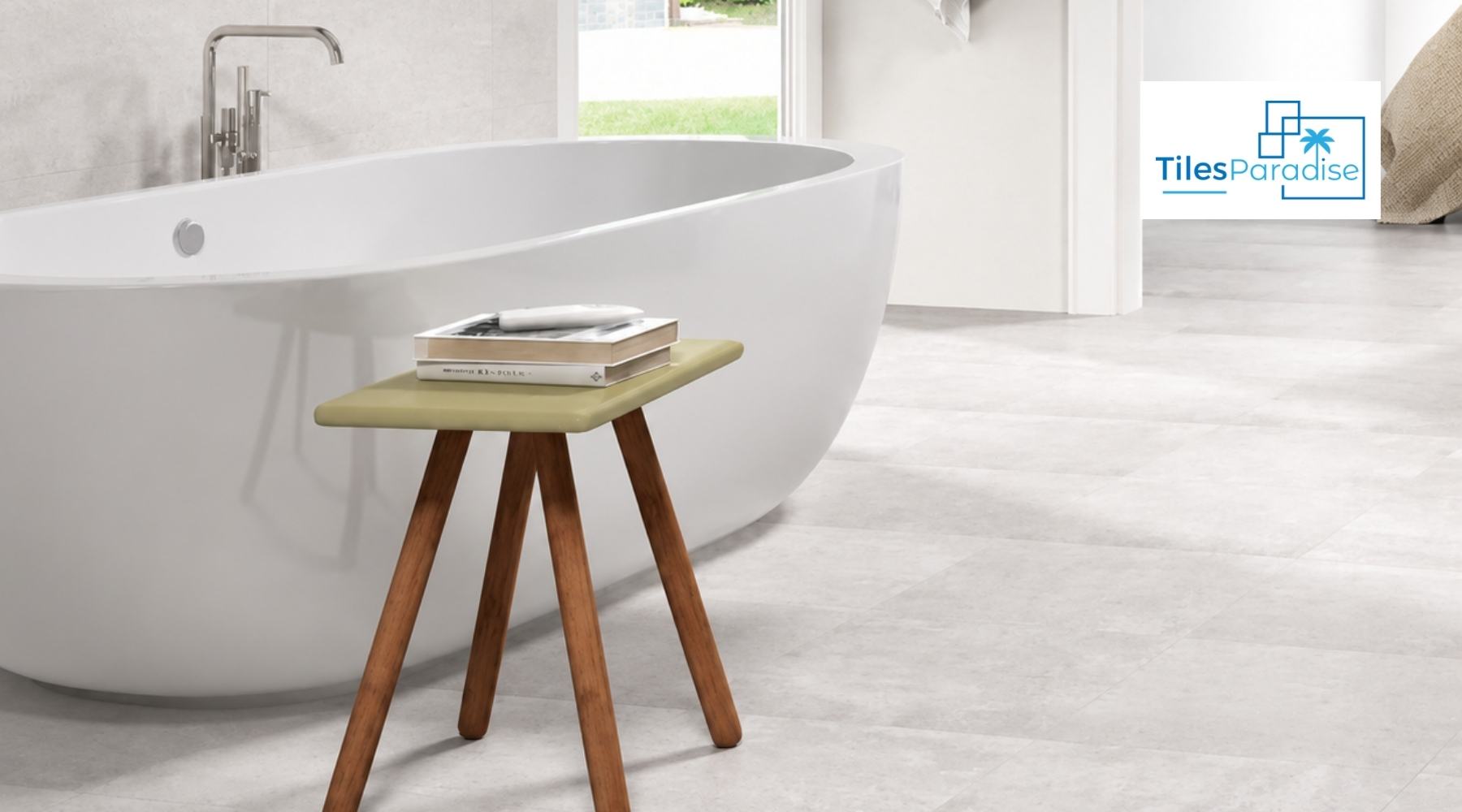
Choosing the best non-slip ceramic floor tiles for kitchen and bathroom starts with one rule: grip must match moisture. Large format ceramic floor tiles in matte finish nail that brief, giving UK homes wide coverage and slip-safe flooring ceramic tiles built for daily wear.
Matte ceramic tile flooring hides spots and smudges better than polished surfaces. From family kitchens to ensuites, ceramic floor tiles UK buyers favour share three traits: low water absorption, scratch strength, and textured tops that grip wet feet.
What Defines Non-Slip Ceramic Floor Tiles for Wet Rooms?
Non slip ceramic floor tiles use textured glazes, micro-grit additives, or structured surface profiles to raise friction under wet feet, and UK suppliers tag the result with R-ratings from R9 through R13 alongside DIN 51130 lab references. R10 covers living rooms and bedrooms, R11 fits kitchens, ensuites, and shared bathrooms, while R12 and R13 belong on outdoor patios, pool surrounds, and commercial wet zones with constant water exposure.
For non slip ceramic bathroom floor tiles, R11 grip blocks slips even when soapy water lands, and a wider non-slip floor tile range covers grip-rated picks that suit pet homes, family bathrooms, ageing-in-place upgrades, and any non slip ceramic floor tiles for bathroom shopping list.
How Does Matte Finish Boost Slip Resistance and Daily Comfort?
Matte glaze scatters light at the micro level, cutting glare and lifting surface friction at once, which is why a matte ceramic floor tile feels safer barefoot near showers, baths, and busy hob zones. Compared with polished ceramic tile flooring, the matte coefficient of friction stays higher when soapy water, cooking oil, or condensation lands on the surface.
Daily upkeep also drops, because the diffused finish hides footprints, paw prints, and fine scratches that polished glazes amplify under bright kitchen LEDs.
Which Large Tile Size Works Best for Open-Plan Kitchens?
Large ceramic floor tiles in 60x60cm, 60x120cm, or 80x80cm formats slash grout joints, making rooms feel bigger and far quicker to mop end to end. For ceramic tile kitchen floors, an 80cm square cuts grout lines by up to 75% versus 30cm squares, creating the slab-like flow that open-plan layouts and kitchen-diners demand across UK new builds and renovations.
Browse the wider floor tile collection for size, shade, and finish pairings that suit modern British kitchens and broken-plan ground floors.
Porcelain v Ceramic Floor Tiles: Which Wins for Wet Areas?
Porcelain v ceramic floor tiles often confuses UK shoppers, yet the split stays simple once water absorption enters the spec sheet. Porcelain fires hotter at 1200-1300°C, absorbs under 0.5% water, handles UK frost, and suits showers, wet rooms, and outdoor ceramic floor tiles installs, while standard ceramic absorbs 3-7% and performs best on indoor walls and dry-leaning floors such as living rooms and bedrooms.
For wet kitchen or bathroom zones, vitrified porcelain rated R10-R11 holds the durability edge, resists staining, and shrugs off moving washing machines or fridge wheels better than entry-grade ceramic.
PEI Rating and R-Value Guide for UK Tile Buyers
PEI grades the abrasion resistance of glazed surfaces from PEI 1 (light wall traffic) through PEI 5 (heavy commercial use), and each tile ceramic floor tile pack prints PEI and R-rating on the box for fast UK comparison. A ceramic tile on kitchen floor with steady foot traffic should sit at PEI 4 or PEI 5, while powder rooms and ensuites can drop to PEI 3 without trouble.
Pairing PEI scores with R10 or R11 slip ratings gives buyers a balance of abrasion strength, scratch resistance, and damp-zone grip across mixed-use UK homes.
|
Room |
Min PEI |
Min R-Rating |
Max Water Absorption |
|
Bathroom |
PEI 3 |
R10-R11 |
<3% |
|
Kitchen |
PEI 4 |
R10-R11 |
<3% |
|
Hallway |
PEI 4 |
R10 |
<3% |
|
Patio |
PEI 5 |
R11-R12 |
<0.5% |
Wood Effect, Marble Effect, and Onyx Looks for Modern Floors
Wood effect ceramic floor tiles copy oak, walnut, and ash plank patterns while adding tile durability and damp resistance, making the look ideal for ceramic kitchen floor tiles, ensuites, and hallway runs. The Ecru wood effect tile at 60x60cm partners well with Scandi-style cabinetry and warm-white grout. Richer schemes lean on marble effect floor tiles or onyx floor tiles ranges that bring veined drama without the upkeep cost of natural stone.
Best Wood Effect Floor Tiles for Bathrooms and Kitchens
Wood-look ceramic tiles thrive in damp rooms because the body stays non-porous, unlike real timber, and grain prints survive UV and steam without warping. Read the in-depth wood effect tile guide for room-by-room style picks, grout pairings, and underfloor heating notes.
Black, White, and Grey Floor Tile Choices for Small Bathrooms
Grey ceramic floor tile shades stretch from soft dove and pebble to slate charcoal, matching UK trend palettes from coastal cottages to industrial loft schemes. White expands tight ensuites, black adds depth, and chequerboard mixes turn ceramic tiles floor tiles into a timeless centrepiece for hallways, downstairs WCs, and kitchens.
Two-tone schemes paired with light grout lift small footprints instantly, even when floor tiles ceramic squares stay at 20cm or 30cm sizes for a vintage period feel.
Black and White Floor Tiles for Small Bathroom UK
Chequerboard layouts in 30x30cm or 45x45cm formats stay a UK favourite for period homes, Victorian terraces, and modern ensuites alike. Browse the full black and white guide for grid patterns, grout shades, border options, and tips on pairing wall colour with the floor.
Outdoor Ceramic Floor Tiles for Patios, Gardens, and Terraces
Outdoor ceramic floor tiles need R11 or R12 slip ratings, frost resistance, and 20mm thickness for stability on sand beds, pedestal frames, or solid screed. The outdoor floor tile range covers stone-look and concrete-look finishes built for British rain, frost cycles, and busy patio traffic. Garden designers often pick the R11 patio tiles range for terraces, BBQ corners, hot-tub surrounds, and pool decks facing wet UK winters and summer downpours alike.
How Much Do Ceramic Floor Tiles Cost and Last in UK Homes?
UK pricing for floor tiles ceramic runs from £15/m² for entry shades up to £55/m² for designer wood-look, marble-effect, or onyx finishes, and bulk packs of large ceramic floor tiles often cut the per-square-metre cost by 10-15%. Installation labour adds £30-£50/m² depending on substrate prep, screed flatness, and underfloor heating fitment, with mosaic borders and herringbone patterns sitting at the upper end.
Quality ceramic tiles for floor use last 25-50 years with grout resealing every two years, while a clickable alternative such as Regalstone honey oak plank suits rentals, attic refits, or fast-turnaround projects on tight budgets.
1. Material cost: £15-£55/m²
2. Install labour: £30-£50/m²
3. Adhesive plus grout: £6-£10/m²
4. Lifespan: 25-50 years
5. Grout resealing: every 2 years
Care Routines and Trends Shaping Ceramic Tile Choices
Big-format slabs, biophilic earth tones, fluted relief, warm terracotta nods, and book-matched veining lead UK tile trend lists from leading interior studios. Ceramic tiles on floor plans pair best when grout matches the tile body for a seamless slab look that runs cleanly across hallways, kitchens, and open-plan family rooms.
Routine care stays simple: a pH-neutral cleaner, a soft microfibre mop, and grout sealant every two years keep tile ceramic flooring fresh through decades of UK weather and family wear.
Final Insights
Large format matte ceramic floor tiles answer the core UK pain point: combining slip safety with sleek modern looks across kitchens, bathrooms, and ensuites. Pairing R10-R11 grip ratings with PEI 4-5 hardness gives floors that survive pets, prams, and party spills.
Shoppers chasing the best non-slip pick benefit from choosing by room first, finish second, and grout colour third. That order locks in safety, then style, then visual flow across larger UK floor plans and broken-plan ground floors.