
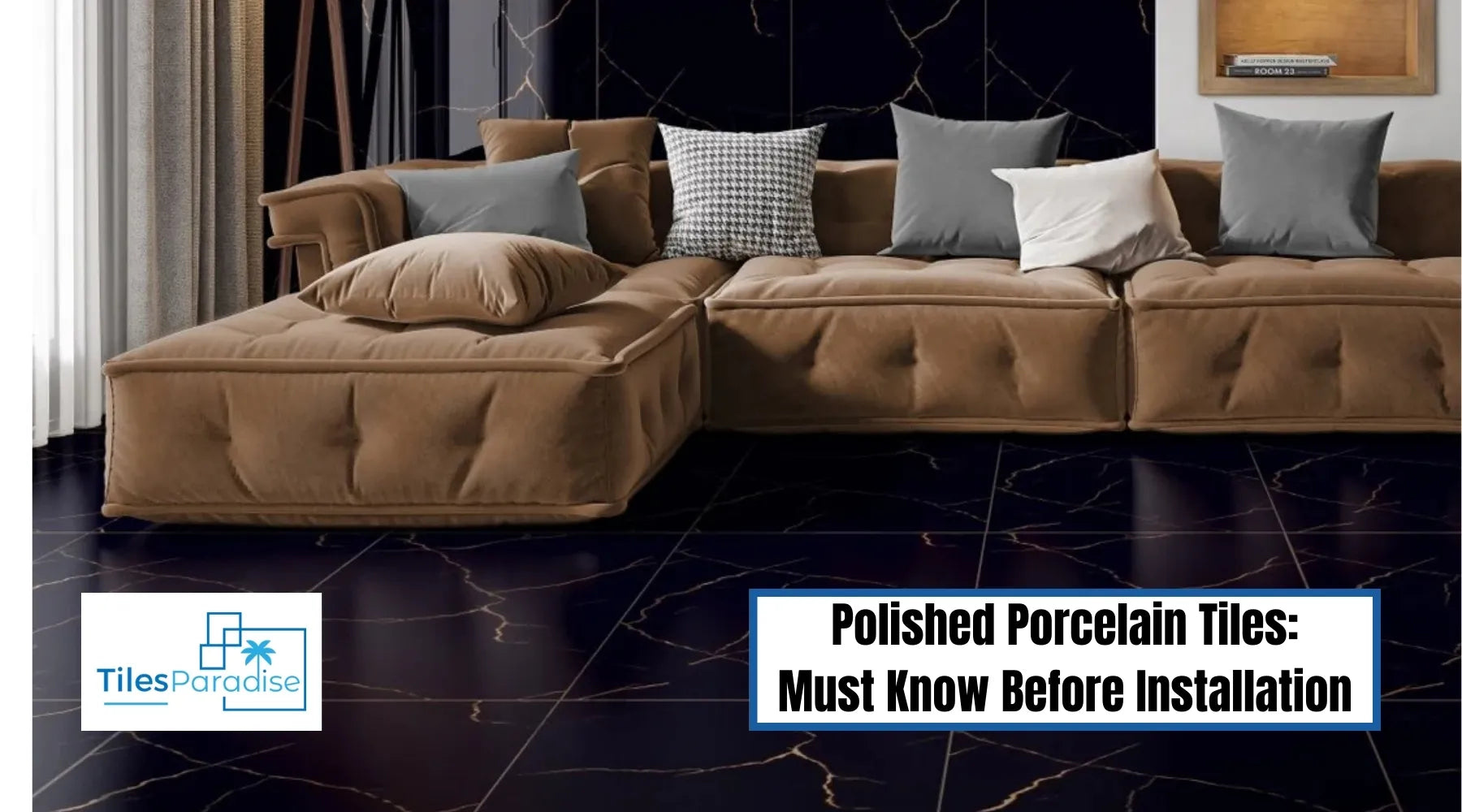
Polished porcelain floors often sell themselves in a showroom. The surface looks clean, bright, almost effortless. Real use tells a more complex story. Polishing changes the tile in ways that affect grip, light, and upkeep, not just appearance. Some advice praises low water absorption and durability. Other guidance warns about stains or slippery floors. Both positions miss the mechanics that sit just below the surface.
Polishing removes a thin layer of material through abrasive stages. That process smooths the face, exposes micro-pores, and alters surface density. Light reflects more sharply, colors appear stronger, and glare becomes possible under LEDs or spotlights. Dry footing feels stable, yet moisture or residue can shift friction quickly.
European standard EN 14411 classifies porcelain tiles with water absorption below 0.5%, even after polishing. Surface exposure still matters for stains and care. This guide explains those details clearly, so the final choice rests on behavior, not assumptions.
What Are Polished Porcelain Tiles and How Is the Surface Created
Polished porcelain tiles are high-density ceramic tiles made from refined clay and minerals, fired at very high temperatures, then finished through mechanical polishing. The result is a smooth, reflective surface that often looks similar to marble. Inside, the structure stays much tighter and harder than natural stone, which explains the lower water intake and higher load strength.

Surface Formation
The shine does not come from appearance treatments alone. It forms through controlled material removal after firing above 1200°C.
-
Mechanical grinding: Fired tiles pass under diamond polishing heads. Each stage uses finer grit to remove surface unevenness and increase surface density.
-
Honing and buffing: Abrasive tools smooth the face further until light reflects evenly.
-
Unglazed and glazed methods: Full-body porcelain is polished through its entire thickness, while glazed porcelain refines only the top glass layer.
-
Surface protection: Polishing may open microscopic pores, so factories often apply sealers to limit stain entry.
-
Edge rectification: Precision cutting produces square edges that allow narrow grout joints.
Performance Factors
Durability: Vitrified porcelain resists compression stress and surface wear. Water absorption stays below 0.5%, which supports heavy foot traffic.
Safety: Surface traction drops once water or soap sits on the tile. Wet areas need extra care, and this finish rarely suits showers or outdoor floors.
Aesthetics: Polished surfaces reflect daylight and artificial light. Smaller rooms often appear brighter, with cleaner visual lines across the floor.
How Dense and Porous Is a Polished Porcelain Tile After Polishing
Polished porcelain tiles carry a structural contradiction that often causes confusion. The tile body stays extremely dense, yet the surface becomes more open after polishing. This change comes from the same process that creates the shine. Mechanical polishing removes the original fired skin and alters surface behavior without changing the internal mass.
Core Density and Internal Structure
Porcelain tiles form from refined clay and minerals pressed under high compression stress, then fired above 1200°C. This firing stage creates a vitrified porcelain body with strong tile rigidity.
-
Bulk density: typically sits around 2380 to 2450 kg/m³, which places porcelain above standard ceramic in hardness and load resistance.
-
Mechanical strength: high flexural strength helps resist slab-tension and limits tensile fracture under normal indoor use.
-
Hardness reference: porcelain rates higher than ceramic on the Mohs scale, which answers the common question of whether porcelain is harder than ceramic.
Surface Condition After Polishing
Polishing changes the surface rather than the body.
-
Fire-skin removal: abrasive polishing stages strip away the dense outer layer formed during firing.
-
Micro-pore exposure: surface capillaries open at the face, even though internal porosity remains low.
-
Water absorption: stays below 0.5 percent, yet surface pore opening explains why stains appear more easily.
Practical Implications
Density supports durability and stone-grain stability, while surface openness affects stain behavior. The tile remains structurally strong, but the polished tile surface interacts with liquids in a different way than unpolished porcelain.
How Do Polished Porcelain Tiles Reflect Natural and Artificial Light
Polished porcelain tiles reflect light through a surface-driven physical response rather than color or pattern. The polishing stage creates an extremely smooth face that directs light in a controlled path. This behavior stays consistent because the tile body remains dense and stable after firing. Compared with ceramic, porcelain ranks higher on the Mohs scale, which supports a harder surface and steadier optical behavior under compression stress.

Mechanism Behind Light Reflection
Light reflection depends on surface condition more than pigment.
Surface smoothness: abrasive polishing stages lower surface roughness, which limits light scatter and increases mirror-like return.
Material density: high firing creates a vitrified body with strong tile rigidity and uniform stone-grain structure.
Structural strength: high flexural strength helps the surface resist slab-tension and tensile fracture that could distort reflection over time.
Manufacturing Influence on Optical Consistency
Mechanical polishing heads remove the fired skin and expose a refined surface layer. Unglazed polished porcelain reflects light directly from the body, while glazed polished tiles reflect through a hardened glass layer. Both rely on precise surface leveling to maintain even reflectivity.
Interaction with Different Light Sources
The polished surface changes the way light behaves across the floor plane, and the effect depends on the source.
Artificial light: Focused sources such as LED downlights, pendants, or chandeliers produce defined reflection points on the tile surface. The polished face returns light in a narrow direction, so fixtures appear as sharp highlights. Brightness increases, yet glare becomes noticeable once viewing angles shift, especially in rooms with multiple ceiling lights.
Natural light: Sunlight entering through windows or roof glazing spreads across the surface in a broader pattern. Reflection carries light further into the space instead of stopping near the opening. Interiors often appear brighter and visually wider during daylight hours, as the polished tile surface redirects available light more efficiently than a matt finish.
Are Polished Porcelain Tiles Slippery in Dry and Wet Conditions
Polished porcelain tiles show a clear change in safety once moisture enters the surface. Dry rooms usually present low risk, yet the same tile behaves very differently under wet conditions.
Dry conditions: controlled grip
i). Traction: A clean, dry polished surface provides sufficient friction for everyday movement in homes.
ii). Slip rating: Most polished porcelain tiles fall within R9, the lowest slip resistance class, which limits use to dry internal areas such as lounges or bedrooms.
iii). Footwear effect: Grip depends strongly on footwear. Rubber soles maintain contact, while socks or smooth leather soles reduce stability.
Wet conditions: elevated risk
i). Surface behavior: Water remains on the surface rather than soaking in, forming a thin film that reduces friction sharply.
ii). Slip risk: Wet polished tiles often test below a PTV of 25, placing them in a high-risk slip category.
iii). Contamination sensitivity: Small amounts of water, soap residue, or steam can make the surface feel slick.
Where Should Polished Porcelain Tiles Be Used and Where Should They Be Avoided
Polished porcelain tiles work best as controlled design surfaces rather than universal flooring solutions. Performance remains strong in the right locations, yet risks rise quickly outside those limits.
Suitable locations
- Living and dining areas: Large, dry rooms suit polished finishes well. The reflective surface spreads light across open spaces and supports a clean, formal interior layout.
- Feature walls: Vertical use in bathrooms, kitchens, or lounges adds depth and visual contrast without introducing slip concerns.
- Commercial interiors: Hotel lobbies, premium retail spaces, and office corridors benefit from the material’s high density and resistance to surface wear where moisture stays controlled.
- Hallways: Dry entrance corridors and internal passages gain brightness, provided tracked water stays minimal.
Areas to avoid
-
Outdoor floors: Rain, condensation, and frost reduce surface grip sharply. External zones require textured or R11-rated porcelain instead.
-
Wet areas: Shower floors, pool surrounds, and wet rooms present consistent slip risk once soap or water settles on the surface.
-
Homes with higher fall risk: Spaces used by children or older occupants demand finishes with greater traction tolerance.
- Utility spaces and kitchens: Frequent splashes and visible footprints increase upkeep demands, making polished finishes less practical despite easy cleaning.
How Should Polished Porcelain Tiles Be Cleaned Without Losing Shine
Polished porcelain tiles demand controlled cleaning because the same surface density that gives them shine also makes them sensitive to residue and abrasion. Incorrect methods do not wear the tile structurally, yet they disturb the polished face and reduce light clarity over time. Loss of shine usually links to surface film, not material failure.

Cleaning process that preserves surface clarity
1. Dry removal of grit: Loose particles create micro-abrasion under foot traffic. A soft broom, static dust mop, or vacuum set for hard floors removes debris before it applies compression stress to the surface.
2. Damp cleaning with neutral solution: Warm water mixed with a pH-neutral cleaner lifts soil without reacting with the polished tile surface. Harsh chemistry leaves deposits that interrupt surface smoothness.
3. Controlled section work: Smaller cleaning zones prevent dirty water from spreading residue across the floor.
4. Immediate drying: Residual moisture forms mineral spots and streaks once evaporation begins. A dry micro-fibre cloth restores optical consistency.
5. Light surface buffing: Gentle manual buffing aligns surface reflection without altering tile rigidity or stone-grain structure.
Suitable and unsuitable products
Neutral cleaners support gloss retention and avoid tensile fracture at the surface layer. Acidic, alkaline, wax-based, or soapy products leave films that dull light response.
Methods to avoid
Abrasive tools: Scouring pads, wire wool, and stiff brushes create permanent micro-scratches.
Strong chemicals: Bleach, ammonia, and acidic or alkaline cleaners damage the polished face and grout.
Steam cleaning: High heat can disturb factory-applied surface treatments on polished finishes.
Do Polished Porcelain Tiles Need Sealing or Extra Protection
Polished porcelain tiles differ from standard glazed porcelain because mechanical polishing exposes micro-pores at the surface that do not exist on an intact glaze layer.
Do They Need Sealing
Yes, in most cases. Sealing helps prevent liquids, fine dirt, and grout particles from settling into these microscopic openings. Without protection, surface haze or long-term staining can develop even though the tile body remains dense.
Checking for factory protection:
Many modern tiles receive a nano-sealing treatment during production. A simple test on an off-cut helps confirm this. Mark the surface with a permanent pen and wipe it after a short time using a small amount of alcohol. Easy removal usually indicates existing protection.
Grout protection:
Grout behaves differently from porcelain. Higher porosity means grout lines still require sealing, even when the tile surface itself already has treatment. This step limits discoloration and moisture-related issues.
Types of Protection
Impregnating sealers:
These penetrate exposed surface pores rather than forming a film. Surface appearance and slip behavior remain unchanged.
Surface traction treatments:
Special coatings increase grip on polished faces while keeping the reflective finish intact.
Application Tips
-
Clean thoroughly to remove polishing residues and site dust
-
Apply evenly in controlled sections
-
Remove excess before drying to prevent surface haze
How Do Polished and Matt Porcelain Tiles Differ in Performance and Care
Choosing between polished and matt porcelain involves balancing the visual impact of a high-gloss finish against the practical safety and low maintenance of a matt surface.
Comparison: Polished vs. Matt Porcelain Tiles
|
Feature |
Polished Porcelain |
Matt Porcelain |
|
Finish |
High-gloss, mirror-like, and highly reflective |
Flat, non-reflective, and often slightly textured |
|
Slip Resistance |
Low (Slippery): Especially hazardous when wet; typically rated R9 |
High (Safe): Provides superior traction; typically rated R10 to R11 |
|
Daily Maintenance |
High: Shows every smudge, fingerprint, and water spot |
Low: Naturally hides dust, smudges, and minor dirt |
|
Ease of Cleaning |
Very Easy: Smooth surface allows for effortless wiping of spills |
Moderate: Texture can trap grime, sometimes requiring a deeper scrub |
|
Scratches/Wear |
Highly Visible: The reflective surface makes fine scratches stand out |
Concealed: The non-reflective finish effectively hides minor scuffs |
|
Lighting Effect |
Brightens: Reflects light to make small or dark rooms feel larger |
Grounds: Absorbs light to create a warmer, cosier ambiance |
|
Best Locations |
Living rooms, hallways, and accent walls |
Bathrooms, kitchens, and outdoor patios |
Final Insights:
Polished porcelain tiles combine high density with a smooth, reflective face. Polishing alters surface behavior without weakening the tile body. Light response sharpens, grip changes under moisture, and residue becomes more visible during daily use.
Dry interiors benefit from added brightness and clear visual lines. Moisture reduces traction and increases maintenance demands. Correct room selection limits safety and care issues.
At Tiles paradise, guidance centres on real surface performance rather than display appeal. Finish selection follows use conditions, so appearance and function stay balanced over time.
FAQ's
1. What are the disadvantages of polished porcelain tiles?
i). Moisture lowers grip on the smooth, glossy surface. Wet floors increase fall risk in bathrooms, kitchens, and busy areas, especially in homes with children or older people.
ii). Footprints, water spots, and fine scratches remain visible on the reflective face. Floors need frequent cleaning to keep a uniform look.
iii). Polished porcelain usually costs more than matt tiles. Extra care, sealing, and maintenance can add to the overall expense.
2. Which is better, glazed or polished porcelain tiles?
Both options perform well in the right setting. Glazed porcelain tiles offer reliable durability and low maintenance for everyday spaces, while polished porcelain tiles add brightness and a refined look to dry interior rooms.
3. Are polished porcelain tiles hard to keep clean?
No. Polished and unpolished porcelain tiles clean just as easily. Both resist dirt and moisture well. The only real difference is grip. Unpolished tiles offer slightly more traction underfoot, while polished tiles show marks more clearly but wipe clean without extra effort.
4. Is polished porcelain tile shiny?
Yes. Polished porcelain tile has a high-gloss, mirror-like surface that reflects light strongly. This reflectivity helps brighten rooms and can make spaces feel larger while giving a refined, upmarket appearance.