





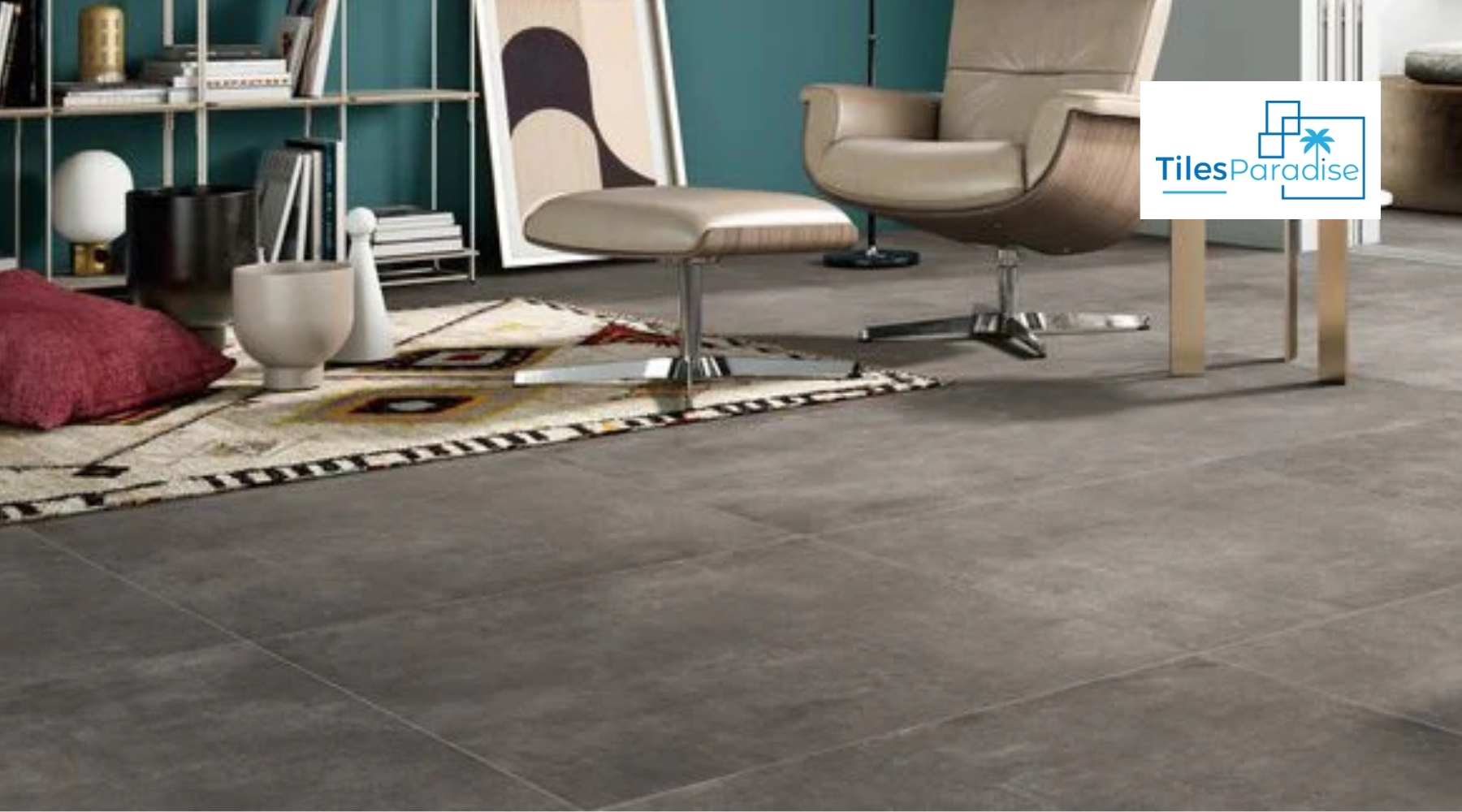
Stone effect floor tiles for kitchen and living room spaces have become one of the most popular flooring choices across UK homes in 2025 and 2026. Offering the luxury aesthetic of tile flooring natural stone without the porosity, sealing demands or higher price point, stone effect porcelain delivers a timeless finish that suits everything from Georgian terrace kitchens to contemporary open-plan extensions.
From large format slabs that define a seamless open-plan ground floor to grey stone floor tiles that sharpen a modern hallway, understanding sizes, finishes, and material differences helps every buyer make a well-informed decision. This guide covers all the key factors, drawing on the most common questions UK homeowners ask before choosing stone tiles flooring.
What Sets Stone Effect Tiles Apart from Natural Stone Floor Tiles?
Stone effect porcelain tiles replicate the visual character of natural stone tile flooring through high-definition digital printing and surface texturing, without the porosity that leaves real stone vulnerable to staining and moisture absorption. Natural stone tiles for floors require periodic sealing, typically every one to three years depending on stone type and traffic levels, whereas stone effect porcelain is non-porous from manufacture and needs no sealant at any point.
For UK kitchens and living rooms where spills, foot traffic and cleaning frequency are daily realities, this difference in upkeep is one of the most significant deciding factors when comparing stone tile floor options.
Browse the full range of stone effect floor tiles to find sizes and finishes suited to any room specification.
Which Finishes Work Best for Stone Kitchen Floor Tiles?
Finish choice shapes both the visual character and the practical performance of stone tiles for floor use in kitchens and living rooms. The four most common finish types in UK stone tile flooring are:
• Polished – high gloss, highly light-reflective, excellent for open-plan rooms and hallways; can be slippery in wet zones without an R10 rating.
• Matt – low sheen, non-reflective, the most forgiving finish for busy family kitchens; rated R9-R10 for slip resistance.
• Honed – smooth yet non-glossy, a mid-point between polished and matt, commonly used for travertine-look and limestone-look stone effect porcelain floor tiles.
• Textured/Riven – slightly irregular surface that mimics split natural stone; ideal for stone bathroom floor tiles and utility areas with high moisture exposure.
Matt and honed finishes are the safest and most practical for kitchen stone tile flooring in UK homes. Polished finishes suit living rooms and formal dining areas where heavy wet-floor exposure is unlikely. For wet rooms and outdoor areas, non-slip floor tiles with R11 ratings offer the right level of grip.
What Size Stone Floor Tiles Work Best in Open-Plan Spaces?
Large format stone effect porcelain tiles dominate open-plan kitchen and living room flooring in UK new builds and renovations for good reason: fewer grout lines across a wide surface create a seamless, uninterrupted visual flow that makes any ground floor feel more expansive.
The most popular formats are 60x120cm for rectangular large-format layouts and 120x120cm for square extra-large formats that push grout lines even further apart.
The 60x120cm rectangular large tiles collection and the 120x120cm extra-extra-large tiles collection both offer stone-effect finishes suited to open-plan layouts.
Large Format Floor Tiles for Small Rooms UK
Contrary to the assumption that large tiles only suit large rooms, large format floor tiles for small rooms in the UK consistently deliver a space-expanding effect. A 60x120cm stone effect tile laid in a straight bond or brick pattern across a compact kitchen or narrow hallway creates the visual impression of a longer, wider floor by reducing the number of horizontal lines the eye registers.
Rectified edges, meaning precisely cut square tile edges, further reduce grout joint width to as little as 1.5mm, intensifying the seamless finish. More detailed guidance on tile sizing relative to room dimensions is available in the large format floor tiles UK size and room guide.
Large Patterned Floor Tiles for Kitchen and Hallway UK
Large patterned floor tiles for kitchen and hallway spaces bring visual interest without sacrificing the spacious feel that large format tiles deliver. Stone-effect patterns with subtle veining, tonal variation or directional movement suit both classic UK period properties and contemporary open-plan builds, particularly in hallways where a statement floor creates an immediate first impression for visitors.
A full breakdown of patterned floor tile types, materials and sizes is available in the patterned floor tiles guide.
Natural Stone vs Stone Effect Porcelain: Cost and Performance Compared
One of the most common questions from UK buyers considering stone tiles flooring is how natural stone and stone effect porcelain compare across cost, maintenance and long-term performance. The table below covers the key differences:
|
Feature |
Natural Stone Floor Tiles |
Stone Effect Porcelain Tiles |
|
Cost per m² |
£40 to £150+ |
£20 to £80 |
|
Sealing required |
Yes, every 1-3 years |
No |
|
Porosity |
High (varies by stone type) |
Very low |
|
Underfloor heating |
Compatible |
Fully compatible |
|
Slip resistance |
Varies by finish |
R9 to R11 rated options available |
|
Unique tile variation |
Yes, each tile differs naturally |
Digital variation, consistent batch match |
Stone effect porcelain covers the aesthetic gap between the two materials with remarkable accuracy while removing the maintenance overhead that deters many UK buyers from committing to natural stone tile flooring. For open-plan kitchen and living room spaces where grout lines and porosity would be a constant cleaning concern, stone effect is the more practical long-term choice. Explore the marble effect floor tiles range for some of the closest natural stone replications currently available.
Are Stone Tiles Compatible with Underfloor Heating Systems?
Both natural stone tiles for floor use and stone effect porcelain tiles conduct heat efficiently, making stone tile floor installations well-suited to underfloor heating systems, which are increasingly standard in UK new builds, ground floor extensions and open-plan kitchen-diners.
Porcelain retains warmth once the system reaches its set temperature, providing consistent heat distribution without the lag associated with thicker natural stone slabs or timber subfloors. For large format stone tiles over underfloor heating, a flexible rapid-set adhesive and a decoupling membrane are recommended by professional tilers across the UK to accommodate thermal movement in the substrate.
The full range of large format floor tiles includes porcelain options confirmed as underfloor heating compatible, with product specifications listed on each tile page.
Which Grey Stone Floor Tiles Suit Modern UK Interiors?
Grey stone floor tiles represent one of the top-selling colourways for UK residential projects, driven by the sustained popularity of Scandi-influenced, industrial and minimalist interior design. A mid-tone grey stone tile floor in a polished finish suits open-plan kitchen-diners and living rooms, reflecting natural light particularly effectively in south-facing UK extensions.
Lighter grey stone effect porcelain floor tiles in 60x120cm formats work well in bathrooms and wet rooms, offering both aesthetic sophistication and the R10-rated slip resistance needed in moisture-prone areas.
Standout options include the Makrana Dark Grey 60x60cm polished porcelain tile and the Onice Real Gris 60x120cm polished wall and floor tile, both offering the depth and tonal movement of natural stone without sealing requirements. For 90x90cm square extra-large tiles in grey stone effects, the range covers both matt and polished finishes.
How Do Stone Effect Tiles Perform in Bathrooms and Wet Rooms?
Stone bathroom floor tiles are a long-standing design choice in UK bathrooms, valued for the spa-like quality they bring to a wet room, en suite or family bathroom. Stone effect porcelain tiles designed for wet areas carry specific attributes worth checking before purchase:
• R10 or R11 slip resistance rating for wet floor surfaces
• Very low water absorption rate (below 0.5% for porcelain)
• Frost-resistance for any tiles used in wet rooms with external walls or cold subfloors
• Rectified edges for minimal grout joints in wet areas where bacteria and mould can accumulate in wide grout lines
The onyx floor tiles range includes large format options with polished and matt finishes suited to high-end bathroom and wet room installations across UK properties.
What Are the Best Stone Effect Floor Tiles for Outdoor UK Spaces?
Outdoor stone tile flooring requires a fundamentally different specification to interior tiles: minimum 20mm thick porcelain, full frost resistance and an R11 anti-slip rating for any garden-facing surface regularly exposed to rain, leaf debris and sub-zero temperatures.
Stone effect outdoor porcelain tiles allow a seamless visual flow from interior kitchen floor to exterior patio, maintaining the same tonal palette and grout joint profile, which has become a defining feature of UK open-plan extensions with bifold or sliding glass doors.
Explore outdoor floor tiles and R11 patio porcelain tiles for stone-effect options rated for UK garden conditions, including frost-resistant formats in sandstone, slate and limestone effects.
Which Stone Floor Tiles Add the Most Value to a UK Home?
Stone tile floor installations are widely cited by UK estate agents and property valuers as a renovation feature that positively influences buyer perception and property valuations. Large format stone effect tiles in polished marble-effect or limestone-effect finishes create a premium first impression in kitchens, hallways and bathrooms that resonates strongly during viewings.
A consistent stone tiled floor running from kitchen through to living room, or from interior to exterior patio, signals a quality renovation and has measurable impact on sale prices particularly across London, the South East and other high-demand UK property markets.
High-impact choices that consistently draw positive buyer attention include the Venus Carrara Grey marble effect 60x120cm tile, the Athos Gold marble effect polished 60x120cm tile, and the Golden Bordeux marble stone 60x120cm wall and floor tile, all of which replicate the texture and tonal depth of high-grade natural stone tile flooring.
Final Insights
Stone effect floor tiles bridge the gap between the timeless beauty of natural stone tile flooring and the practical demands of busy UK households. With continuous advances in digital printing and surface texturing, stone effect porcelain now replicates the depth, veining and tactile character of granite, marble, travertine and limestone with a level of accuracy that makes the visual distinction from the real material almost imperceptible to the untrained eye.
Selecting the right size, finish and slip-resistance rating for each specific room transforms stone tiles flooring from a generic choice into a tailored design decision that adds lasting value to any UK property. Ordering free tile samples before purchasing remains the most reliable way to assess how a stone tile floor will look under each room's natural and artificial light conditions before committing to a full order.