





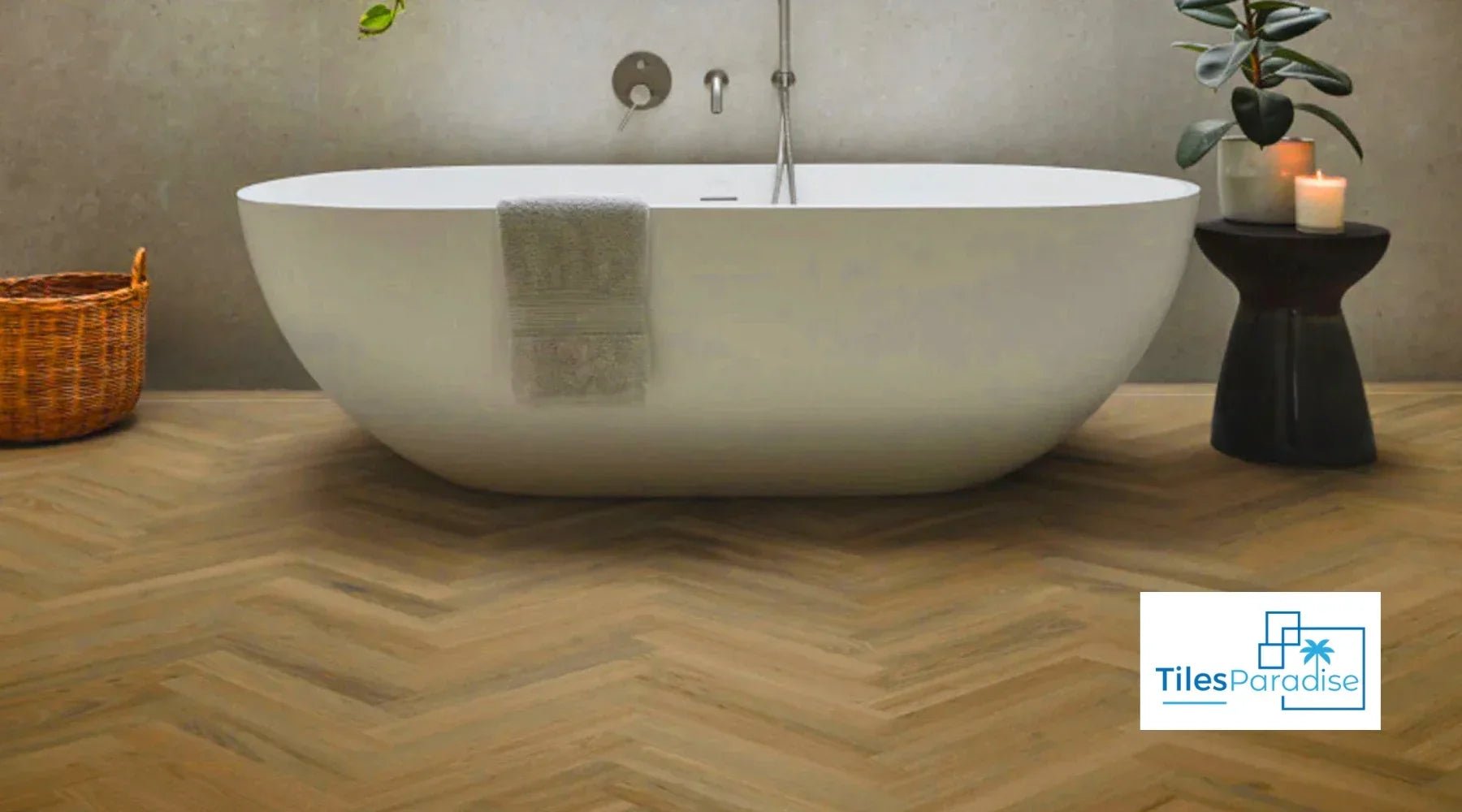
Choosing the right flooring for your bathroom is one of the most important decisions in any renovation project. A vinyl tile bathroom floor must handle constant moisture, temperature shifts, and daily foot traffic, all without losing its good looks. That is why more UK homeowners are moving away from cold ceramic and expensive natural stone, choosing luxury vinyl tiles instead.
Modern SPC click vinyl tiles combine 100% waterproof performance with realistic wood and stone effects, making them a premium yet cost-effective solution for bathrooms of every size. Whether you are renovating a compact en-suite or a full family bathroom, vinyl tiles deliver the durability, warmth, and style that this room demands.
Why SPC Core Makes Vinyl Tiles Ideal for Bathrooms?
Not all vinyl tiles are built the same. The core material determines how a tile performs in a wet, high-humidity environment. Stone Plastic Composite (SPC) is now widely regarded as the benchmark for bathroom flooring in the UK, and for good reason.
An SPC core is made from a blend of limestone powder and polyvinyl chloride, producing a rigid, extremely stable plank that will not warp, swell, or buckle when exposed to moisture. Unlike standard vinyl or laminate, SPC tiles maintain their dimensional stability even when the temperature in your bathroom fluctuates rapidly, for example, after a hot shower in a cold room.
The multi-layer construction of a quality SPC tile includes a UV-coated wear layer on top, a high-definition printed design layer, the rigid stone core, and a pre-attached acoustic underlay beneath. At 6.5mm total thickness, tiles in the Luxura Ash Grey SPC range deliver the kind of structural integrity that bathrooms genuinely require with none of the costly subfloor preparation that ceramic tiles demand.

Plank vs Herringbone: Which Format Suits Your Bathroom?
Vinyl tiles for bathrooms come in two primary formats, standard plank and herringbone — and the right choice depends on the size, shape, and overall aesthetic of your space.
Standard planks (1230×180mm) create a clean, linear layout that makes narrow bathrooms feel wider and longer rooms feel more grounded. The Luxura Coral Oak and Luxura Riverside Oak in the 1230×180mm format are popular choices for family bathrooms where a calm, flowing wood-effect finish is the goal.
Herringbone tiles (640×128mm) bring a level of visual complexity that makes even the smallest bathroom feel considered and designed. The interlocking 45-degree pattern draws the eye across the floor, giving compact en-suites a sense of space and character. From warm oak tones like Luxura Toranto Oak herringbone to cooler coastal hues like Luxura Seagrove Oak herringbone, the herringbone range gives UK buyers a genuinely premium look at a fraction of the cost of parquet or stone.
Wear Layer, Slip Rating & Safety Standards Explained
For a bathroom floor, two technical specifications matter more than anything else: the wear layer thickness and the slip resistance rating.
Wear layer: This is the clear protective coating on the surface of the tile. A 0.5mm wear layer is considered commercial-grade and will withstand heavy foot traffic, cleaning products, and dropped toiletries for years without degrading. Thinner wear layers (0.2–0.3mm) are adequate for guest bathrooms with light use, but a 0.5mm rating gives you peace of mind in a busy family bathroom.
Slip resistance: Look for an R10 rating as a minimum for any domestic bathroom. This rating indicates the tile provides sufficient grip underfoot when wet, a critical safety consideration, particularly for households with young children or elderly residents. Many SPC vinyl tiles also include a lightly textured surface that adds natural traction without compromising the visual finish.
The Luxura Portofino Oak herringbone and Luxura Beachfront Oak herringbone options combine a textured surface with a warm, natural finish, demonstrating that safety and style are not a trade-off when the product is engineered correctly.
Click-Lock Installation: DIY-Friendly Without Compromise
One of the most compelling reasons UK homeowners choose SPC vinyl tiles over ceramic is the installation process. Traditional ceramic tiles require adhesive, grout, specialist tools, and considerable drying time before the room can be used. SPC click vinyl tiles eliminate all of that.
The click-lock system works identically to quality laminate flooring. Planks or herringbone tiles slot together using an interlocking tongue-and-groove edge, creating a tight, stable floating floor that sits over your existing subfloor without glue or nails. A competent DIYer can tile an average bathroom in a single day.
A few key installation points for bathrooms specifically:
-
Subfloor flatness matters: The subfloor must be level to within 3mm over a 1.8m span. Any dips or humps can stress the click joints over time.
-
Expansion gap: Leave a 10mm gap around all walls and fixed fixtures to allow for natural thermal movement.
-
Silicone seal the perimeter: Apply a waterproof silicone bead around the edges after fitting to prevent any surface water from reaching the subfloor.
-
Allow acclimatisation: Leave tiles in the room for 48 hours before fitting so they adjust to the ambient temperature.
When you order, always add 10% to your total square meterage to account for cuts, wastage, and future repairs. This is standard practice across UK flooring suppliers and ensures you have matching tiles available if a plank ever needs replacing.

Colour & Design Trends for UK Bathrooms
The aesthetic range available in SPC vinyl tiles has expanded dramatically in recent years. High-definition printing and synchronised embossing technology now produce surface textures that closely replicate the grain, knot structure, and tonal variation of real wood, making it genuinely difficult to distinguish a quality vinyl tile from the natural material it references.
For the dominant colour stories in UK bathroom design are:
-
Warm neutrals: Ash grey, soft taupe, and sandy oak tones create a spa-inspired calm. The Luxura Ash Grey herringbone is particularly popular for this reason. It reads as neutral but adds genuine warmth to white-tiled bathrooms.
-
Coastal and natural oak: Tones referencing driftwood, pale sand, and bleached timber are strong sellers. The Luxura Coral Oak herringbone and Luxura Riverside Oak herringbone sit firmly in this category.
-
Rich character oak: Deeper, more saturated wood tones add drama and work well against dark or matte wall finishes.
Maintenance, Longevity & Value Over Time
A well-fitted SPC vinyl tile floor in a bathroom will last between 15 and 25 years with basic maintenance. The non-porous surface naturally resists mould and mildew, a significant advantage over grout lines in ceramic tile installations, which require regular treatment to prevent discolouration.
Cleaning requires nothing more than a vacuum or soft broom to remove surface debris, followed by a damp mop with a pH-neutral cleaning solution. Avoid steam mops, as prolonged high heat can affect the adhesion of pre-attached underlays. Abrasive cleaners and scrubbing pads should also be avoided, as they can gradually degrade the wear layer over time.
From a value perspective, the Luxura SPC range offers a durable, low-maintenance flooring solution at a significantly lower combined cost (materials plus fitting) than porcelain or natural stone equivalents, making it one of the strongest value propositions available to UK bathroom renovators.
Terrazzo Bathroom Tiles Styling Guide
If you love the idea of a patterned, textured floor that goes beyond wood effect, terrazzo is worth exploring. A rich design tradition with a strong presence in contemporary UK interiors, terrazzo tiles bring organic flecked patterns and a distinctly premium feel. Our terrazzo bathroom tiles guide covers everything from chip sizes and colour combinations to grout choices and styling approaches for both walls and floors.
Black & White Tiles for Luxury Bathroom
High-contrast monochrome tile schemes remain one of the most enduring choices in UK bathroom design. From classic Victorian chequered floors to graphic modern arrangements, black and white tiles work across period and contemporary settings alike. Explore design ideas, layout patterns, and surface combinations in our black and white bathroom tile guide.
Final Thoughts
Vinyl tiles for bathrooms have evolved far beyond the thin, easily damaged sheet flooring of previous decades. Today's SPC click vinyl tiles offer 100% waterproof performance, realistic natural finishes, and a DIY-friendly installation process that makes them the most practical and cost-effective bathroom flooring choice available to UK homeowners.
Whether your priority is a warm herringbone pattern for a compact en-suite or a clean plank format for a large family bathroom, the right tile is available to suit your space, budget, and style. Browse the full Luxura SPC range at Tiles Paradise UK and order free samples before you commit. Getting the colour right in your own lighting is always the best first step.
FAQ’s
-
Is vinyl tile good for bathrooms?
Yes. It's made with PVC, vinyl has a natural resistance to water and moisture. In fact, vinyl itself is a waterproof product, but the seams between planks and sheets are not. This means you'll need to be careful when installing vinyl floors in the bathroom to avoid any gaps.
-
Will mold grow under vinyl flooring?
While vinyl plank flooring is water-resistant, it is not immune to mold. Mold can develop underneath the planks due to water seeping through the seams, as well as around the edges where moisture accumulates from poor installation or lack of sealing.
-
What is better for bathroom vinyl or laminate?
Vinyl flooring is fully waterproof, making it an excellent choice for areas prone to moisture, such as kitchens, bathrooms, and basements. Unlike traditional hardwood or laminate flooring, vinyl does not absorb water, which helps prevent damage from spills, leaks, or humidity.
-
What are the pros and cons of waterproof vinyl flooring in bathrooms?
Pros: Scratch-resistant, stain-resistant, and affordable. Luxury vinyl also offers a realistic appearance and is easy to install.
Cons: While durable, vinyl may dent under very heavy items, so it's advisable to use felt pads under furniture.