


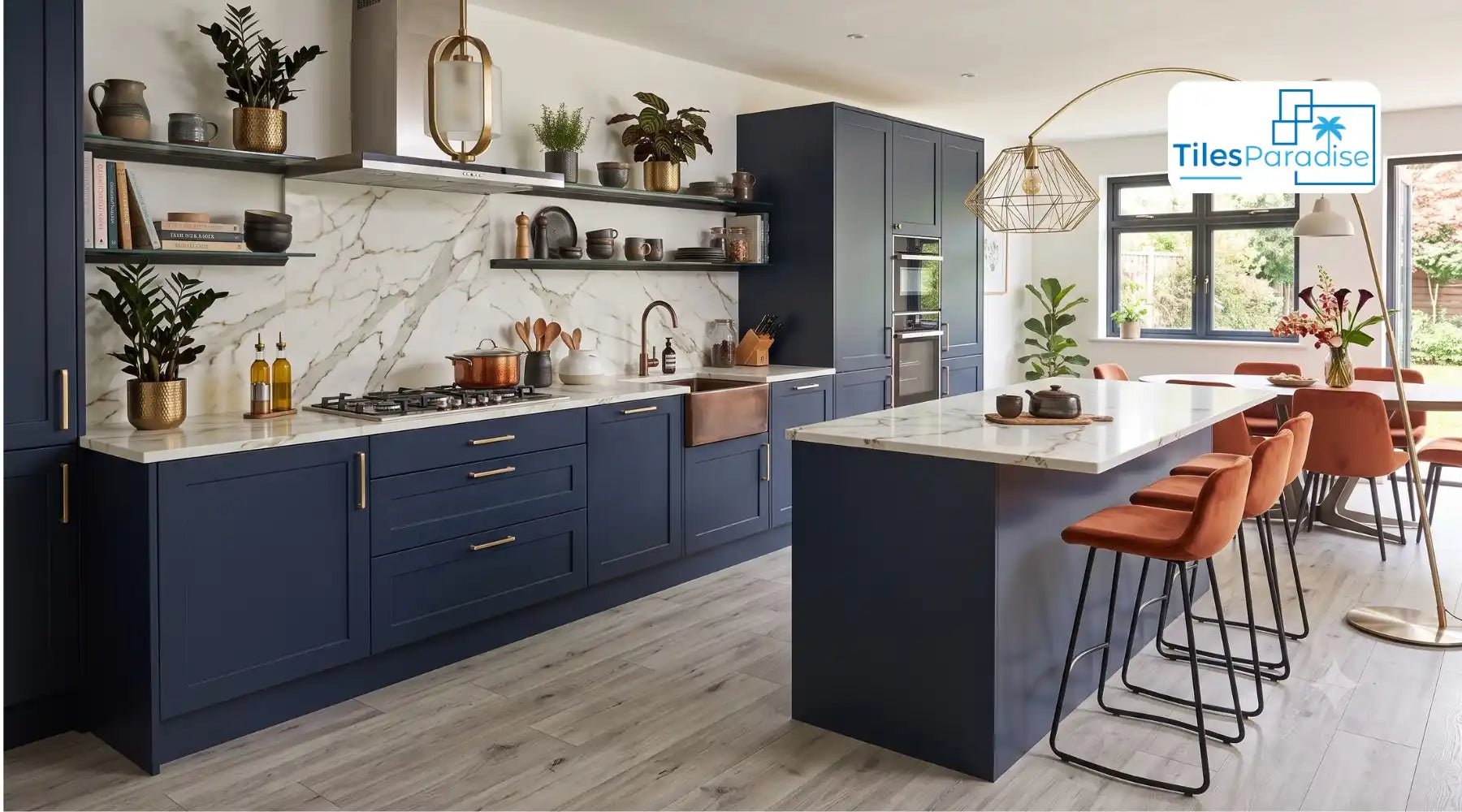
Wood effect vinyl tiles bring the warmth of natural timber into rooms that face daily spills, splashes and heavy footfall. Homeowners searching for waterproof wood effect vinyl floor tiles for kitchens and bathrooms want a floor that survives wet conditions without losing the grain, colour and texture of real wood.
This guide covers material choice, thickness, fitting method, slip safety, underfloor heating and cost, so a decision on wood effect floor tiles feels informed rather than rushed. Every point below answers a question buyers ask before choosing wood effect tiles for a UK home.
What Makes Wood Effect Vinyl Tiles Different From Wood Effect Porcelain Tiles?
Wood effect vinyl tiles use printed PVC layers topped with a protective wear layer to copy oak, walnut or ash grain, while wood effect porcelain tiles fire clay into a hard, scratch resistant slab carrying the same pattern. Vinyl feels warmer and softer underfoot, and porcelain wood effect tiles last longer under heavy furniture and constant foot traffic. Buyers weighing wood effect tiles against porcelain wood effect tiles should balance comfort underfoot against long term hardness. A full wood effect tile range covering both material types sits within the collection.
Are Wood Effect Vinyl Floor Tiles Waterproof Enough For Bathrooms?
Most wood effect vinyl floor tiles carry a fully waterproof PVC core, so water sitting on the surface after a shower or bath cannot swell or warp the plank. This makes wood effect bathroom floor tiles a safer swap for solid timber, which stains and cups once moisture reaches the grain. A sealed edge and correctly fitted skirting keep wood effect bathroom tiles watertight around sinks and shower trays, and the full premium bathroom tiles range covers finishes built for this purpose.
Which Wood Effect Floor Tiles Suit A Busy Kitchen?
Kitchen floors face oil marks, dropped pans and constant footfall, so wood effect floor tiles kitchen buyers need a wear layer of at least 0.3mm sitting over a rigid core. Textured, low sheen finishes hide crumbs and light scuffs better than glossy surfaces, and matt wood effect tiles kitchen ranges resist slipping once the floor turns greasy. Square format options within the kitchen medium format tiles work well alongside plank shaped wood effect floor tiles kitchen designs for a mixed layout, and the wider kitchen tile collection covers both styles.
How Slip Resistant Are Wood Effect Bathroom Floor Tiles?
Slip rating matters more in bathrooms than any other room, since bare feet meet wet, soapy surfaces daily. A textured or embossed finish on wood effect tiles bathroom ranges grips better than a smooth gloss tile ever can. Checking the R rating before purchase avoids a floor that looks good in a showroom but feels unsafe once wet.
Non-Slip Wood Effect Bathroom Floor Tiles
Non slip wood effect bathroom floor tiles typically carry an R10 or R11 rating, tested under wet conditions using oil and water. Bathroom wood effect floor tiles at this rating suit walk in showers, wet rooms and family bathrooms where standing water is common. A full breakdown of how slip ratings apply to timber look surfaces sits in the slip rating guide.
Wood Effect Porcelain Tiles For Modern Bathroom Floor
Porcelain wood effect tiles offer a harder, more scratch resistant surface than vinyl, suiting homes wanting a long term bathroom floor. Wood effect porcelain floor tiles pair well with underfloor heating and hold colour after years of cleaning. More detail on choosing porcelain over ceramic for a timber look floor sits in the porcelain tiles guide.
What Thickness And Wear Layer Suit Wood Effect Vinyl Tiles?
Wear layer thickness decides how long a floor keeps its printed finish before scratches show through to the core. Lighter use rooms tolerate a thinner layer, while kitchens and hallways need a rigid core built for daily impact.
|
Room Type |
Recommended Wear Layer |
Core Type |
|
Bedroom, light use |
0.15mm to 0.2mm |
Foam backed |
|
Kitchen, hallway |
0.3mm or more |
SPC rigid core |
|
Commercial, heavy traffic |
0.5mm or more |
SPC rigid core |
Click Lock Or Glue Down: Which Wood Effect Tile Fitting Works Best?
Two fitting methods dominate wood effect floor tiles, and the choice depends on subfloor condition and room size.
• Click lock: floats over the subfloor without adhesive, suits DIY fitting and easy floor tiles wood effect swaps later
• Glue down: bonds fully to the subfloor, limits movement in large open plan rooms, and suits busy kitchens
• Loose lay: relies on weight and backing grip, common in smaller rooms with fewer seams
Do Wood Effect Tiles Work With Underfloor Heating?
SPC cored wood effect tiles generally tolerate underfloor heating up to manufacturer limits, usually around 27 to 28 degrees Celsius at the surface. Gradual warming rather than sudden temperature jumps protects click joints and glue lines from stress over time. Checking manufacturer heat limits before fitting a tile floor wood effect design over heated screed avoids warranty problems later.
How Much Do Wood Effect Floor Tiles Cost In The UK?
Price depends on material type, wear layer and fitting method, with porcelain sitting above vinyl on both material and labour cost.
|
Tile Type |
Material Cost per m2 |
Fitting Cost per m2 |
|
Standard vinyl |
£15 to £25 |
£10 to £15 |
|
SPC rigid core vinyl |
£20 to £35 |
£15 to £20 |
|
Wood effect porcelain |
£25 to £45 |
£25 to £40 |
Which Colours And Patterns Suit Wood Effect Tiles?
Grey wood effect floor tiles suit modern, minimal interiors and hide dust well, while oak wood effect floor tiles bring warmth to traditional rooms. Herringbone wood effect tiles add pattern interest to hallways and open plan kitchens without extra grout lines breaking up the floor. Large format planks and the 60x120cm rectangular tiles both work well in bigger rooms wanting fewer visible joints, and matching wood effect wall tiles extend the same grain from floor to a feature wall or splashback.
Can Wood Effect Tiles Be Used Outdoors?
Wood effect outdoor tiles need frost resistance and a textured, slip safe surface, which points buyers toward porcelain rather than standard vinyl. Wood effect porcelain tiles outdoor ranges handle rain, UV exposure and freeze thaw cycles that vinyl cannot survive long term. Matching an indoor wood effect ceramic tiles floor with an outdoor porcelain equivalent, both available within the porcelain tiles and ceramic tiles collections, creates a smooth visual transition from kitchen to patio, with further plank and format choices inside the floor tiles range.
Final Insights
Wood effect tiles now cover every practical concern that once pushed buyers toward solid timber, from waterproof cores to slip tested surfaces and heating compatible cores. Matching wear layer, fitting method and finish to the room in question turns a wood effect floor tiles purchase into a long term investment rather than a quick fix.
A full range of wood effect floor and wall options, along with porcelain and ceramic alternatives, sits within the Tiles Paradise UK collection for buyers ready to compare finishes side by side before ordering samples.