





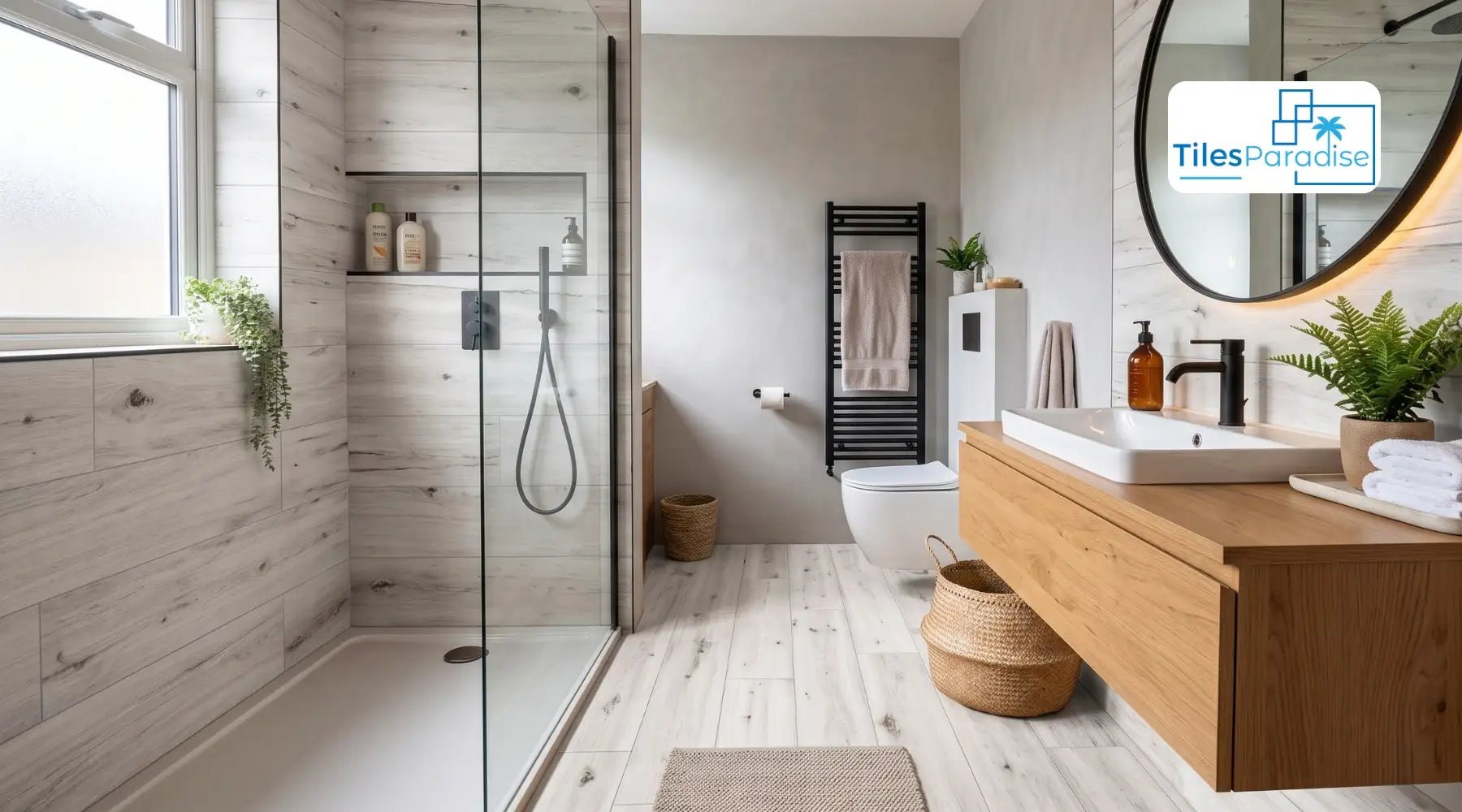
Wood effect bathroom tiles bring warm, timber-look flooring and walls into wet rooms without the maintenance real wood demands. For anyone nervous about safety, non-slip wood effect bathroom floor tiles solve the biggest worry: reliable grip underfoot even when the floor is soaked. Porcelain and ceramic versions replicate oak, walnut and grey wood grain convincingly, holding up against steam, splashes and daily foot traffic for years.
This guide covers slip ratings, sizing, grout matching, material choice and pattern options, answering the real questions buyers ask before ordering wood effect tiles for a bathroom refit, a kitchen floor or an outdoor terrace.
What Are Wood Effect Bathroom Tiles?
Wood effect bathroom tiles are porcelain or ceramic tiles printed with realistic timber grain, offering the visual warmth of oak or walnut floorboards without moisture risk. Digital inkjet printing reproduces knots, grain lines and colour variation so closely that a wood effect tile often passes for genuine timber from a distance. Explore the wood effect tile range to compare finishes, plank sizes and tones before choosing.
Are Non-Slip Wood Effect Bathroom Floor Tiles Safe For Showers?
Slip resistance is measured by an R-rating or wet DCOF (dynamic coefficient of friction) score, and bathroom wood effect floor tiles should sit at R10 or higher, with R11 recommended for shower trays. Textured or matte-finish wood effect porcelain tiles grip far better than gloss finishes, which turn dangerously slick once wet. The premium bathroom tile range lists slip ratings alongside each design, making it straightforward to match safety needs with style across wood effect tiles bathroom projects.
Quick slip rating guide for wet bathroom floors:
• R9: light domestic use only, not recommended for wet areas
• R10: standard bathroom floor tiles, safe for regular use
• R11: recommended for shower trays and wet room floors
• R12-R13: commercial or heavy-splash zones
What Size Wood Effect Floor Tiles Suit A Small Bathroom?
Long, narrow planks around 150x900mm or 200x1200mm elongate a small floor and reduce the number of grout lines breaking up the space. Large format tiles also work well in bigger bathrooms and open-plan wet rooms, giving a seamless timber-look floor. Browse the full floor tile range to compare plank lengths and finishes for wood effect floor tiles bathroom schemes.
Popular wood effect floor tile sizes:
• 150x900mm plank
• 200x1200mm plank
• 300x1200mm large plank
• 600x600mm square format
Which Grout Colour Suits Wood Effect Bathroom Tiles Best?
Matching grout to the darkest grain tone in a tile, rather than the lightest, creates a shadow-line effect that mimics real timber boards. Grey or beige grout blends naturally with oak wood effect floor tiles, while charcoal grout suits darker walnut and grey wood effect floor tiles. Wood effect ceramic floor tiles and porcelain both benefit from narrow grout joints of 2-3mm, which help the finished floor read as continuous planking rather than obvious tiling.
Porcelain, Ceramic Or Vinyl: Which Wood Effect Tile Material Performs Best?
Porcelain wood effect tiles are the densest and least porous option, making them the strongest choice for wet, high-traffic bathroom floors. Wood effect ceramic tiles cost less and suit bathroom walls or lighter-use floors, though they carry slightly more water absorption than porcelain. Wood effect vinyl tiles offer a cheaper, warmer-underfoot alternative for dry zones, but lack the durability and heat compatibility of tiled options; browse the ceramic tile range or the porcelain tile collection to compare.
Can Wood Effect Tiles Be Installed Over Underfloor Heating?
Porcelain and ceramic wood effect floor tiles conduct heat efficiently, making them a strong match for underfloor heating systems in bathrooms. Real timber flooring cannot tolerate the same heat cycling without warping, which is one reason tiled wood effect flooring has overtaken laminate in renovation projects. A qualified installer should confirm subfloor preparation and heating output before laying tiles wood effect over a heated screed.
Herringbone Or Straight Plank: Which Wood Effect Tile Pattern Works In A Bathroom?
Herringbone wood effect tiles create a classic, characterful floor pattern that suits both traditional and contemporary bathroom schemes, and floor wood effect tiles laid this way often become the room's focal point. Straight plank layouts running the length of a room make a bathroom feel longer and are quicker to install with fewer cuts. Large format plank tiles work particularly well laid in a brick-bond pattern for a clean, contemporary wood effect tiles floor look.
Where Can Wood Effect Porcelain Tiles Be Used Beyond The Bathroom Floor?
Wood effect porcelain tiles extend well beyond bathroom floors, working equally well across kitchens, hallways, outdoor patios and a wood effect tiles wall scheme for feature walls. Their non-porous surface resists spills, scratches and fading, making them a practical option across multiple rooms in a single home.
Wood Effect Porcelain Floor Tiles For Kitchens And Bathrooms
Wood effect porcelain floor tiles handle spills, dropped pans and daily foot traffic in a kitchen just as reliably as steam and splashes in a bathroom. Many wood effect tiles kitchen projects reuse the same batch across an open-plan bathroom for a cohesive, whole-home finish, and wood effect floor tiles kitchen schemes often extend into a matching splashback. The kitchen tile collection and the medium format square tiles collection both suit kitchens where a plank look is not wanted; read the wood effect floor guide for a full breakdown of formats and finishes.
Wood Effect Porcelain Wall Tiles
Wood effect porcelain wall tiles bring the same timber warmth to shower walls, feature walls and splashbacks without any water absorption risk. Pairing wood effect bathroom wall tiles with a plain porcelain floor, or vice versa, avoids an overly busy scheme while still delivering a natural material contrast. The wall tile collection includes matching trims and edge profiles; read the wood effect wall guide for sizing advice across different room types.
Are Wood Effect Tiles Suitable For Outdoor Use?
Wood effect outdoor tiles are manufactured with higher slip ratings and frost resistance for patios, balconies and pool surrounds, extending the timber look beyond the home. Wood effect porcelain tiles outdoor rated R11 or above cope with rain, algae growth and freeze-thaw cycles far better than real decking. Matching an indoor bathroom floor with an outdoor terrace in the same wood effect tile finish creates a seamless transition for homes with garden access.
Checklist before ordering wood effect porcelain tiles outdoor:
• Minimum R11 slip rating
• Frost-proof porcelain body
• 20mm thickness for patio laying
• Matching indoor plank size for a continuous indoor-outdoor look
How Much Do Wood Effect Bathroom Tiles Cost And How Are They Maintained?
Choosing a tile floor wood effect finish pays off through low upkeep; prices for wood effect bathroom floor tiles typically range from around £15 to £45 per square metre depending on material, format and finish quality, with porcelain sitting above ceramic. Maintenance is simple: regular sweeping, a mild detergent mop and prompt drying keep floor tiles wood effect looking sharp for years without sealing or refinishing. Avoid abrasive cleaners and bleach-based products, which can dull the printed grain pattern on a wood effect tiles floor over time.
|
Material |
Typical Price per m² |
Best Use |
|
Ceramic wood effect |
£15-£25 |
Walls, light-traffic floors |
|
Porcelain wood effect |
£25-£45 |
Bathroom and kitchen floors, wet rooms |
|
Vinyl wood effect |
£10-£20 |
Dry zones, budget refits |
Final Insights
Choosing wood effect bathroom tiles comes down to three checks: a slip rating suited to wet floors, a porcelain or ceramic body matched to the room's traffic and moisture level, and a grout tone that supports rather than fights the timber grain. Non-slip wood effect bathroom floor tiles remove the biggest safety concern while keeping the natural warmth timber lovers want.
With sizing, pattern and material sorted, a wood effect tile floor delivers the look of real wood with none of the upkeep, working equally well across bathrooms, kitchens and outdoor spaces for a consistent, coordinated finish throughout a home.