





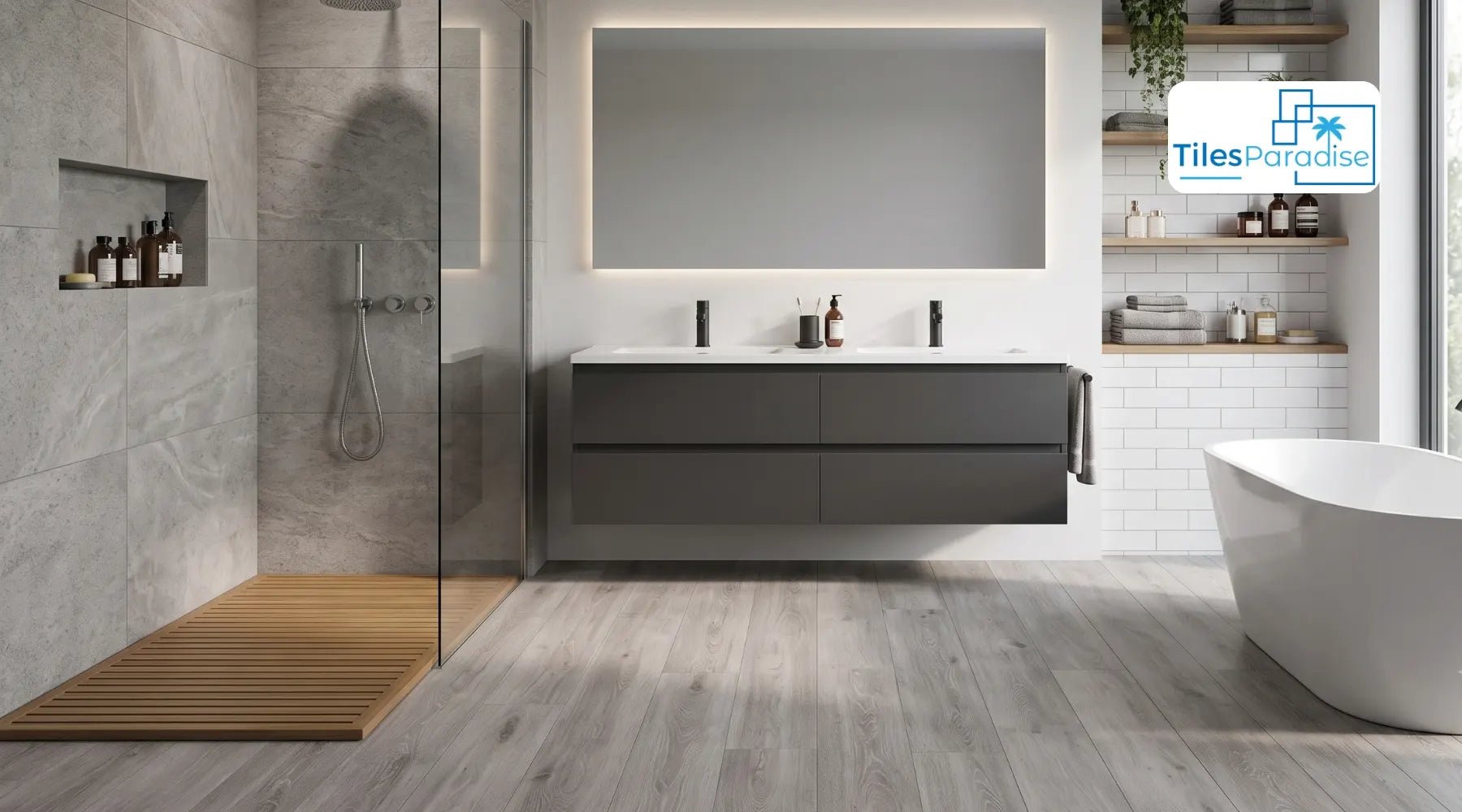
Wood effect floor tiles bring the character of natural timber into rooms where real wood struggles to last. For anyone comparing wood effect porcelain floor tiles for kitchens and bathrooms, the appeal is straightforward: authentic oak or walnut grain sits on a surface built to handle water, steam and daily foot traffic without complaint.
This guide covers material choice, size, finish, grout pairing, underfloor heating and installation, answering the questions that come up most before a purchase gets made. Wood effect wall tiles, wood effect ceramic tiles and porcelain options all get covered, along with where each performs best around a home.
What Are Wood Effect Floor Tiles?
Wood effect floor tiles are ceramic or porcelain tiles printed and textured to copy the grain, knots and colour variation of real timber planks. High-resolution digital printing presses the pattern onto a tile body, so a wood effect tile carries the same visual detail as oak, walnut or pine flooring without the sanding or sealing real wood demands.
Tiles wood effect designs now cover floors, walls and even outdoor spaces, with tone, plank width and finish varying by range. The full wood effect tiles collection brings oak, grey and rustic tones together for direct comparison.
Is Porcelain Or Ceramic Better For Wood Effect Tile Flooring?
Porcelain wood effect tiles are denser and absorb less water than ceramic wood effect tiles, making porcelain the stronger pick for kitchen floors, bathroom floors and any room exposed to regular spills. Ceramic wood effect tiles cost less and still suit walls, low-traffic rooms or feature areas where heavy impact is not a concern. Both fall under the wider floor tiles collection, alongside dedicated porcelain tiles and ceramic tiles ranges for side-by-side browsing.
Which Wood Effect Tiles Suit Kitchens And Bathrooms?
Kitchens need a floor that copes with grease, dropped pans and constant footfall, while bathrooms need water resistance and grip underfoot. Wood effect tiles kitchen buyers pick most often sit in a matt or lightly textured porcelain finish, sized to run in a continuous plank across an open-plan layout. Wood effect bathroom floor tiles follow the same logic, with anti-slip textures preferred around showers and bath surrounds, and wood effect bathroom wall tiles often used to carry the same tone up a feature wall.
Best porcelain floor tiles for kitchens and bathrooms
The strongest performers pair a porcelain body with a matt or lightly structured surface, since gloss finishes turn slippery once wet. A full breakdown of shortlisted options sits in the kitchen and bathroom floor tile guide, alongside the dedicated kitchen tiles collection and premium bathroom tiles range for browsing by room.
What Makes Wood Effect Porcelain Tiles A Popular Choice?
Wood effect porcelain tiles hold their colour under sunlight, resist scratches from pets and furniture, and never need sanding, staining or resealing the way real timber does. The surface stays stable through temperature swings and humidity, so a bathroom, kitchen or hallway keeps one consistent floor without expansion gaps opening up over time. Porcelain wood effect tiles also handle heavy furniture and dropped items far better than laminate or engineered wood flooring.
Wood effect porcelain floor tiles
Choosing between plank sizes, tones and finishes gets easier with a side-by-side comparison of grain pattern, slip rating and price per square metre. The full wood effect porcelain floor tiles guide breaks each of these down by room and budget.
Do Wood Effect Tiles Work With Underfloor Heating?
Porcelain and ceramic wood effect tiles both conduct heat well and are fully compatible with wet and electric underfloor heating systems, unlike solid or engineered wood, which can warp under sustained heat. The tile surface heats evenly and holds warmth after a system switches off, keeping a floor comfortable through colder months. Grey wood effect floor tiles and oak wood effect floor tiles both perform the same way here, since heat conduction depends on the tile body rather than the printed finish on top.
Are Wood Effect Floor Tiles Slip Resistant In Wet Rooms?
Slip resistance depends on surface texture rather than the wood-look print, so a textured or matt finish carrying an R10 or R11 rating suits bathrooms, wet rooms and kitchen areas near sinks. Polished or high-gloss wood effect tiles bathroom buyers sometimes pick for looks alone can become genuinely hazardous once wet. Checking the slip rating listed on a product page before ordering avoids this problem entirely.
What Size And Format Suit Wood Effect Tiles Best?
Plank formats copy real floorboards most convincingly, while square formats suit smaller rooms or a more contemporary layout. Popular choices include:
● Long plank tiles around 20x120cm for open-plan kitchens and living spaces
● Medium square formats such as 60x60cm for bathrooms and utility rooms
● Herringbone wood effect tiles for a parquet-style pattern in hallways and feature areas
The medium format 60x60cm range and large format 60x120cm range both suit wood effect finishes well, with the right pick depending on room size and pattern preference.
Which Grout Colour Pairs Best With Wood Effect Tiles?
Grout choice makes or breaks the realism of a wood effect floor, since a strong colour contrast against dark tiles draws the eye straight to the grid pattern instead of the timber look. Matching or close-toned grout keeps joints nearly invisible and lets a plank format read as a continuous floor rather than individual tiles. Stain-resistant grout is worth the extra cost in kitchens, where oil and food spills are common.
How Do Wood Effect Tiles Compare To Real Wood, Laminate And Vinyl?
Each flooring type trades one advantage for another, and the right pick depends on room, budget and how much upkeep feels reasonable over time:
|
Flooring Type |
Water Resistance |
Maintenance |
Underfloor Heating |
|
Wood effect porcelain tiles |
Excellent |
Wipe clean |
Yes |
|
Wood effect ceramic tiles |
Good |
Wipe clean |
Yes |
|
Wood effect vinyl tiles |
Good |
Wipe clean |
Limited |
|
Real hardwood flooring |
Poor |
Sand and reseal |
No |
Wood effect outdoor tiles extend the same look onto patios and garden paths, using a frost-proof wood effect porcelain tiles outdoor rating built for exterior weather, something neither laminate nor real wood can offer.
How Are Wood Effect Floor Tiles Installed And Maintained?
Tile floor wood effect installation follows standard porcelain or ceramic fitting methods: level subfloor, flexible adhesive, and consistent spacers to keep plank lines straight across a room. Random staggering across rows, rather than repeating the same offset, keeps the finished pattern looking closer to genuine timber flooring. Daily care needs nothing beyond sweeping and an occasional mop, with no sanding, waxing or resealing required over the life of the floor.
Final Insights
Wood effect floor tiles solve the long-standing trade-off between the warmth of timber and the practicality a busy kitchen or bathroom demands. Porcelain remains the stronger pick for wet or high-traffic rooms, ceramic suits walls and lighter-use spaces, and grout colour together with slip rating decide how convincing and how safe the finished floor feels day to day.
Getting size, finish and heating compatibility right before ordering saves cost and disruption later, particularly across open-plan kitchens where one continuous floor ties rooms together. Sampling a tile at home under actual lighting remains the most reliable way to confirm tone and finish before committing to a full order.