





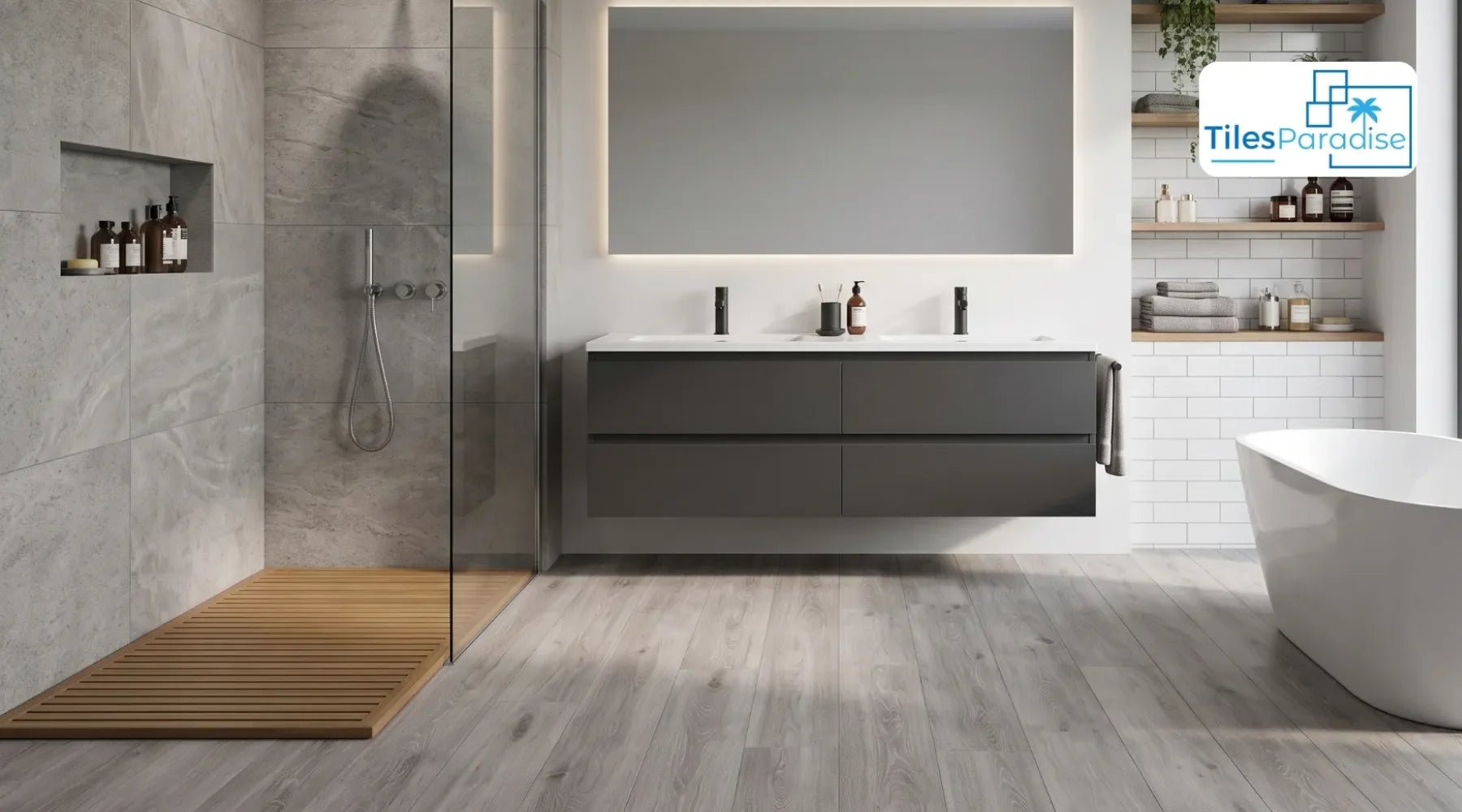
Wood effect porcelain wall tiles bring the warmth of natural timber into modern interiors without the upkeep real wood demands. Rising damp, warping and constant resealing never enter the picture, because porcelain resists water, scratches and daily wear across kitchens, bathrooms and hallways alike.
This guide covers material choice, room suitability, size formats and installation, helping buyers match wood effect wall tiles to the room, budget and finish a project actually needs for a lasting result.
What Are Wood Effect Wall Tiles?
Wood effect wall tiles replicate oak, walnut, ash and reclaimed timber grain through digital printing on ceramic or porcelain bodies. A single wood effect tile can look identical to a real floorboard end-on, complete with knots, colour variation and grain texture. Unlike wood effect vinyl tiles, ceramic and porcelain versions never peel, fade in sunlight or lift at the edges.
Why Choose Wood Effect Porcelain Tiles Over Ceramic or Vinyl?
Porcelain wood effect tiles absorb almost no water, making them the strongest choice for splashback and shower wall applications. Ceramic wood effect tiles cost less and suit dry walls, hallways and feature panels away from constant moisture. Wood effect vinyl tiles install faster but scratch, dent and discolour years before porcelain tiles show any wear.
How Do Wood Effect Bathroom Tiles Handle Moisture?
Wood effect bathroom tiles and wood effect bathroom wall tiles cope with steam, splashes and standing water without swelling or growing mould. A rectified porcelain body stays dimensionally stable even behind a shower enclosure or around a freestanding bath. This makes wood effect bathroom floor tiles and matching wall panels a safer long-term pairing than timber panelling, especially inside a premium bathroom tiles scheme.
A full wood effect tiles bathroom scheme usually pairs a matt ceramic wood effect tiles wall with a slip-rated porcelain floor for grip near the shower tray. Budget-conscious renovations often mix wood effect ceramic tiles on dry walls with porcelain only where water exposure is highest, keeping cost down without sacrificing the timber look.
Which Rooms Suit Wood Effect Tiles Kitchen Walls Best?
Wood effect tiles kitchen splashbacks soften stainless steel and stone worktops with a warm, grounding tone. Grease, steam and everyday spills wipe away in seconds, unlike painted timber panelling behind a hob. Wood effect floor tiles kitchen schemes extend naturally onto a feature kitchen tiles wall for a cohesive, seamless look.
● Kitchens: splashbacks, feature walls behind hobs and open shelving
● Bathrooms: shower niches, feature walls behind freestanding baths
● Living areas and hallways: chimney breasts, media walls, entryway panelling
● Outdoor spaces: covered patios, balconies and boot-room walls
What Sizes and Formats Work Best for Wall Installation?
Long plank formats such as 30x120cm and 60x120cm reduce grout lines and create a calmer, more realistic timber impression on walls. Larger 60x120cm rectangular tiles suit open-plan living rooms and feature walls, while narrower planks fit compact bathrooms and box-room ensuites. A rectified edge keeps joints tight, letting grain patterns flow uninterrupted across the surface.
|
Plank Size |
Best Use on Walls |
|
20x120cm |
Compact bathrooms, herringbone feature walls |
|
30x120cm |
Standard bathrooms, splashbacks, chimney breasts |
|
60x120cm |
Open-plan living rooms, large feature walls |
|
60x60cm |
Kitchen splashbacks paired with matching floor tiles |
Running the same floor wood effect tiles size onto the wall, rather than mixing two different plank widths, keeps a room visually calm and avoids a patchwork feel. A wood effect floor tiles bathroom scheme in 20x120cm, for instance, reads best with a matching or slightly wider wall plank rather than a much larger format.
Wood Effect Porcelain Floor Tiles
Wood effect porcelain floor tiles share the same plank format as their wall counterparts, which makes matching a floor to a feature wall straightforward. Grey wood effect floor tiles and oak wood effect floor tiles both perform well under underfloor heating, conducting warmth evenly across the room. A full buying breakdown sits in the wood effect porcelain floor tiles guide.
Wood Effect Porcelain Floor Tiles for Kitchens and Bathrooms
Kitchens and bathrooms both demand slip resistance, so wood effect ceramic floor tiles and porcelain equivalents need a textured, matt finish rather than a high-gloss one. Bathroom wood effect floor tiles paired with matching wall planks create a spa-style scheme without cold, hard stone tones. Room-specific advice sits in the guide for kitchens and bathrooms.
How Does a Herringbone Layout Change a Feature Wall?
Herringbone wood effect tiles introduce movement and pattern that a straight plank layout cannot match, ideal for a shower niche or chimney breast. Chevron layouts, by contrast, use angled cuts for a sharper, more directional zig-zag. Both patterns work best in narrower plank widths, where the repeat reads as genuine parquet rather than an obvious wall tiles grid.
What Colour and Grout Choice Suits Wood Effect Wall Tiles?
Grey wood effect floor tiles and matching wall planks suit contemporary, minimal schemes, while oak and honey tones warm up a period property. Matching grout to the darkest grain tone keeps the finish reading as timber rather than as an obvious tiles wood effect surface. Contrasting grout, on the other hand, emphasises each individual plank for a more graphic result.
Are Wood Effect Porcelain Tiles Outdoor Suitable?
Wood effect porcelain tiles outdoor rated for frost resistance handle patios, balconies and pool surrounds without cracking in winter. Wood effect outdoor tiles need a textured, slip-rated finish and a minimum thickness for safe foot traffic in wet weather. Matching an outdoor floor to an indoor wood effect wall tiles scheme creates a seamless transition from kitchen to garden.
How To Install Wood Effect Wall Tiles Correctly?
A flat, primed substrate and a flexible tile adhesive stop long planks from lipping at the edges. Dry-laying a run first reveals pattern repeat and awkward cuts before adhesive goes down. Movement joints matter around door frames and internal corners, especially where wood effect tiles floor and wood effect tiles wall surfaces meet.
Tile spacers keep joint width consistent along a long plank run, which matters more on walls than floors since uneven joints are at eye level. A professional installer familiar with large-format wall tiles will also check wall flatness before fixing, since a plank format shows up any dip or bow far more readily than a small square tile.
How To Clean and Maintain Wood Effect Tile Surfaces?
Warm water and a pH-neutral cleaner keep both floor tiles wood effect and wall planks looking new, with no sanding or resealing routine. Sealing only applies to the grout lines, not the porcelain body itself, which stays non-porous for decades. Routine care for tile floor wood effect surfaces takes minutes compared with the seasonal maintenance real timber demands.
Final Insights
Wood effect wall tiles now cover kitchens, bathrooms and outdoor spaces once reserved for real timber, combining porcelain durability with a convincing grain finish. Size, room and finish decide the right format, from compact plank sizes in ensuites to large 60x120cm panels in open-plan living areas.
Matching floor and wall in the same porcelain wood effect tiles range creates a cohesive scheme that ages well under daily use. Explore the full wood effect tiles collection or the wider floor tiles and kitchen medium format tiles ranges at Tiles Paradise UK to compare finishes, sizes and colours before ordering samples.