





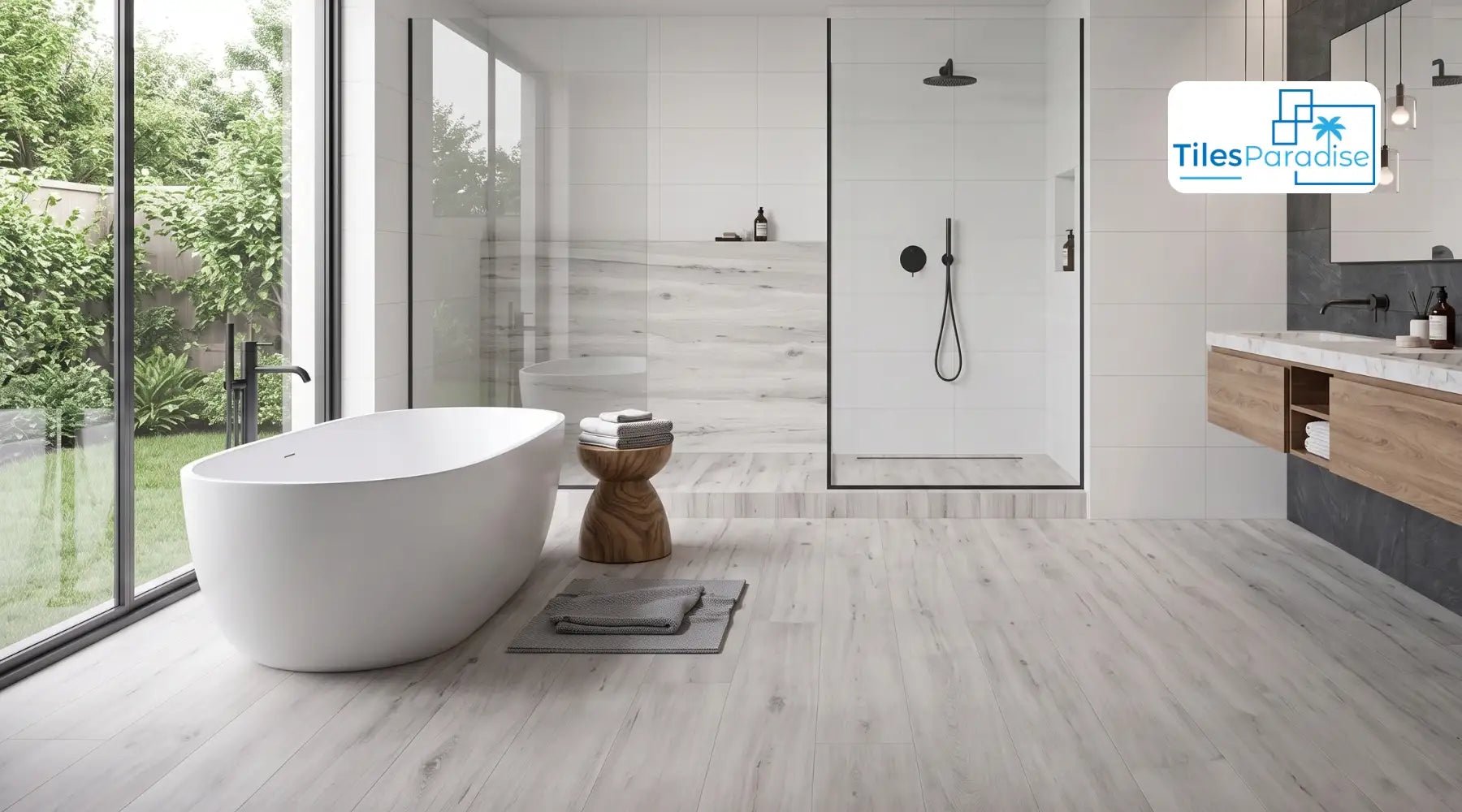
Wood effect porcelain floor tiles bring the warmth of natural timber into UK homes without the upkeep real wood demands. Printed with high-definition grain, knots and tonal variation, wood effect tiles replicate oak, walnut and pine finishes across floors and walls in kitchens, bathrooms, hallways and outdoor spaces.
This guide breaks down material differences, sizing, room suitability, laying patterns and maintenance for wood effect floor tiles, wood effect wall tiles and wood effect bathroom tiles, helping homeowners choose flooring that performs well and looks authentic for years to come.
What Are Wood Effect Porcelain Floor Tiles?
Wood effect porcelain tiles are manufactured from dense, kiln-fired clay and printed using digital inkjet technology that reproduces oak grain, knots and colour variation in fine detail. Porcelain composition gives each wood effect tile a water absorption rate below 0.5 percent, making it far less porous than ceramic or natural timber. Shoppers browsing the porcelain tile range will find plank, square and large-format designs suited to most room types.
How Do Wood Effect Tiles Differ From Ceramic And Vinyl?
Porcelain, ceramic and vinyl each replicate a wood look tile floor differently, and material choice affects durability, cost and installation. Porcelain wood effect tiles suit high-traffic and wet areas because of low porosity and high hardness, while wood effect ceramic tiles cost less and work well on walls or lighter-use floors. Wood effect vinyl tiles install quickly and feel warmer underfoot but scratch more easily and last less time than ceramic wood effect tiles or porcelain.
|
Material |
Water absorption |
Best use |
Typical lifespan |
|
Porcelain |
Below 0.5% |
Floors, wet rooms, outdoors |
25+ years |
|
Ceramic |
0.5-3% |
Walls, low-traffic floors |
15-20 years |
|
Vinyl |
Not water absorbent |
Bedrooms, low-moisture rooms |
10-15 years |
Which Sizes And Formats Suit A Wood Effect Tile Floor?
Wood effect floor tiles come in plank formats from around 150x900mm up to 300x1800mm, alongside square formats such as 600x600mm and 300x300mm. Long, narrow planks mimic individual floorboards, while large-format tiles reduce grout lines and suit open-plan layouts. Buyers planning a seamless finish often pair oversized planks from the large format tile range with matching skirting for a continuous, floor-to-wall timber look.
Common wood effect formats stocked by UK retailers include:
• Plank tiles: 150x900mm to 300x1800mm, mimicking individual floorboards
• Large-format rectangles: 600x1200mm, ideal for open-plan rooms
• Square tiles: 300x300mm and 600x600mm, suited to smaller bathrooms and utility rooms
• Herringbone-cut planks: pre-shaped pieces for parquet-style laying
Are Wood Effect Porcelain Tiles Suitable For Bathrooms?
Wood effect bathroom tiles handle splashes, steam and standing water far better than timber flooring, since porcelain does not swell, rot or stain when wet. A textured, matt finish with a slip rating around R10 keeps wood effect bathroom floor tiles safe underfoot in showers and around baths. Pairing wood effect wall tiles with a matching floor creates a spa-style scheme, and the premium bathroom tile range covers finishes from pale oak to charcoal walnut.
Top 10 Bathroom Tiles Ideas For Modern And Aesthetic Choices
From herringbone wood effect bathroom floor tiles to full-height wood-look wall panels, small design choices change how a bathroom feels day to day. A dedicated bathroom tile ideas guide covers layout, colour pairing and lighting tips for building a modern, spa-inspired scheme around timber-look porcelain.
Which Wood Effect Tiles Work Best In Kitchens?
Wood effect tiles for kitchens combine the visual warmth of oak with resistance to grease, spills and dropped pans, unlike laminate or engineered wood. Medium and large-format wood effect ceramic floor tiles reduce visible grout lines across open-plan kitchen-diners, creating a cleaner sight line from cooking zone to seating area. Many homeowners browse the kitchen tile collection alongside medium format square tiles to match units, splashbacks and flooring in one consistent tone.
Porcelain Kitchen Tiles: Size, Finish, Material & Layout Guide for UK Homeowners
Matt, satin and lightly textured finishes each suit kitchen wood effect tiles differently depending on footfall and cleaning routine. A dedicated kitchen tile layout guide breaks down sizing, finish and pattern choices for porcelain kitchen flooring across UK homes.
Can Wood Effect Porcelain Tiles Be Used Outdoors?
Wood effect outdoor tiles bring decking-style warmth to patios and garden paths while resisting frost, rain and UV fading that damage timber decking over time. Wood effect porcelain tiles outdoor typically feature an R11 or higher slip rating and a thicker 20mm body for laying on pedestals or mortar beds. Because porcelain does not absorb moisture, outdoor installations avoid the cracking and rot that affect timber decking after a few UK winters.
What Laying Patterns Suit Wood Effect Floor Tiles?
Herringbone wood effect tiles create a parquet-style pattern that suits hallways, living rooms and feature bathroom floors. A staggered brick-bond layout, offset by around a third of the tile length, gives long plank tiles a natural, randomised timber look rather than a repeated print. Wall applications favour a linear stack or brick-bond pattern from the wall tile styles range to keep vertical sightlines clean.
How Durable And Low Maintenance Are Wood Effect Tiles?
A PEI rating of 4 or 5 confirms a wood effect tile can withstand heavy foot traffic without surface wear, making it suitable for hallways and busy family kitchens. Cleaning involves warm water and a pH-neutral cleaner, since wax-based or abrasive products dull the printed surface over time. Because porcelain resists staining and scratching, tiles from the wood effect tile collection need no sealing and hold colour far longer than laminate or real timber flooring.
What Colours And Finishes Suit Different Rooms?
Oak wood effect floor tiles suit most colour schemes and remain the most requested finish across UK homes, while grey wood effect floor tiles fit contemporary, minimalist interiors. Darker walnut tones add depth in larger rooms, and pale or white-washed finishes help small rooms feel brighter and more open. Homeowners comparing tones side by side can browse the full tile range before ordering samples.
How Much Do Wood Effect Porcelain Floor Tiles Cost?
Prices for wood effect tiles typically range from around £15 to £45 per square metre in the UK, depending on plank size, print quality and finish. Large-format planks and herringbone-cut tiles cost more per square metre than standard rectangular formats because of higher production and cutting complexity. Factoring in adhesive, grout, trims and roughly 10 percent extra for cuts and wastage gives a realistic total project budget:
1. Tiles: £15-£45 per square metre depending on format and print quality
2. Adhesive and grout: £3-£6 per square metre
3. Levelling clips or spacers: £2-£4 per square metre
4. Professional installation: £25-£45 per square metre, depending on region and pattern complexity
Final Insights
Wood effect porcelain floor tiles deliver the character of natural timber with far greater resistance to water, scratching and daily wear across kitchens, bathrooms and outdoor spaces. Choosing the right size, finish and laying pattern makes the difference between a floor that looks authentic and one that reads as an obvious print.
Comparing porcelain, ceramic and vinyl options against room use, footfall and budget helps narrow down a shortlist quickly. Ordering samples before committing remains the most reliable way to judge grain, tone and texture under real lighting conditions.