





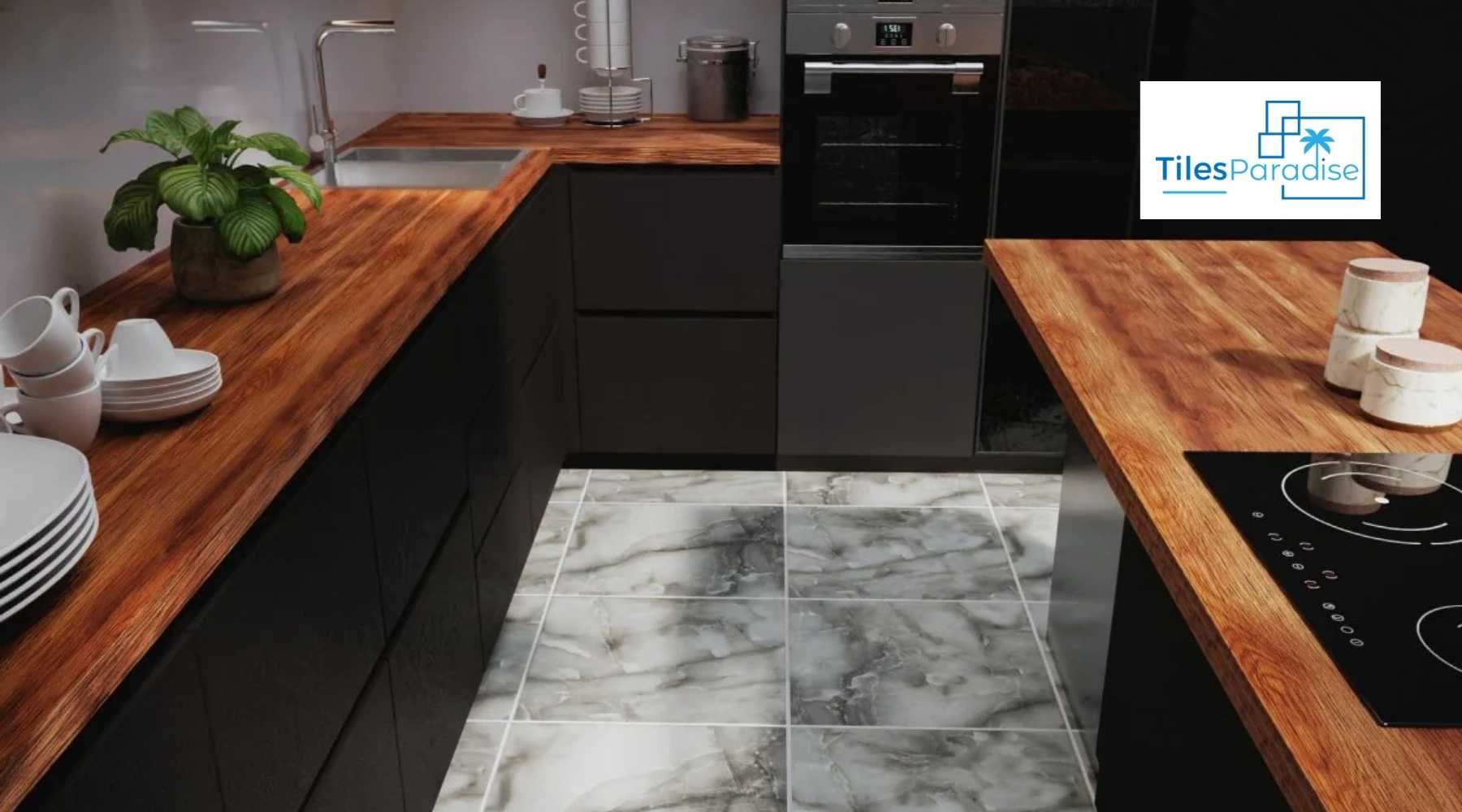
Choosing the right kitchen tiles can completely transform how a space feels, functions, and lasts. For compact spaces, the best porcelain kitchen floor and wall tiles for small kitchens are those that combine light-reflective finishes with smart sizing to open up the room visually.
From splashback choices to full-room floor tile layouts, UK homeowners face a wide range of decisions before a single tile is laid. This guide breaks down every key consideration, covering materials, sizes, colours, finishes, and layouts, so the right choice becomes clear.
Why Porcelain Outperforms Ceramic for Kitchen Use
Porcelain is fired at higher temperatures than ceramic, making it denser, less porous, and far more resistant to moisture, staining, and heavy foot traffic. Porcelain kitchen tiles absorb less than 0.5% water, a critical property in a room exposed to steam, spills, and heat daily.
Ceramic tiles remain a budget-friendly option for wall applications such as splashbacks, where durability demands are lower. However, for kitchen floor tiles, porcelain is the professional standard in UK homes.
The key trade-off is cost versus long-term performance. Porcelain costs more upfront, but its lifespan in a high-use kitchen environment makes it a more economical choice over time.
What Tile Size Works Best in a Small Kitchen?
Tile size has a direct impact on how large or small a kitchen feels. Contrary to popular belief, large-format tiles can actually make a small kitchen appear bigger by reducing the number of grout lines, which fragment the visual field.
60x60cm square tiles are an excellent choice for small kitchen floors, creating a clean, expansive look. For walls in tight spaces, metro tiles in a brick bond layout add character without visual weight.
Smaller mosaic-style tiles or heavily patterned formats work better as accent features, such as a splashback strip, rather than covering every surface in a compact kitchen.
Quick Size Reference:
|
Format |
Best For |
Effect in Small Kitchen |
|
30x60cm |
Walls, splashbacks |
Elongates the space |
|
60x60cm |
Floors |
Fewer grout lines, feels larger |
|
60x120cm |
Open-plan floors |
Maximises seamless look |
|
10x30cm metro |
Walls, splashbacks |
Classic, structured look |
Which Finish Suits Kitchen Floors vs Kitchen Walls?
Finish choice affects both safety and aesthetics. For kitchen floor tiles, a matt or satin finish is strongly recommended because it provides grip underfoot when wet. Gloss floors can become hazardous near sinks and cooking zones.
On kitchen wall tiles, a gloss or semi-gloss finish is ideal. It reflects light, brightens darker kitchens, and wipes clean effortlessly. Textured wall finishes add depth but require slightly more cleaning effort around grout lines.
For a cohesive look, many UK homeowners now pair a matt floor tile with a gloss wall tile in the same or complementary tone, which adds contrast without clashing.
Colour Strategy: How to Choose Between White, Grey, Green, and Black
Colour is the first thing noticed in a kitchen, and tile colour sets the entire tone. White kitchen tiles remain the top choice for maximising light in north-facing or windowless kitchens. Grey kitchen tiles offer a more contemporary, understated look that suits both modern and Shaker-style cabinetry.
Green kitchen tiles have surged in popularity across the UK, particularly sage and forest tones used as feature splashbacks. Blue kitchen tiles work especially well in coastal or cottage-style kitchens, while black kitchen tiles create a dramatic, high-contrast finish in minimal and industrial designs.
For a warm, earthy feel, beige and cream kitchen tiles pair naturally with wooden worktops and brass fittings. Gold kitchen tiles used as accent strips or full splashbacks add a luxurious layer to neutral schemes.
Top Layout Patterns for Kitchen Floor and Wall Tiles
How tiles are laid is just as important as which tile is chosen. Layout patterns shift the visual weight of a room and can make a narrow kitchen feel wider or a short room feel longer.
Most effective layouts for kitchen tiles:
• Brick bond (offset) - the standard for metro tiles; adds horizontal movement to walls
• Herringbone - a premium pattern for both floors and splashbacks; adds texture and direction
• Running bond vertical - makes low ceilings appear taller when used on walls
• Large format straight lay - best for small kitchens; minimal grout lines for a seamless result
• Chevron - a stepped V-shape ideal for statement floor areas in open-plan kitchens
For patterned kitchen tiles, a straight lay grid is usually the cleanest approach, letting the pattern speak for itself without competing with the installation layout.
Splashback Tiles: Material, Size, and Design Considerations
The splashback is the most visible tile zone in any kitchen. It sits directly behind the hob and sink, where it faces heat, grease, and repeated cleaning. Tiling a kitchen splashback in porcelain or ceramic is the most durable and cost-effective choice available.
Metro tiles remain the UK's most popular splashback choice due to their clean lines and low cost. For a more distinctive look, marble-effect kitchen tiles deliver the luxury aesthetic of natural stone without the sealing and maintenance requirements.
A full-height splashback running from countertop to ceiling is a growing trend in UK kitchen renovations. It eliminates the visual break created by a partial splashback and makes the wall feel intentional rather than functional.
Large Format vs Standard Tiles: Which Covers More Ground?
60x120cm rectangular large tiles are increasingly chosen for open-plan kitchen-diner floors because they reduce grout lines across a wider area, making the space feel continuous. Installation does require a flatter subfloor and professional fitting for best results.
Standard 60x60cm tiles suit most domestic kitchens and offer greater flexibility when cutting around units, islands, and doorways. They also weigh less per tile, which reduces stress on suspended floors.
Large format tiles work best when the floor and wall tile design are coordinated. Using the same porcelain slab on both surfaces creates a seamless, gallery-like effect that is popular in high-end UK kitchen designs.
Onyx, Marble, and Decorative Effects in Kitchen Tiling
Natural stone effects are consistently among the highest-performing kitchen tile styles in the UK market. Onyx kitchen tiles offer dramatic veining in white-on-grey or black-on-gold colourways, making them a statement choice for islands, feature walls, and splashbacks.
Marble-effect porcelain is the practical alternative to real marble. It delivers the same visual impact, with the additional benefit of being frost-resistant, stain-resistant, and suitable for underfloor heating systems, all common requirements in UK homes.
Decorative and geometric tile options work well as accents rather than whole-room applications. A single row of patterned tile along a splashback, or a geometric floor insert, introduces personality without overwhelming a compact space.
Grout Colour and Joint Width: The Details That Define the Finish
Grout is one of the most overlooked decisions in kitchen tiling, yet it has a significant visual impact. Matching grout to tile colour creates a seamless, almost monolithic appearance. Contrasting grout, such as dark grey with white metro tiles, emphasises the layout pattern.
Joint width also matters. Large-format porcelain tiles are typically laid with 2-3mm grout joints to maintain a clean, minimal aesthetic. Smaller tiles may use 5-10mm joints depending on the style and material.
For kitchens, always use a flexible epoxy or cement-based grout that resists moisture and staining. Anti-fungal grout additives are worth considering near sinks and dishwashers, where condensation regularly collects.
How to Tile a Kitchen on a Budget Without Compromising on Style
Achieving a high-end look without high-end pricing comes down to strategic placement. Ceramic kitchen tiles on walls paired with a porcelain floor tile is one of the most cost-effective approaches, reducing spend where durability is less critical.
Budget-stretching tactics that work:
1. Use large-format tiles on floors to reduce tile quantity and labour time
2. Limit decorative or patterned tiles to the splashback only, where less surface area is covered
3. Choose a single base tile across the floor and wall in a different layout pattern to create variety without extra cost
4. Order 10-15% extra to account for cuts and future repairs, reducing expensive reordering later
Sales, clearance lines, and end-of-range stock are also worth exploring. Many premium porcelain ranges carry previous-season colourways at significantly reduced prices while maintaining the same quality.
Bathroom Tile Ideas for Modern Homes
The principles that apply to kitchen tiling also translate directly to bathrooms, particularly around material choice, finish, and scale. Porcelain remains the top recommendation for bathroom floors due to its water resistance and slip ratings. For wall applications, gloss ceramic or large-format porcelain both deliver a polished result.
Explore a full range of bathroom tile ideas for modern homes, covering wall, floor, and wetroom options suited to UK interiors.
Best Porcelain Floor Tiles for Kitchens and Bathrooms
When selecting porcelain floor tiles for both rooms, consistency across materials and finish tones creates a natural flow through connected spaces in open-plan layouts. R-rated slip resistance (R10 or above for wet areas) and PEI wear ratings above 4 are the practical benchmarks for any domestic kitchen or bathroom floor tile.
For a detailed comparison of options, the guide to the best porcelain floor tiles for kitchens and bathrooms covers the key specifications UK homeowners need before making a purchase.
Final Insights
Porcelain kitchen tiles offer the strongest combination of durability, aesthetics, and practical performance for UK homeowners. From large-format floor tiles that open up tight spaces to gloss wall tiles that brighten north-facing kitchens, the material and format choices made at planning stage determine how well a kitchen performs for years ahead.
Whether the goal is a complete kitchen renovation or a refreshed splashback, the range of kitchen tiles available today covers every style, size, and budget. Matching tile material to the specific demands of each surface, floor versus wall, wet zone versus dry zone, is the starting point for a result that looks intentional, holds up to daily life, and adds lasting value to a home.