





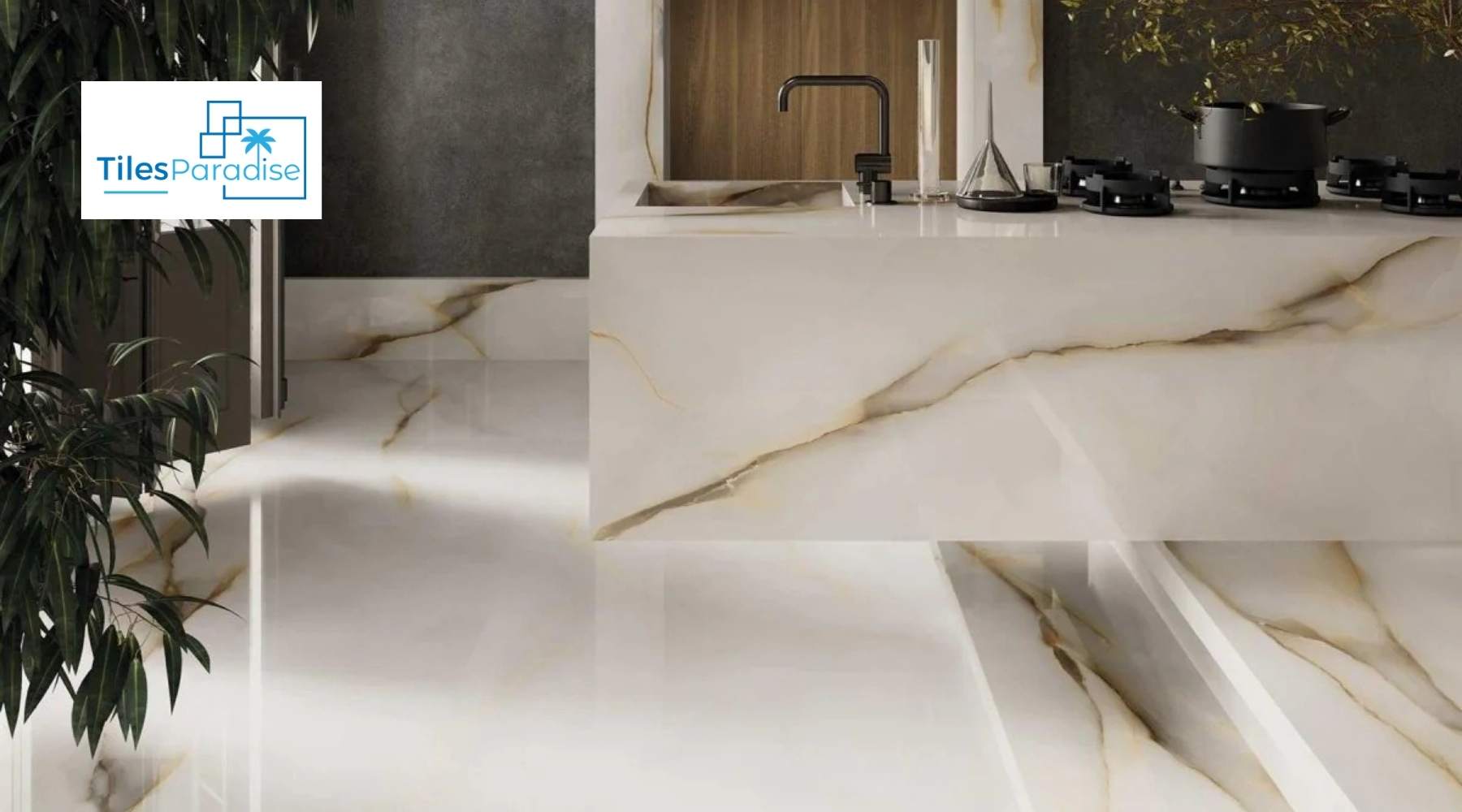
Choosing the best porcelain kitchen floor tiles UK starts with four practical checks: material density, surface grip, size, and heat performance. A kitchen floor carries cooking spills, chair movement, muddy shoes, and constant cleaning, so style alone cannot lead the decision.
Porcelain kitchen floor tiles give strong daily performance because the body is dense, low absorption, and suitable for many finishes. This guide compares floor tiles for kitchen spaces, installation needs, colour ideas, and buying checks for long-lasting results.
What Makes Porcelain Best for Kitchen Floor Tiles?
Porcelain suits kitchen floor tiles because the surface resists stains, moisture, scratches, and everyday impact better than many softer kitchen flooring tiles. Dense vitrified clay gives porcelain kitchen floor tiles a practical edge for busy family spaces, open-plan rooms, and rental renovations.
A wider kitchen tiles range helps match floor strength with wall colour, splashback pattern, and cabinet tone. For heavy-use cooking spaces, porcelain kitchen tiles usually offer better water resistance than ceramic kitchen tiles, although quality ceramic still works for light-to-moderate traffic.
Which Material Type Suits Kitchen Floors?
The best floor tiles for kitchen projects depend on traffic, budget, grip, and cleaning habits. Porcelain is the strongest all-rounder, ceramic tile on kitchen floor areas can be cost-efficient, stone kitchen floor tiles feel natural, and vinyl tile flooring kitchen options feel softer but lack the same heat and scratch resistance.
|
Material |
Best use |
Main caution |
|
Porcelain |
Busy kitchens, UFH, large formats |
Needs good adhesive and a flat base |
|
Ceramic |
Light-use kitchens and walls |
Lower density than porcelain |
|
Natural stone |
Premium rustic schemes |
Sealing and stain control required |
|
Vinyl |
Fast refresh or softer feel |
Kitchen vinyl floor tiles can dent or fade |
Searches for kitchen floor tiles vinyl, kitchen vinyl floor tiles, and kitchen vinyl tiles floor often point to budget-led decisions. Porcelain costs more at first, but tile lifespan, heat transfer, and stain resistance usually give stronger long-term value.
Which Size Makes a Kitchen Floor Look Larger?
Tile size changes perceived space. Large kitchen floor tiles reduce grout lines, so a narrow galley, square kitchen, or open-plan diner can look calmer and wider.
A 60x60cm format works well in most UK kitchens, and 60x60cm square tiles create balance with islands and straight cabinet runs. Long 60x120cm large tiles help stretch sightlines across extensions, while smaller rectangles suit classic layouts and older homes with uneven subfloors.
For floor tiles kitchen planning, match tile size to room width, door thresholds, and visible cut pieces near plinths. Kitchen tiles floor layouts look best when a full tile starts at the main entrance or focal line, then cut pieces finish under cabinets.
Which Finish and Slip Rating Works Safely?
Matt, natural, and lightly textured finishes give better grip than polished surfaces. Kitchen floor tiles non slip performance matters near sinks, dishwashers, patio doors, and utility connections.
For domestic kitchens, many buyers compare R10 and R11 surfaces. PTV36+ is a useful low-slip benchmark for wet-risk areas, but product data sheets should guide final selection.
· Matt porcelain hides water marks, crumbs, and paw prints.
· Textured porcelain adds grip but needs slightly deeper cleaning.
· Polished porcelain reflects light but can feel slippery when wet.
best matt porcelain floor tiles for kitchen and bathroom
A matt porcelain surface is often the safest balance for kitchens and bathrooms because it gives grip, low sheen, and simple daily cleaning. The matt porcelain guide explains finish choice, bathroom overlap, and care points in more depth.
Which Colours Fit UK Kitchen Floor Tiles?
Colour controls mood, light, and maintenance. White kitchen floor tiles brighten small spaces, black kitchen floor tiles ground pale cabinetry, and beige kitchen tiles or cream kitchen tiles add warmth to Shaker, farmhouse, and classic kitchens.
Grey kitchen floor tiles remain the safest neutral for resale, especially with handleless cabinets and oak worktops. Search language often shifts between grey kitchen tiles, gray kitchen floor tile, gray kitchen tiles floor, kitchen gray floor tile, kitchen gray tile floor, gray floor tiles for kitchen, kitchen floor tiles gray, kitchen flooring tiles grey, grey floor kitchen tiles, grey tiled floor kitchen, grey tile floor in kitchen, and grey tiled kitchen floor.
|
Colour family |
Best kitchen effect |
Useful internal option |
|
White |
Brighter compact rooms |
|
|
Grey |
Modern, practical, stain-softening |
grey kitchen tiles |
|
Green or blue |
Calm colour accent |
|
|
Gold, cream, beige |
Warm luxury or classic softness |
gold kitchen tiles, beige kitchen tiles |
|
Black |
Graphic contrast and depth |
Which Porcelain Tiles Work With Underfloor Heating?
Porcelain works well with electric and wet underfloor heating because dense tile bodies transfer warmth evenly and resist dimensional movement. Tiling a kitchen floor with porcelain tiles over UFH needs insulation boards, flexible adhesive, flexible grout, and gradual heat commissioning after curing.
Large formats can feel especially comfortable because fewer grout joints interrupt heat spread. Kitchen tile flooring over UFH should avoid hollow spots, rushed drying, and tight perimeter edges, since movement space protects the adhesive bed.
Which Layout Gives Better Kitchen Floor Tile Designs?
Kitchen floor tile ideas should start with room shape. Straight lay suits modern spaces, staggered lay softens rectangular rooms, herringbone adds movement, and checkerboard brings period character.
Patterned kitchen tiles create focal zones under an island or breakfast table, while marble effect tiles and onyx kitchen tiles add a polished luxury look. Metro tiles layout suits walls more than floors, but matching a floor with kitchen wall tiles can make a smaller kitchen feel coordinated.
For kitchen floor tiles ideas, combine one strong surface with one quiet surface. Busy kitchen floor tile designs work best with plain cabinets, while simple kitchen floor tiles design choices allow bold splashbacks, green walls, or brushed gold hardware.
best porcelain kitchen floor and wall tiles for small kitchens
Small kitchens need controlled contrast, fewer grout lines, and surfaces that bounce light. The kitchen tiles guide gives size, finish, material, and layout rules for compact rooms.
Best porcelain kitchen floor and wall tiles for small kitchens usually pair large or medium floor tiles with lighter wall tiles. A beige, cream, or pale grey floor with glossy white wall tiles gives more light, while darker grout adds outline without visual clutter.
Final Insights
Kitchen floor tiles uk buyers usually need a balance of grip, durability, colour, size, and heating compatibility. Porcelain gives the broadest answer because it covers heavy traffic, stains, moisture, and design flexibility without demanding stone-level maintenance.
For the strongest result, choose tiles for kitchen floor performance first, then refine colour, finish, and layout. A sample checked in natural daylight beside cabinets, worktops, and grout gives a better decision than screen images alone.