





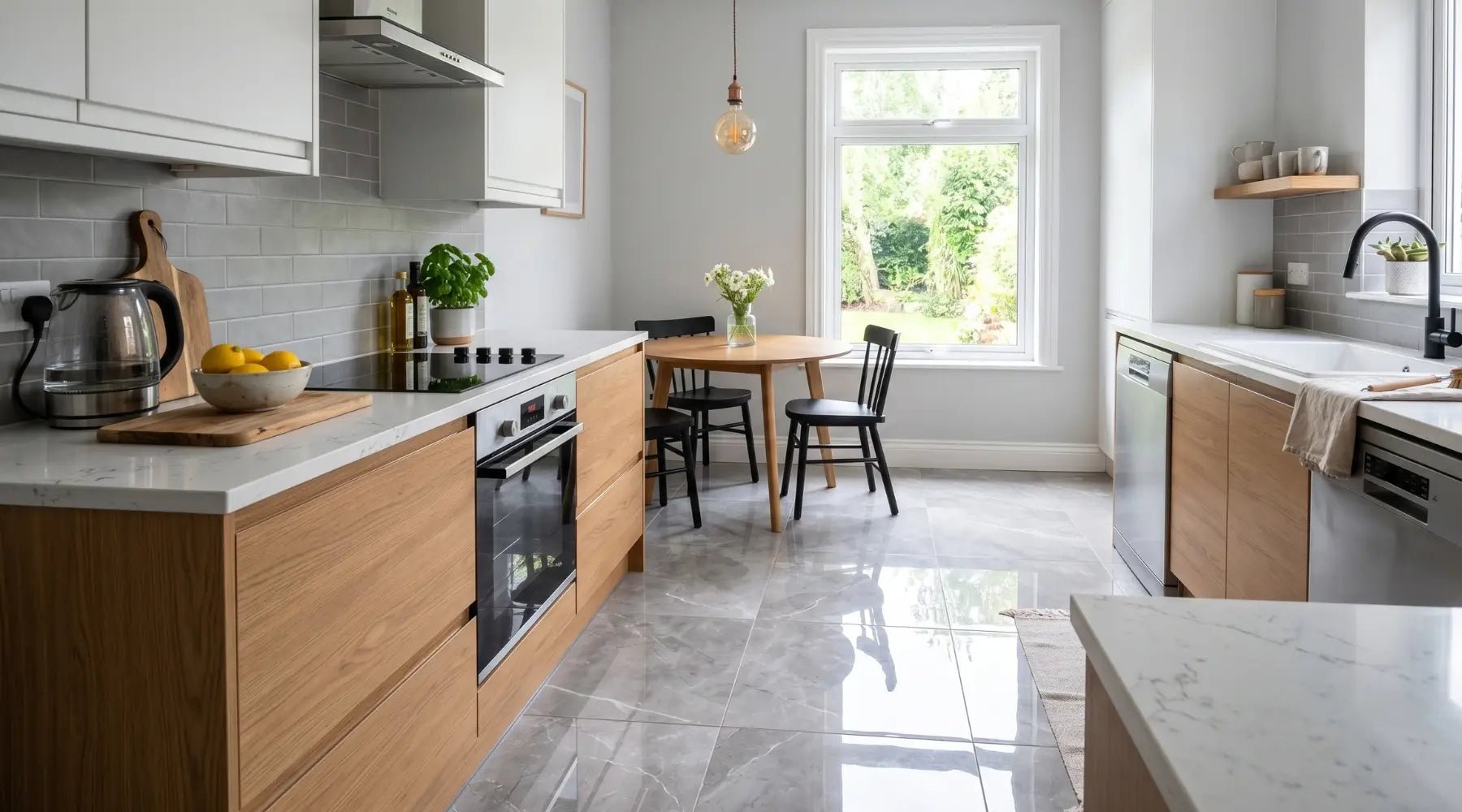
Designing functional cooking spaces requires exceptionally durable materials. Selecting matte wood-effect brown porcelain kitchen floor tiles provides excellent slip resistance alongside striking natural aesthetic appeal. Incorporating brown kitchen tiles into architectural layouts offers immense warmth, hiding daily dust effectively while complementing various cabinetry colours seamlessly.
Integrating brown tiles in kitchen environments demands careful assessment of light reflectance values and surface textures. Proper installation of brown tiles for kitchen projects guarantees long-lasting performance against intense moisture, extreme heat, and constant high foot traffic.
Material Durability: Ceramic vs Porcelain Brown Kitchen Tiles
Selecting dense porcelain kitchen tiles ensures high thermal mass, creating the perfect foundation for modern electric underfloor heating systems. Standard ceramic kitchen tiles provide an excellent, lightweight alternative for vertical spaces due to easier cutting properties during complex installations.
Homeowners routinely compare material densities when searching for resilient brown tiles kitchen surfaces to ensure maximum structural longevity. High-traffic areas benefit immensely from the superior water resistance found within dense porcelain bodies, completely preventing long-term degradation.
Assessing the specific porosity of kitchen brown tiles prevents unexpected water damage around active sink zones.
|
Attribute |
Ceramic |
Porcelain |
|
Density |
Standard |
Very High |
|
Placement |
Wall Application |
Floor & Wall |
|
Water Absorption |
Moderate |
Extremely Low |
Surface Finishes: Matte Slip Resistance and Glossy Reflectance
Matte finishes on resilient kitchen floor tiles create essential grip, achieving high R-ratings for ultimate slip prevention. Glossy surfaces on vertical kitchen wall tiles bounce incoming light around darker rooms, increasing overall brightness significantly.
Matching surface textures depends strictly on specific spatial placement and daily usage requirements within busy culinary zones. Combining a glossy brown tile kitchen backsplash with ultra-matte flooring creates optimal safety and visual balance simultaneously.
Routine maintenance differs vastly between finish types, requiring specific cleaning protocols for long-term care. Matte brown kitchen floor tile surfaces hide dust efficiently, while gloss requires frequent wiping to remove water spots.
Formats and Sizing: From Metro Brick to Large Formats
Utilising classic brick metro tiles delivers timeless appeal when applied in traditional brick-bond or dynamic herringbone layouts on splashbacks. Conversely, installing expansive 60x120cm rectangular tiles reduces visible grout lines, creating seamless visual continuity across large floorplans.
For standard UK properties, versatile 60x60cm square tiles strike an ideal proportion and scale for daily living. Such sizes facilitate highly accurate levelling during initial installation while dramatically minimising material wastage through fewer necessary cuts.
Popular layout strategies include:
· • Brick-bond for establishing traditional, rustic aesthetics
· • Stacked straight for promoting ultra-modern minimalism
· • Herringbone for generating dynamic visual interest across wide areas
Colour Combinations: Cream, Beige, and Brown Pairings
Incorporating blending cream kitchen tiles with darker espresso shades establishes striking contrast, preventing smaller rooms from feeling enclosed. Soft beige kitchen tiles serve as perfect transitional elements bridging dark base cabinets and bright white ceilings.
Exploring cream and brown kitchen wall tiles helps designers soften harsh contemporary lines and introduce organic warmth. Many brown and cream kitchen tiles feature subtle marble veining, adding intricate texture to minimalist structural layouts.
Incorporating varying shades requires careful consideration of natural light sources throughout the day. The right brown tile floor kitchen palette reflects incoming sunlight beautifully, enhancing the spatial perception of narrow corridors.
Natural Stone Replication: Marble and Patterned Variations
Advanced digital printing allows elegant marble effect tiles to mimic natural stone without requiring intensive, ongoing sealing routines. Selecting luxurious onyx kitchen tiles introduces breathtaking translucency, elevating standard brown kitchen tiles design concepts immediately.
Introducing decorative patterned kitchen tiles into central floor areas creates designated focal points underneath dining tables or central islands. Such highly decorative brown marble tiles kitchen applications combine traditional elegance with modern manufacturing durability flawlessly.
Designers appreciate the ultra low-maintenance aspect of printed designs over highly porous natural materials. Creative brown kitchen tiles ideas often revolve around replicating costly timber or natural stone on a highly sensible budget.
Wall Application: Splashbacks and Vertical Protective Zones
Exploring durable kitchen tiles options protects delicate plasterwork from hot oil splashes behind active hobs and busy sinks. Choosing durable brown kitchen backsplash tiles ensures easy wiping of daily cooking residue without any chemical damage occurring.
A well-designed brown tile backsplash kitchen zone anchors the entire room palette perfectly, establishing absolute visual harmony. Using brown wall tiles for kitchen installations requires matching grout colours carefully to either blend seamlessly or contrast effectively.
Moisture-resistant properties make specific materials ideal for splashback zones. A properly sealed brown tile kitchen backsplash completely resists staining from acidic foods like tomatoes or citrus juices.
Floor Installation: Traffic Flow and Grout Selection
Laying a brown kitchen floor tiles layout involves considering daily foot traffic patterns and potential dropped items. Dark brown floor tiles kitchen environments conceal muddy footprints seamlessly, dramatically reducing constant cleaning requirements in busy households.
Selecting premium epoxy grout for brown tiles for kitchen floor applications prevents deep moisture penetration and permanent staining. Proper installation of brown tiles kitchen floor environments ensures long-term structural integrity and lasting aesthetic preservation.
Many individuals seeking warmth often choose robust kitchen floor tiles brown hues over colder grey alternatives. A solid brown kitchen tile floor withstands heavy domestic appliances and dropped metal utensils without chipping or cracking.
Dark Tone Contrasts: Black, Grey, and Brown Synergies
Pairing rich chestnut floors with moody black kitchen tiles creates highly sophisticated, modern industrial aesthetics. Incorporating lighter grey kitchen tiles balances deep mahogany walls, adding cool undertones to otherwise exceptionally warm palettes.
Contrasting dark flooring against pristine white kitchen tiles amplifies natural daylight in compact properties considerably. Utilising such kitchen wall tiles brown variations alongside stark monochrome elements generates highly sought-after contemporary styling for modern homes.
A well-planned installation integrates smoothly with matte black fixtures and brass fittings. Such dark synergy provides immense architectural depth often missing in standard, heavily neutral cooking environments.
Vibrant Accents: Blue, Green, and Gold Integrations
Introducing calming blue kitchen tiles next to rich walnut flooring evokes peaceful, nature-inspired coastal atmospheres beautifully. Earthy green kitchen tiles complement warm terracotta or chocolate shades, bringing refreshing botanical warmth indoors effortlessly and organically.
Adding striking metallic accents via metallic gold kitchen tiles elevates the pure luxury factor of standard brown tile for kitchen projects. Reviewing different cream and brown kitchen tiles inspirations helps narrow down the absolute best accent colours for specific property styles.
Colour psychology plays a pivotal role in interior planning and hard material selection. Grounding the room with earth tones allows vibrant wall colours to stand out without causing any visual fatigue.
Wood Effect Kitchen Tiles: Porcelain Durability, Grout Matching, and Underfloor Heating Guidelines
Unlike highly porous natural timber, the best wood effect porcelain tiles resist sustained water damage entirely. Leading manufacturers produce long plank formats featuring rectified edges, allowing ultra-thin grout joints measuring just two millimetres across. Matching precise grout colours to the darkest knot in the printed tile pattern creates a continuously authentic timber appearance. Furthermore, extremely dense porcelain conducts thermal energy efficiently, functioning absolutely flawlessly above modern wet or electric underfloor heating mats.
Small Kitchen Tiles: Size, Finish, and Layout Strategies for Optical Expansion
Optimising a small kitchen tiles layout requires highly strategic planning regarding physical format and overall light reflectance. Glossy surface finishes bounce available ambient light continuously, tricking the human eye into perceiving a much wider room footprint. Laying rectangular planks in a diagonal or chevron pattern draws attention towards distant corners, physically elongating the visual space. Using perfectly matching grout colours prevents grid-like visual fragmentation, resulting in a beautifully cohesive and highly expansive surface area.
Insights
Selecting optimal surface materials transforms ordinary cooking zones into highly resilient, visually captivating environments. The correct combination of textures, specific formats, and tonal shades ensures absolute long-term satisfaction and unwavering structural reliability.
Thorough planning regarding light reflectance, slip resistance, and specific grout compatibility guarantees highly successful installation outcomes. Investing in premium quality materials provides enduring property value, elevating daily culinary experiences while easily maintaining pristine conditions against rigorous daily household demands.