


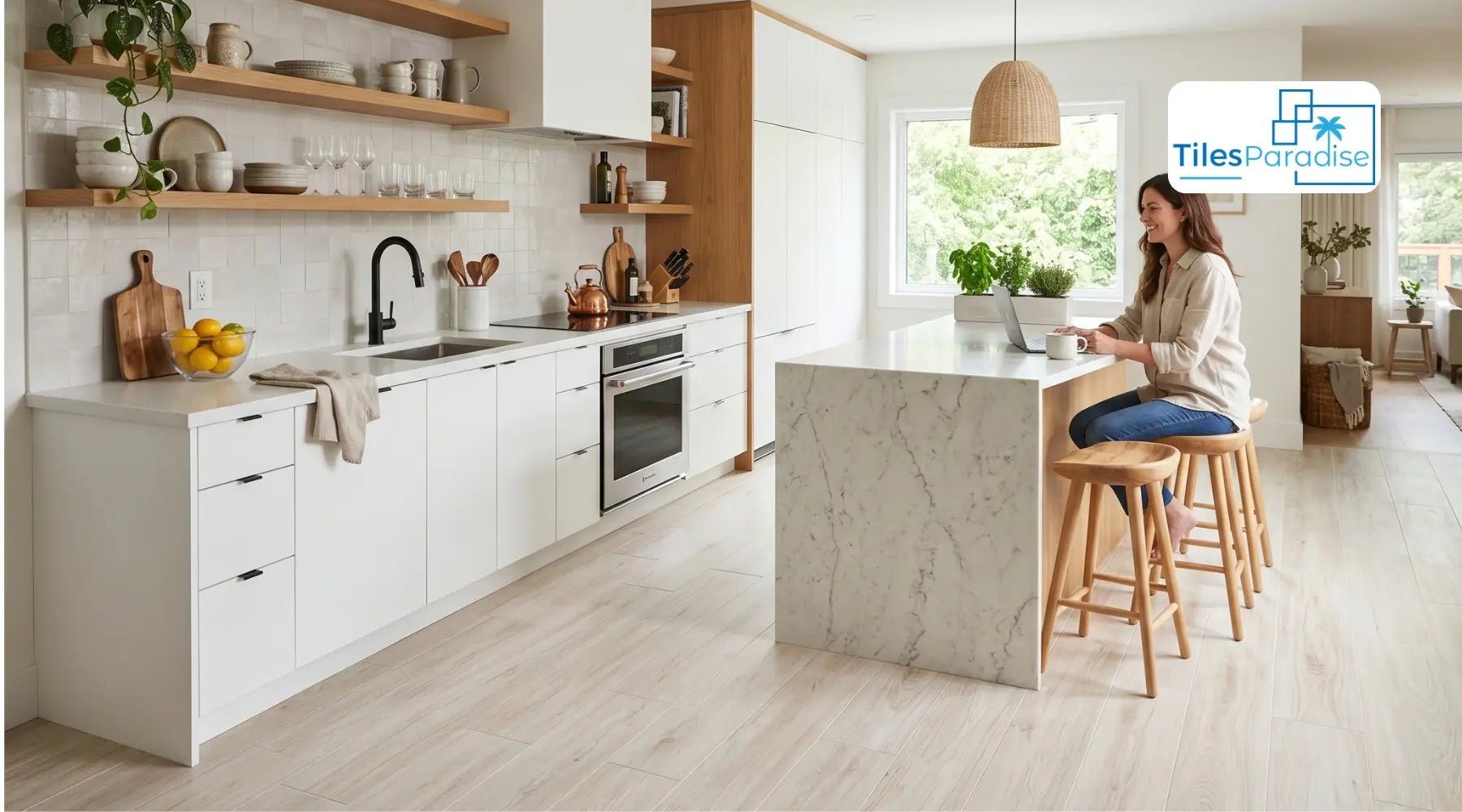
Selecting the best wood effect porcelain tiles for open-plan kitchens with underfloor heating requires careful consideration of thermal mass and moisture resistance. High-density porcelain rapidly conducts warmth while providing complete imperviousness to spills and culinary stains. Authentic grain textures mimic natural timber aesthetics without requiring intense chemical maintenance protocols.
Utilizing wood effect tiles ensures structural stability across vast floor plans, preventing the warping often associated with traditional organic hardwood materials during seasonal temperature shifts. Implementing advanced manufacturing technologies guarantees exceptional visual authenticity alongside unparalleled longevity for rigorous culinary environments.
Thermal Conductivity of Porcelain Wood Effect Tiles for Underfloor Heating
Porcelain possesses exceptional thermal retention capabilities, making the material highly compatible with modern radiant heating systems. The dense clay composition of robust porcelain kitchen tiles allows rapid heat transfer from subfloor pipes directly to the room surface. This efficiency reduces overall energy consumption while maintaining consistent ambient warmth across expansive architectural footprints.
Integrating sturdy kitchen floor tiles prevents the typical thermal expansion seen in natural timber installations. Consequently, a wood and tile floor combination maintains absolute structural integrity even under constant temperature fluctuations. Choosing specialized porcelain wood effect tiles guarantees optimal heat distribution without risking material degradation.
Water Resistance Variations in Kitchen Floorboard Tiles
Culinary environments demand surfacing materials capable of withstanding constant moisture exposure and frequent liquid spills. Traditional classic ceramic kitchen tiles offer moderate water resistance suitable for low-traffic zones, but high-density floorboard tiles featuring a porcelain body provide superior impermeability. Advanced manufacturing yields water absorption rates below 0.5 percent, securing maximum environmental sealing.
|
Specification |
Ceramic Substrate |
Porcelain Substrate |
|
Water Absorption |
3% to 7% |
Less than 0.5% |
|
Density Level |
Moderate |
Extremely High |
|
Frost Resistance |
Low |
Exceptional |
Applying moisture-resistant durable kitchen tiles prevents structural warping and mould proliferation within the subfloor beneath. Transitioning a wood floor to tile requires specific waterproofing membranes to ensure complete aquatic protection. High-quality ceramic floorboard tiles and wooden effect tiles deliver the visual warmth of timber alongside essential liquid resilience.
Dimensional Formats of Wood Look Floor Tiles
Achieving a realistic timber aesthetic relies heavily on selecting appropriate plank dimensions and accurate surface proportions. Elongated rectangular large tiles closely replicate authentic hardwood boards, minimizing visible grout lines across vast horizontal planes. Conversely, medium format square tiles suit compact layouts requiring complex geometric laying patterns or unique border designs.
Modern fabrication techniques produce wood look floor tiles in varied lengths, allowing staggered installations that flawlessly mimic randomized natural woodcuts. Utilizing wood effect ceramic tiles with rectified edges enables ultra-thin grout joints, enhancing the seamless illusion of organic lumber. Therefore, tiles with wood effect provide immense architectural design flexibility.
Herringbone Installation Patterns for Ceramic Floorboard Tiles
The classic herringbone configuration introduces dynamic visual movement and sophisticated architectural geometry to flat interior surfaces. Arranging decorative patterned kitchen tiles at precise 45-degree angles creates an interlocking zigzag motif that significantly expands the perceived room width. Implementing herringbone wood effect tiles demands meticulous subfloor leveling and exact mathematical calculation to maintain rigid pattern alignment.
While often associated with small classic metro tiles, the herringbone technique adapts beautifully to elongated wooden tiles. This complex arrangement provides superior structural locking, distributing heavy footfall weight evenly across the entire wood tiles floor. Consequently, wooden effect floor tiles installed in this precise manner exhibit enhanced durability and prolonged lifespan.
Grout Colour Matching Techniques for Wooden Floor Tiles
Creating a convincing timber illusion necessitates careful grout colour selection to disguise individual slab boundaries effectively. Selecting a pigmented epoxy resin that closely matches the darkest grain present within the wooden floor tiles ensures the joint recedes visually into the background. Pairing warm beige kitchen tiles with matching sandy grout prevents the distracting grid effect common in poorly executed residential installations.
Contrasting grout colours break the monolithic appearance, destroying the authentic continuity of wood effect flooring. Applying soft cream kitchen tiles or bright white kitchen tiles adjacent to dark timber aesthetics requires exact transitional caulking. Ultimately, precision grouting transforms individual tiles that look like wood into a unified, continuous surface.
Pros and cons of large format matte marble effect porcelain tiles for slip-resistant kitchen floors
Implementing large format matte surfaces reduces grout lines and offers excellent traction underfoot in busy culinary spaces. Heavy monolithic materials require reinforced subflooring to prevent structural cracking under immense weight loads. Reviewing a comprehensive marble effect kitchen tiles guide highlights the exact balance between luxurious aesthetics and mandatory slip resistance.
Pros and cons of polished porcelain onyx effect tiles for heat-resistant kitchen splashbacks
Polished onyx finishes reflect ambient light brilliantly and withstand high temperatures from adjacent stovetops without scorching or discolouring. High-gloss vertical surfaces show watermarks readily and demand frequent microfibre buffing to retain visual clarity. Consulting an onyx effect kitchen tiles guide provides detailed insights into maintaining pristine installations immediately above rigorous cooking zones.
Slip Resistance Ratings of Wood Effect Ceramic Floor Tiles
Safety standards dictate specific anti-slip properties for flooring materials installed in high-moisture culinary zones. Selecting modern grey kitchen tiles with an R10 or R11 slip rating provides essential grip, minimizing hazard risks caused by spilled cooking liquids. The textured grain pattern inherent in premium wood effect ceramic floor tiles naturally enhances functional surface friction.
Smooth, untextured finishes increase slipping probabilities significantly upon direct contact with airborne oils or damp footwear. Installing striking black kitchen tiles featuring deeply embossed timber textures combines dramatic visual impact with rigorous safety compliance. Every hardwood floor tile must successfully balance aesthetic authenticity with pragmatic domestic traction requirements.
Transitioning Wood Effect Flooring from Open-Plan Kitchens
Open-plan architectural designs require cohesive material transitions between active culinary zones and relaxed living spaces. Extending slate grey kitchen tiles seamlessly into adjoining rooms creates expansive visual continuity, making interior footprints appear significantly larger. Using uniform wood tiles eliminates awkward threshold strips and disruptive height variations between different flooring mediums.
Strategic border layouts using contrasting navy blue kitchen tiles can subtly demarcate functional zones without compromising the open-plan ethos. Connecting a true timber living room to a wood floor with tile requires precise level matching and flexible expansion joints. Ultimately, a continuous tile like hardwood application unifies the entire ground floor design scheme.
Structural Integrity of Tile Hardwood Combinations
Combining diverse surfacing materials necessitates precision leveling to prevent dangerous trip hazards and localized structural weakness. Matching a natural timber section to a robust tile hardwood perimeter demands exact subfloor calibration prior to applying adhesive. Installing premium wood effect floor tiles alongside existing baseboards ensures a flawless finish without requiring extensive carpentry modifications.
Applying wood effect porcelain floor tiles guarantees zero shrinkage or expansion, unlike traditional raw timber products. The integration of tiles with wood elements brings modern engineering to classic aesthetics, perfecting the tile with wood floor transition flawlessly. Utilizing wood look tiles and floor tiles wood effect offers unparalleled structural longevity for rigorous environments.
Maintenance Protocols for Hardwood Floor Tile Surfaces
Preserving the pristine appearance of porcelain timber replicas demands minimal yet consistent chemical intervention. Routine sweeping combined with pH-neutral detergent solutions effectively removes abrasive particulates without dulling the printed surface glaze. Unlike organic lumber, natural green kitchen tiles and tiles wood effect require no periodic sanding, sealing, or protective waxing.
-
Utilize pH-neutral cleaning solutions to preserve the advanced digital print glaze.
-
Avoid highly abrasive scrubbing pads to prevent micro-scratches on polished areas.
-
Rinse all surfaces with clean water to remove residual detergent buildup entirely.
Harsh acidic cleaners degrade cementitious grout joints over time, causing structural looseness and severe visual discolouration. Coordinating floor maintenance with protective kitchen wall tiles ensures a completely hygienic and easily sanitised culinary environment. High-quality wood look tile installations resist heavy wine, oil, and acidic fruit stains effortlessly.
Advanced Applications for Bathroom and Outdoor Integration
The exceptional moisture impermeability of porcelain facilitates extending timber aesthetics into severe wet zones and exterior landscapes. Installing wood effect bathroom tiles provides organic spa-like tranquility within shower enclosures without risking material rot or hidden mould penetration. Combining luxurious gold kitchen tiles with adjacent wood effect bathroom floor tiles establishes opulent, cohesive interior styling.
Exterior-grade porcelain planks feature robust thickness and extreme frost resistance, making wood effect outdoor tiles perfect for patio installations. Transitioning from interior elegant marble effect kitchen tiles to an alfresco dining area utilizes wood flooring tiles outdoor to bridge indoor and outdoor architecture. Furthermore, integrating translucent onyx kitchen tiles alongside wood effect wall tiles creates stunning vertical feature elements.
High-grade ceramic wood effect tiles and wooden effect tiles bathroom applications ensure flawless continuity. Specialized hardwood tile bathroom formats and wood effect tiles bathroom ranges provide total design freedom. Meticulous wood floor tiling practices ensure tiles for wood integration remains structurally sound, elevating the wood effect tiles kitchen standard globally.
Final Insights
Finalizing a flooring specification requires prioritizing both maximum material density and enduring aesthetic longevity. Porcelain timber replicas provide the definitive solution for high-traffic culinary environments, effortlessly withstanding heavy object impact, intense moisture, and fluctuating radiant temperatures. Advanced digital printing technology guarantees unparalleled visual authenticity, capturing the nuanced beauty of natural wood grain.
Selecting premium grade porcelain ensures a lifetime of structural stability without demanding rigorous or expensive upkeep routines. From expansive open-plan layouts to intricate herringbone patterns, engineered timber aesthetics elevate modern interior architecture instantly. Such robust surfacing investments deliver enduring daily functionality alongside timeless, sophisticated visual appeal.