





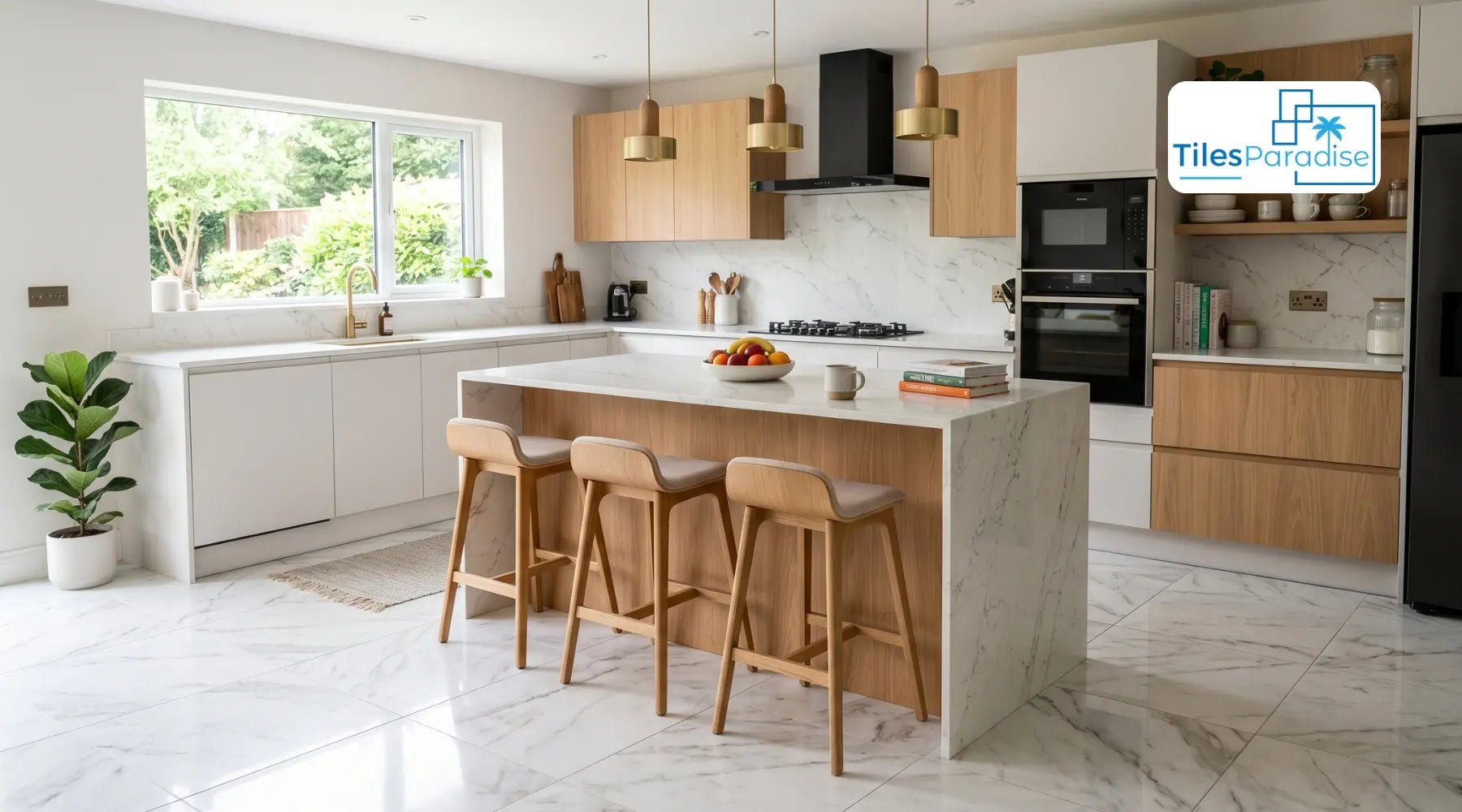
Analyzing the pros and cons of large format matte marble effect porcelain tiles for slip-resistant kitchen floors reveals vital insights for modern architectural projects. Property owners constantly seek flooring materials combining high-end aesthetics with practical daily usage requirements.
Selecting optimal marble effect kitchen tiles requires understanding specific material attributes like water absorption rates and Mohs hardness scale ratings. Such technical specifications directly determine long-term performance and durability in high-traffic residential culinary spaces.
Material Composition and Density of Kitchen Tiles Marble Effect
Understanding the structural differences between ceramic and porcelain bases remains crucial for residential design projects. Authentic marble look kitchen tiles manufactured from dense porcelain clay fired at extreme temperatures offer superior density compared to standard ceramic options. This high-density profile makes resilient porcelain kitchen tiles highly resistant to moisture penetration and accidental heavy impacts.
Alternatively, lightweight ceramic kitchen tiles present an excellent solution for vertical surfaces requiring less structural support during installation. The manufacturing process of porcelain results in a water absorption rate of less than 0.5 percent, officially classifying the material as fully vitrified. Such low porosity prevents liquid stains from penetrating the surface, ensuring long-term hygiene in active food preparation zones.
-
Porcelain Density: Frost resistant and built for heavy continuous foot traffic.
-
Ceramic Versatility: Lighter weight profile, perfect for rapid vertical wall applications.
-
Vitrification Process: The thermal firing method creating glass-like impermeability in tile bodies.
Exploring comprehensive kitchen tiles collections allows architectural designers to match specific material properties to exact spatial layout requirements.
Evaluating Marble Effect Kitchen Floor Tiles Formats
Room dimensions heavily influence the selection of specific tile sizes and structural layout configurations. Installing 60x120cm rectangular large tiles creates an illusion of expansive space by minimizing visible grout lines across the entire floor plan. Fewer intersecting grout joints mean fewer interruptions in the printed digital veining, creating a seamless, hyper-realistic stone aesthetic.
For standard residential layouts, versatile kitchen medium format 60x60cm square tiles provide excellent geometric balance and straightforward installation logistics. Careful format selection directly impacts visual flow and maintenance requirements for stunning marble effect floor tiles kitchen installations. Larger formats require perfectly level substrates to prevent uneven lippage, demanding skilled professional leveling prior to application.
-
Minimizes visual floor clutter by significantly reducing intersecting grout joints.
-
Enhances the natural continuity of printed continuous marble veining patterns.
-
Requires specialized self-leveling compounds for flawless concrete subfloor preparation.
Slip Resistance Ratings for Kitchen Floor Tiles Marble Effect
Flooring safety metrics rely on standardized R-ratings to evaluate potential slip hazards under varying wet conditions. High-quality kitchen floor tiles marble effect feature textured matte finishes achieving strict R10 or R11 slip resistance certifications. Integrating secure kitchen floor tiles prevents dangerous sliding accidents near wet sink areas or active culinary cooking zones.
Such textured marble look kitchen floor tiles maintain luxurious high-end aesthetics while strictly adhering to mandatory residential safety building codes. Glossy polished finishes, while visually striking, present significant slipping hazards when exposed to spilled liquids or airborne cooking oils. Therefore, matte or lightly textured finishes remain the superior, responsible choice for all horizontal foot-traffic areas.
|
Rating Scale |
Surface Texture Type |
Recommended Architectural Application |
|
R9 |
Smooth / Minimal Friction |
Dry dining zones, transitional hallways |
|
R10 |
Light Texture / Medium Friction |
Standard residential culinary spaces |
|
R11 |
Coarse Texture / High Friction |
Commercial kitchens or heavy wet zones |
Thermal Conductivity in Marble Effect Floor Tiles Kitchen
Modern home climate control systems frequently incorporate radiant underfloor heating mechanisms to maximize seasonal energy efficiency. Dense porcelain white marble effect kitchen floor tiles possess exceptional thermal conductivity, efficiently transferring warmth from subfloor heating elements directly into the room. This thermal efficiency ensures beautiful marble effect kitchen tiles remain comfortably warm underfoot during freezing winter periods.
Unlike natural hardwood or laminate materials, porcelain does not warp, expand, or degrade when exposed to continuous thermal temperature fluctuations. Such structural dimensional stability makes white marble effect kitchen tiles the ultimate companion material for both electric mat and hydronic piping heating systems. The rapid heat retention properties of dense porcelain also help lower overall household heating energy consumption over time.
Design Versatility with Marble Effect Kitchen Wall Tiles
Vertical installations demand advanced materials balancing visual impact with vital moisture and stain resistance properties. Incorporating elegant kitchen wall tiles marble effect creates stunning focal points behind commercial-grade ranges and food preparation zones. Diverse kitchen wall tiles collections include polished finishes reflecting ambient light to instantly brighten confined or windowless architectural spaces.
Designers frequently utilize such striking marble effect tiles kitchen wall layouts to protect drywall from boiling culinary splatters and steam damage. Continuous slab-effect vertical layouts spanning from the countertop to the ceiling visually elevate room heights, generating a grand architectural atmosphere. Replacing porous natural stone with impermeable porcelain marble effect kitchen wall tiles eliminates the constant anxiety of permanent tomato or hot oil stains.
Colour Alternatives for Marble Look Tiles for Kitchen Wall
Neutral tones historically dominate culinary spaces, but contemporary interior designs warmly embrace bolder chromatic palettes. While classic white kitchen tiles remain eternally popular, dramatic black kitchen tiles infuse modern environments with sophisticated, moody industrial character. Nature-inspired green kitchen tiles paired with subtle grey kitchen tiles establish remarkably calming, organic atmospheres indoors.
Selecting darker marble look tiles for kitchen wall installations effectively masks minor daily liquid splashes between scheduled deep cleaning sessions. Rich emerald or deep charcoal bases featuring high-contrast white veining deliver spectacular visual drama without completely overwhelming the room. Advanced LED lighting design plays a crucial role in highlighting the intricate mineral detailing printed onto darker porcelain surfaces.
Integrating metallic brass or matte black brassware alongside dark marble look tiles for kitchen wall areas completes the modern design transition. Architectural professionals prioritize chromatic harmony to ensure the final cooking space feels highly cohesive and intentionally curated.
Integrating Exotic Hues and Onyx Kitchen Tiles
Warmer base tones generate inviting, highly comfortable atmospheres within active family-centric culinary environments. Subdued beige kitchen tiles and soft cream kitchen tiles offer highly versatile, neutral backdrops for various natural timber or painted cabinetry finishes. For striking visual contrast, vibrant blue kitchen tiles or highly translucent onyx kitchen tiles introduce unparalleled luxury and spatial depth.
Onyx-inspired digital designs replicate the luminous, cloud-like formations of natural gemstone, instantly elevating the standard interior into a bespoke masterpiece. Strategic under-cabinet lighting beautifully illuminates the crystalline structural illusions printed within the light-colored porcelain surface glaze. Such vibrant alternatives to traditional Carrara or Calacatta patterns allow for highly personalized, unique residential aesthetics.
Advanced glazing techniques ensure colored porcelain remains entirely fade-resistant even under direct, intense ultraviolet sunlight exposure. Such exterior-grade durability guarantees the chosen exotic hues maintain initial vibrancy for decades without requiring costly restorative maintenance.
Layout Patterns with Metro and Patterned Kitchen Tiles
Creative installation techniques rapidly elevate standard rectangular tile formats into bespoke architectural design features. Arranging classic metro tiles in dynamic herringbone or vertical stack bonds modernizes traditional wall spaces instantly. Incorporating intricate patterned kitchen tiles alongside opulent gold kitchen tiles creates distinct focal borders or captivating customized backsplash designs.
Such precise styling makes ordinary marble effect wall tiles kitchen installations truly remarkable and visually dynamic from every angle.
-
Herringbone Pattern: Zig-zag interlocking arrangements creating dynamic forward movement and visual width.
-
Vertical Stack Bond: Straight vertical alignment specifically emphasizing interior ceiling height.
-
Classic Brick Bond: Traditional staggered placement offering timeless, universally recognized appeal.
Utilizing specialized epoxy grout for marble effect tiles kitchen applications provides ultimate moisture and stain resistance in heavy cooking zones. Selecting contrasting grout colors further accentuates the chosen geometric layout, adding another distinct layer of bespoke interior customization.
What colour cabinets go best with gold kitchen splashback tiles
Pairing metallic finishes requires careful consideration of complementary undertones to achieve harmonious interior color balance. Navy blue or deep charcoal cabinetry creates a striking contrast, allowing radiant metallic installations to serve as the primary visual anchor. Alternatively, pure white or soft taupe woodwork establishes a refined, understated elegance when combined with luminous reflective splashbacks.
For comprehensive professional design strategies, reviewing a detailed gold kitchen splashback tile pairing guide provides exact color matching formulas. Combining highly matte cabinet fronts with vividly reflective gold surfaces prevents the overall design layout from appearing overly saturated.
white glazed ceramic kitchen wall tiles for small kitchens
Compact culinary spaces benefit immensely from high-gloss surfaces capable of maximizing available natural window light. Reflective white glazed ceramic kitchen wall tiles for small kitchens visually expand tight architectural perimeters by bouncing illumination across the entire room. Installing such luminous materials in horizontal brick-bond patterns further emphasizes lateral space, tricking the human eye into perceiving a wider floor plan.
Homeowners frequently discover that upgrading to bright ceramic finishes completely transforms cramped environments into airy, highly welcoming culinary zones. The flawlessly smooth glaze also facilitates rapid daily wipe-downs, significantly simplifying standard household cleaning chores.
Maintenance Protocols for Marble Look Tile Kitchen Surfaces
Preserving the pristine appearance of dense porcelain surfaces involves remarkably straightforward daily cleaning regimens. Unlike highly porous natural quarried stone, a durable marble look tile kitchen installation requires no periodic chemical sealing to prevent stubborn staining. Wiping down pristine white marble effect kitchen wall tiles with gentle pH-neutral solutions easily removes cooking grease without degrading the printed digital veining.
Consistent basic care ensures long-lasting visual brilliance across all installed residential surfaces year after year. Harsh abrasive scrubbers or highly acidic chemical cleaners remain entirely unnecessary and may accidentally dull glossy surface glazes over time. Simple warm water combined with a clean microfiber mop effortlessly maintains the strict hygienic integrity of the entire culinary space.
Final Insights
Selecting premium porcelain alternatives over natural stone delivers unparalleled longevity without sacrificing visual grandeur in residential interior projects. Advanced digital manufacturing technology continues producing remarkably realistic mineral veining patterns completely indistinguishable from authentic, expensive quarried stone slabs.
Investing in such high-quality surfacing materials ensures enduring daily functionality across highly active, demanding culinary environments. Proper spatial format selection combined with appropriate surface slip resistance ratings guarantees a structurally safe, highly hygienic, and aesthetically flawless architectural space for decades.