





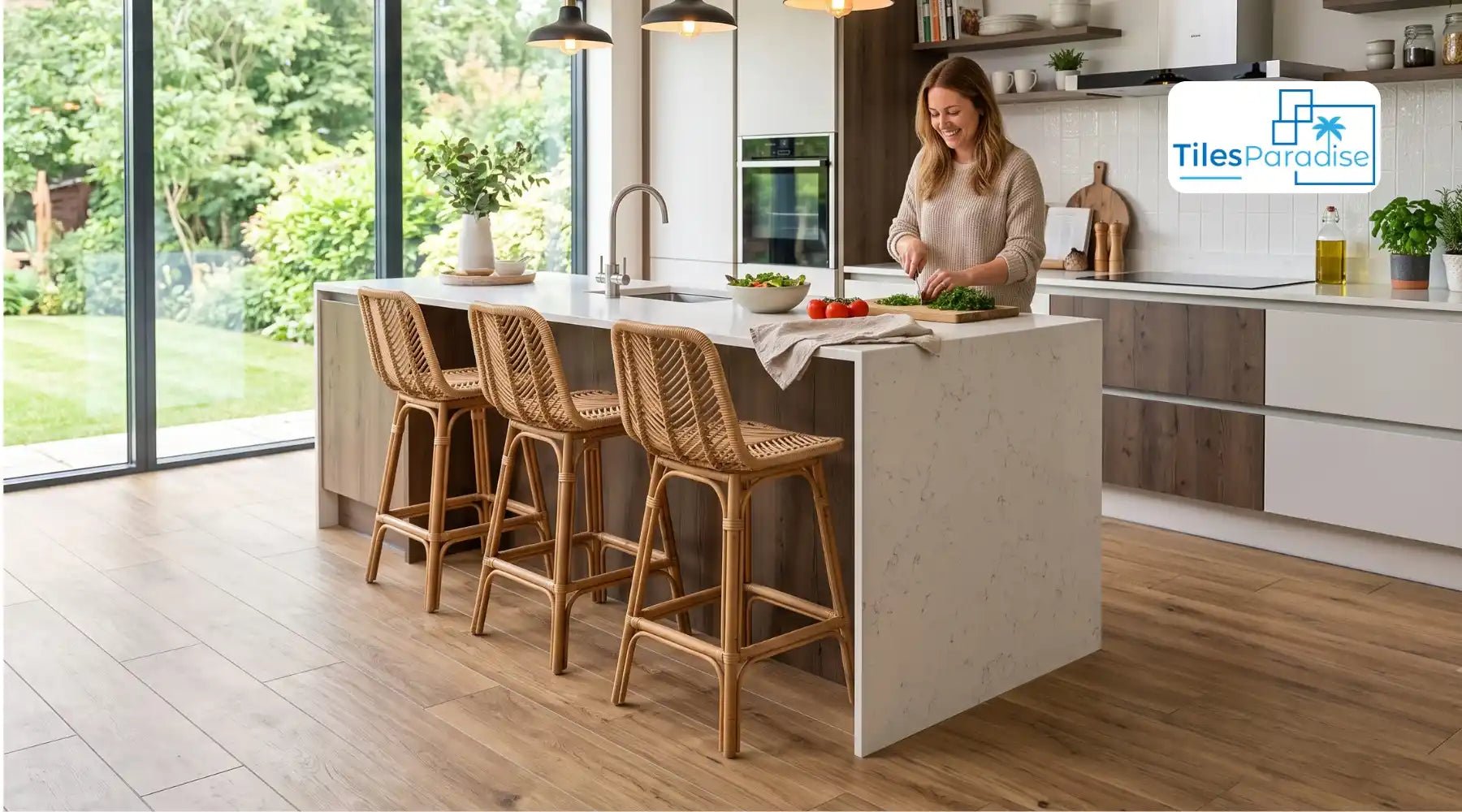
Wood effect ceramic floor tiles bring the warmth of natural timber into a home without the upkeep that solid wood demands. For wet rooms, anti-slip wood effect ceramic floor tiles for bathroom spaces solve a genuine safety concern while keeping the timber look fully intact underfoot.
Shoppers researching wood effect floor tiles often struggle to find material, slip rating, size and room guidance in one single place. This guide brings every detail together, covering ceramic and porcelain wood effect tiles alongside vinyl alternatives, colour choices, patterns and realistic UK pricing.
What Are Wood Effect Ceramic Floor Tiles?
Wood effect ceramic tiles are fired clay tiles finished with a high definition printed layer that recreates the grain, knots and colour variation of real timber. Unlike solid or engineered wood, ceramic wood effect tiles resist moisture, never warp and need no sanding, staining or sealing across a lifetime of daily use. The outcome is a floor tile wood effect surface that reads as oak, walnut or ash planks yet performs exactly like standard ceramic flooring underfoot. Search terms like tile floor wood effect and floor wood effect tiles both point to the same reliable, water resistant category, and browsing the full ceramic tiles collection helps compare grain patterns before choosing a final plank.
How Do Anti-Slip Wood Effect Ceramic Floor Tiles Work In Bathrooms?
Anti-slip wood effect ceramic floor tiles for bathroom use carry a tested slip rating, usually shown as R9 to R11 or a pendulum test value, confirming grip levels when the surface gets wet. A textured matt finish, rather than a polished gloss glaze, builds traction underfoot, which matters most directly around showers, baths and basin splash zones. Confirming the exact slip rating before checkout removes guesswork and closes the safety gap many shoppers report when comparing wood effect bathroom floor tiles across retailers, searching either wood effect tiles bathroom or wood effect bathroom tiles ranges.
|
Slip Rating |
Grip Level |
Best Use |
|
R9 |
Light grip |
Dry bathroom floors |
|
R10 |
Moderate grip |
Shower surrounds and wet bathroom floors |
|
R11 |
High grip |
Wet rooms and walk-in showers |
Which Materials Come In Wood Effect Tiles: Ceramic, Porcelain Or Vinyl?
Wood effect tiles are manufactured in three core materials: ceramic, porcelain and vinyl, each suited to a different budget and wear level. Ceramic wood effect tiles cost less upfront and suit low traffic rooms, while porcelain wood effect tiles bring a denser clay body from the porcelain tiles collection built for busy kitchens and hallways. Vinyl, sold widely as wood effect vinyl tiles, brings a softer, warmer feel underfoot and stays fully waterproof, a practical option for wet rooms and rental properties. Comparing the complete wood effect tiles range side by side helps match the right material to the right room before ordering samples.
Wood Effect Porcelain Tiles For Modern Bathroom Floor
Porcelain wood effect tiles suit a modern bathroom floor because the dense, low porosity clay body resists water absorption almost completely, even in constant humidity. Grey and taupe tones across porcelain wood effect floor tiles pair naturally with matt black fittings and white sanitaryware for a clean, contemporary finish. Full detail on plank sizes, finishes and slip data sits inside this wood effect porcelain guide.
Waterproof Wood Effect Vinyl Floor Tiles For Kitchens And Bathrooms
Waterproof wood effect vinyl floor tiles handle spills in kitchens and splashes in bathrooms without swelling, lifting or staining at the seams. Vinyl also feels noticeably warmer and quieter underfoot than ceramic wood effect tiles, a detail that suits family homes with young children or older residents. Installation steps and wear layer thickness are covered fully inside this vinyl flooring guide.
What Sizes And Finishes Suit Wood Effect Floor Tiles Best?
Wood effect floor tiles typically arrive as long planks, ranging from around 150mm strips up to full length boards, designed to mimic genuine timber floorboards. Larger formats from the 60x120cm rectangular tiles range reduce grout lines and create a more seamless plank effect across open plan kitchens and living spaces, and the wider floor tiles collection shows how such formats compare against classic stone and plain finishes. Matt, lightly textured or embossed finishes replicate real wood grain most convincingly, while high gloss glazes suit accent walls rather than busy floors. Buyers typing wood effect tiles floor or floor tiles wood effect into search bars are usually comparing plank size against room dimensions before deciding on a final format.
Which Rooms Suit Wood Effect Tiles: Kitchen, Bathroom Or Hallway?
Wood effect tiles kitchen installations benefit from strong scratch resistance against dropped pans and dragged chairs, and browsing the dedicated kitchen tiles collection alongside the 60x60cm square tiles format speeds up size selection for cooking zones. In bathrooms, wood effect bathroom wall tiles from the wall tiles collection paired with a matching floor from the premium bathroom tiles range build a cohesive, spa style scheme from wall to floor. Hallways and living rooms suit wood effect wall tiles as a feature panel alongside flooring, since foot traffic runs heavy but direct moisture exposure stays low. Many households search wood effect floor tiles kitchen and wood effect tiles wall together when planning a full ground floor renovation, and bathroom wood effect floor tiles or wood effect floor tiles bathroom searches usually follow a similar pattern, paired with a slip rating check.
What Colour Options Work Best For Wood Effect Ceramic Tiles?
● Grey wood effect floor tiles suit Scandinavian, minimalist and industrial schemes
● Oak wood effect floor tiles bring a warmer, more traditional tone to living spaces
● Walnut and chestnut shades hide scuffs well in busy hallways
● Pale ash and white washed tones make small bathrooms feel larger and brighter
Testing a physical sample under natural daylight before ordering a full pack avoids the common mismatch between an online product photo and the finished floor tone.
How To Lay Herringbone Wood Effect Tiles For A Parquet Look?
Herringbone wood effect tiles arrange short planks at ninety degree angles to recreate a traditional parquet floor pattern using durable ceramic or porcelain instead of solid timber. This layout suits narrower plank formats and reads best across hallways, entryways or feature zones rather than tightly sized bathrooms, where cutting waste rises sharply. A professional installer experienced with wood effect ceramic tiles keeps grout lines tight and pattern symmetry accurate across a full room.
Are Wood Effect Outdoor Tiles Durable Enough For Patios?
Wood effect outdoor tiles arrive with a thicker 20mm body and a higher slip rating built specifically for patios, garden paths and pool surrounds. Frost resistant porcelain wood effect tiles handle UK winters without cracking or flaking, unlike natural timber decking that needs annual oiling or staining. Matching an indoor wood effect ceramic floor tiles scheme with the outdoor equivalent creates a smooth visual line running from kitchen straight through to garden. Ranges covering wood effect porcelain tiles outdoor use now commonly include matching indoor planks for a seamless transition.
How To Maintain And Clean Wood Effect Floor Tiles?
Each wood effect tile needs only warm water and a mild detergent for routine cleaning, with no sanding, sealing or refinishing required across decades of use. Grout lines benefit from a stain resistant additive at installation time, which prevents discolouration in high moisture rooms such as bathrooms and kitchens. Sweeping or vacuuming before mopping stops loose grit from scratching the printed surface layer over years of daily foot traffic.
What Does It Cost To Buy Wood Effect Ceramic Floor Tiles In The UK?
Prices for wood effect ceramic floor tiles across the UK generally sit between fifteen and forty pounds per square metre, with porcelain and larger plank formats landing at the higher end. Vinyl alternatives often cost less upfront, yet ceramic and porcelain wood effect tiles tend to last longer and add more resale value to a property over time. Comparing tiles wood effect options across UK retailers, alongside ordering free samples, remains the safest route to a fair price and a correctly rated, water resistant finish.
Final Insights
Wood effect ceramic floor tiles resolve the long running conflict between wanting a timber look and needing a durable, genuinely low maintenance surface. Checking slip rating, material type and room suitability before buying removes most common complaints, particularly around bathroom safety and colour mismatch.
For a bathroom renovation, anti-slip wood effect ceramic floor tiles for bathroom spaces paired with a matching wall tile deliver both safety and a cohesive style throughout a home. Ordering a physical sample first remains the simplest way to confirm the right tone, finish and grip level for any room.