





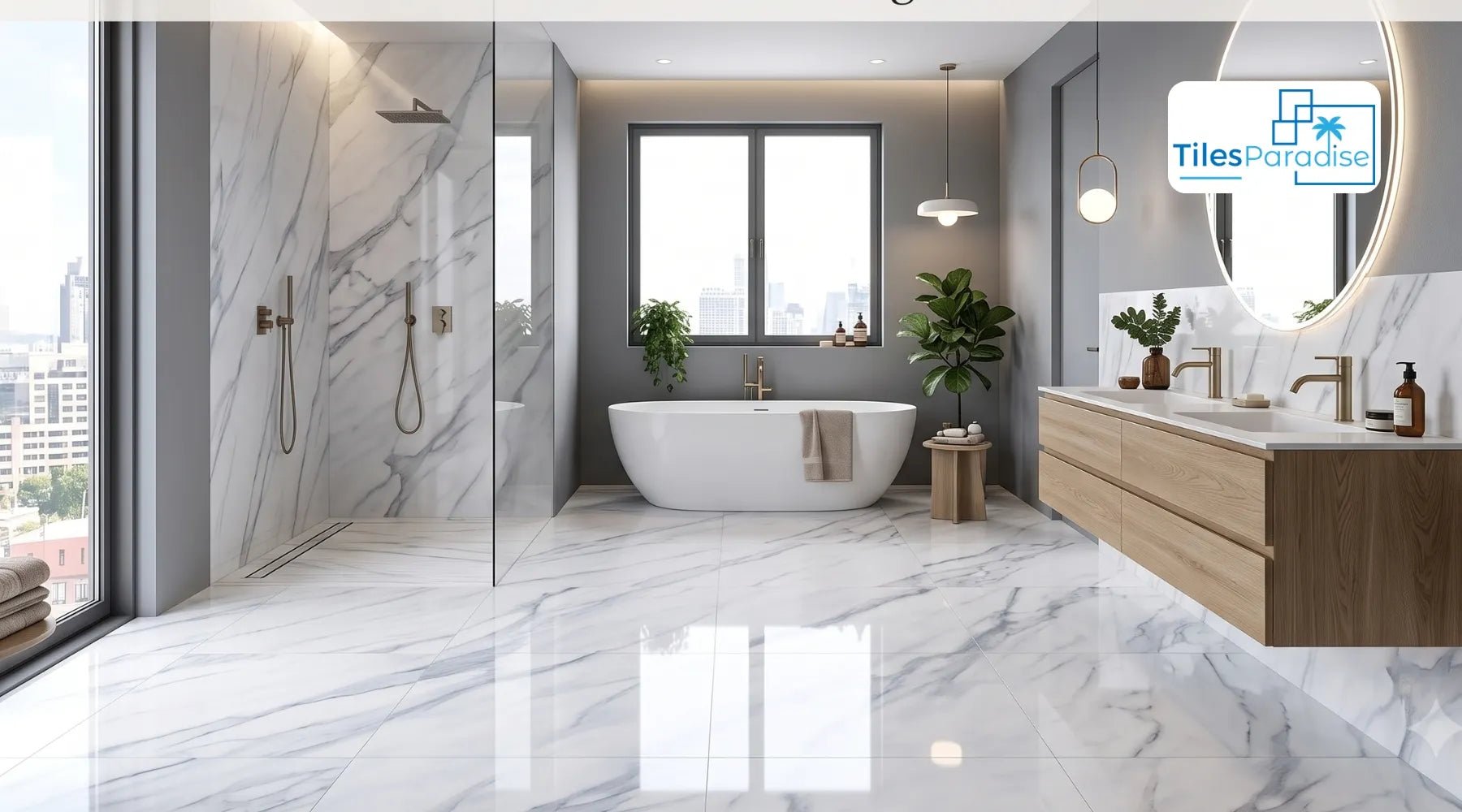
Honed marble bathroom floor tiles UK homeowners increasingly request combine timeless veining with a soft, matte grip suited to wet rooms. Unlike glossy stone, a honed finish scatters light rather than reflecting it, cutting slip risk without losing natural elegance.
This guide covers finish choices, colour options, sealing routines, sizing and cost so a bathroom renovation moves forward with confidence. Slip ratings, installation notes and answers to common UK buyer questions follow below.
What Is Honed Marble And How Does It Compare To Polished Finishes?
Honed marble carries a flat, satin surface produced by grinding stone short of a mirror polish. This process leaves a slightly textured finish that grips bare feet safely across wet bathroom floors. Polished marble reflects light and shows veining more vividly, though the glossy surface turns slippery once damp.
Most fitters recommend a honed or lightly brushed marble tile for bathroom floors and reserve polished marble for walls or low-traffic feature areas. A grey marble tile floor in honed finish, paired with a polished marble wall tile strip, balances safety and shine effectively.
Why Do Marble Bathroom Tiles Suit UK Wet Rooms?
Marble bathroom tiles handle steam, splashing and underfloor heating well once sealed correctly. Natural stone holds heat efficiently, keeping a floor warm underfoot through cold British mornings. Grey marble tiles and white marble tiles both perform reliably in humid conditions provided grout lines stay sealed.
UK bathroom floors generally need an R10 or R11 slip rating under wet-pendulum testing. Honed marble effect floor tiles typically achieve R10, sufficient for standard domestic bathrooms and ensuite floors, while walk-in shower trays benefit from textured porcelain rated R11 for extra grip.
Which Marble Tile Colours Work Best For UK Bathrooms?
Colour choice shapes the entire mood of a bathroom scheme, from bright coastal tones to moody, dramatic finishes. Popular options among UK buyers include:
• White marble floor tiles for a bright, spa-style bathroom
• Grey marble floor tiles for a contemporary, low-maintenance look
• Black marble tiles for bold, high-contrast schemes
• Green marble tiles for a rich, jewel-toned feature wall
• Gold marble tiles for warm, luxury accents
Many renovators pair a marble effect bathroom tiles floor with a black and white marble tile feature wall for visual balance. Large marble tiles in a single tone also suit minimalist bathroom schemes seeking a calm, uncluttered look.
How Should Marble Floor Tiles Be Sealed And Maintained?
Natural marble tile remains porous, so a quality impregnating sealer prevents staining from soap, shampoo and standing water. Resealing every twelve to eighteen months keeps a marble bath tile surface protected in a typical UK bathroom. Cleaning with a pH-neutral stone cleaner, rather than bleach or vinegar, preserves the finish and prevents etching over time.
Marble effect porcelain tiles skip this routine entirely, since a dense, vitrified body absorbs almost no moisture. Buyers wanting genuine marble tile bathroom character without ongoing sealing duties often choose porcelain as a practical middle ground.
What Size Marble Effect Floor Tiles Suit A Bathroom Layout?
Large marble tiles in 60x120cm formats reduce visible grout lines and suit open, walk-in shower rooms well. Smaller formats around 30x60cm work better in compact cloakrooms where cutting waste needs to stay low. Buyers comparing large format floor tiles against smaller layouts should factor in room shape, pipework access and existing skirting heights before ordering.
Square formats sit well in period bathrooms with traditional proportions, while long rectangular formats suit contemporary, open-plan wet rooms. Ordering slightly more material than the measured floor area covers cutting waste around fittings and pipework.
Marble Tiles Or Marble Effect Porcelain: Which Suits A UK Bathroom Better?
Natural marble tiles offer unmatched veining depth, though upkeep includes regular sealing and careful, pH-neutral cleaning. Marble effect porcelain tiles replicate the same look with near-zero water absorption and no sealing requirement at all. Many trade fitters now recommend marble effect porcelain tiles for busy family bathrooms where low maintenance outweighs the appeal of genuine stone.
Budget also plays a role, since natural stone slabs generally cost more per square metre than a well-made porcelain equivalent. A ceramic tile range offers a further budget-friendly option for smaller projects or rental properties.
How Much Do Honed Marble Bathroom Floor Tiles Cost, Including Installation, In The UK?
Pricing for marble tile ranges widely based on origin, veining quality and finish grade, with genuine stone sitting above marble effect alternatives. Installation adds further cost, particularly where waterproof tanking, levelling and narrow-joint grouting apply. A short reference table below outlines common installation factors fitters weigh before starting work:
|
Factor |
Typical Requirement |
|
Substrate |
Fully waterproofed, tanked base |
|
Adhesive |
Flexible, rapid-set tile adhesive |
|
Grout width |
Narrow joints, around 2-3mm |
|
Sealing |
Impregnating sealer before grouting |
Skipping tanking or using a rigid, non-flexible adhesive remains one of the most common causes of cracked marble bath tile installations in UK homes. Getting a written quote covering both materials and labour avoids unexpected costs mid-project.
How Can Marble Tiles Style Different Rooms Across A UK Home?
A marble floor tile scheme rarely stops at the bathroom door once a renovation gets underway. Matching tones across a hallway, kitchen or utility room ties a home together visually. Browsing the full premium bathroom tiles range alongside wall tile options helps homeowners plan a coordinated look room by room.
Bathroom Tile Ideas For Modern Homes
Modern bathroom schemes often pair a honed marble effect floor tiles surface with a polished marble wall tiles feature strip behind the basin. Fresh inspiration and layout examples sit in the bathroom styling guide, covering colour pairing and lighting tips for small and large spaces alike.
Best Porcelain Kitchen Floor And Wall Tiles For Small Kitchens
Small kitchens benefit from large-format porcelain in marble effect finishes, since fewer grout lines make a compact floor read as more spacious. The kitchen tile size guide explains format, finish and material choices suited to tight galley layouts and open-plan extensions alike. Anti-slip kitchen floor tiles with a matt finish also handle spills better than a high-gloss surface.
Frequently Asked Questions About Marble Bathroom Floor Tiles
- Are honed marble bathroom floor tiles UK safe for wet rooms?
Yes, the matte, low-shine surface offers noticeably better grip than polished marble, making honed finishes a safer choice for shower floors and wet rooms.
2. Can a marble tile bathroom floor be installed over underfloor heating?
Yes, marble conducts heat efficiently and pairs well with underfloor heating systems common in UK bathroom renovations.
3. How often should a marble bathroom tile floor be resealed?
Most UK bathrooms need resealing every twelve to eighteen months, though heavy daily use may shorten that interval.
4. Is marble effect porcelain a good alternative to natural marble tiles?
Yes, marble effect porcelain needs no sealing, resists staining fully, and suits busy family bathrooms extremely well.
Final Insights
Choosing honed marble bathroom floor tiles UK buyers can rely on comes down to balancing natural elegance against practical upkeep. A matte, sealed finish delivers safe grip, warmth underfoot and a timeless look suited to both period and contemporary UK homes.
Choosing between genuine stone and a marble effect porcelain alternative, correct installation and regular sealing protect the investment long term. Matching floor and wall tones across a bathroom, kitchen or hallway creates a cohesive, elevated finish throughout a renovation project.