





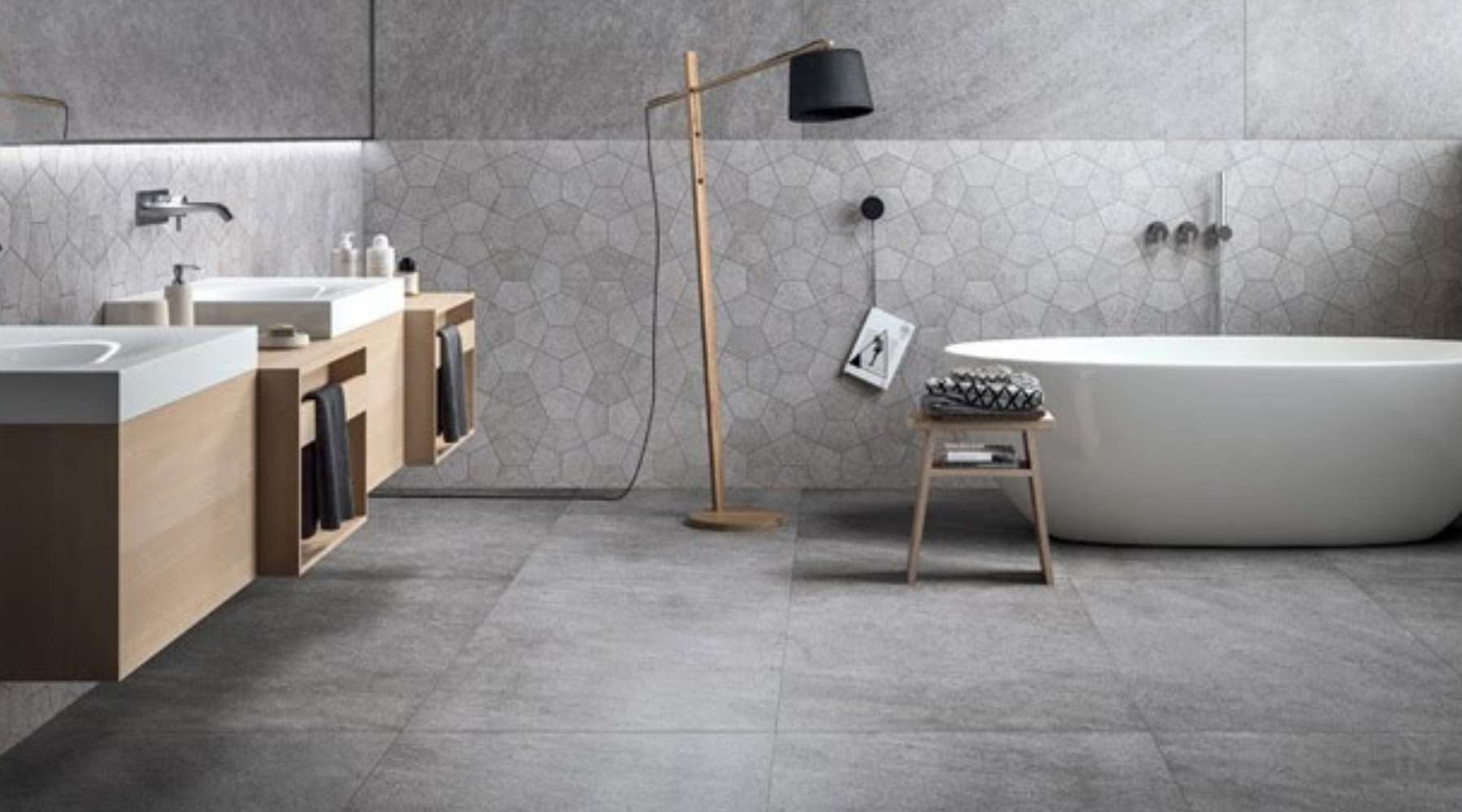
Choosing the right bathroom wall and floor tiles transforms a functional space into one that genuinely feels considered. Whether the goal is a calming spa retreat, a bold modern statement, or a practical family bathroom built to last, the tile selection shapes every part of the result, from moisture resistance and slip safety to how light moves across the room.
This guide covers everything needed to buy bathroom tiles with confidence, from material performance and tile sizing to coordinating wall and floor combinations, grout choices, and the latest UK design trends worth knowing before placing an order.
What Makes Porcelain the Top Bathroom Tile Material?
Porcelain consistently outperforms other materials in wet environments, and the technical reasons are straightforward. It fires at higher temperatures than ceramic, producing a vitrified body with a water absorption rate below 0.5%, well within the BS EN 14411 standard for use in bathrooms and wet rooms. That density means soap scum, limescale, and bathroom cleaning products sit on the surface rather than penetrating it.
For bathroom floor and wall tiles in high-use spaces, porcelain lasts 50 years or more under regular conditions. Large-format porcelain, particularly in 60x120cm, reduces grout line coverage by up to 35%, which directly lowers the frequency of grout cleaning and the risk of mould forming in joints.
The Harvest Beige Porcelain Matt Sugar-Effect Anti-Slip wall and floor tile combines this technical durability with a subtly textured surface that delivers reliable grip underfoot, a practical choice for family bathrooms where slip resistance is a priority. For a cooler, calming tone in the same format, the Harvest Blue Anti-Slip carries the same slip-rated performance with a distinctive spa-like colour.

Ceramic vs Porcelain: Which Is Right for Walls and Floors?
The distinction matters more than most buyers realise before starting a project:
|
Feature |
Porcelain |
Ceramic |
|
Water Absorption |
Below 0.5% |
3%–10% |
|
Weight per m² |
20–24 kg |
15–18 kg |
|
Ideal Application |
Floors, showers, wet rooms |
Walls, splashbacks, low-traffic floors |
|
Lifespan |
50+ years |
20–30 years |
|
Slip Resistance (R-rating) |
R10–R13 available |
Lower COF ratings typically |
|
Cost |
Moderate to premium |
Budget to moderate |
Ceramic remains an excellent tile for bathroom floors and walls in lower-moisture zones. Its lighter body makes it simpler to handle on wall surfaces, and the glaze layer offers a wider spectrum of decorative patterns and colours than standard porcelain. For shower walls, glazed ceramic performs well when installed with the correct waterproofing membrane behind it.
The practical rule: use porcelain on floors and in wet zones, use ceramic or porcelain on walls, depending on budget and aesthetic preference.
How Tile Size Affects Bathroom Space Perception?
Tile format is one of the most underused tools in bathroom design. Sizing decisions directly affect how large or compact a room reads:
-
300x300mm or 300x600mm — suited to smaller bathrooms; additional grout lines create natural traction on floors
-
600x600mm — a versatile mid-format that works across medium bathrooms on both walls and floors
-
60x120cm (600x1200mm) — the dominant large-format choice in UK bathrooms, reducing grout lines and creating seamless coverage
-
80x80cm — a strong square large-format option for bathrooms with a generous floor area
The Italian Open Stone-Effect Grey Matt Porcelain and Light Grey variant demonstrate how a square large-format floor tile delivers both scale and a sophisticated stone aesthetic without the maintenance demands of real natural stone.
For 60x120cm formats in a polished finish, the Java Jade Light Grey Polished Porcelain brings reflective depth to bathroom walls, particularly effective in narrower rooms where light amplification opens up the space visually.

Slip Resistance Ratings Explained for Bathroom Floors
The R-rating system (DIN 51130) and Pendulum Test Value (PTV) are the two most relevant safety benchmarks for floor and wall tiles bathroom buyers in the UK:
-
R9 — suitable for dry domestic areas; not recommended for wet bathroom floors
-
R10 — the minimum standard for wet domestic bathroom floors; meets UK Building Regulations
-
R11 — recommended for family bathrooms, elderly users, and step-in showers
-
R12–R13 — commercial or high-risk wet environments
Polished porcelain is visually striking but carries a lower slip coefficient when wet. Pairing polished wall tiles with a matt, textured, or sugar-effect anti-slip floor tile is the most common and effective solution for bathroom wall tiles and floor tiles that balance aesthetics with safety.
Matching Bathroom Floor and Wall Tiles: A Design Framework
Coordinating wall and floor tiles bathroom combinations is where most buyers spend the most time — and where the most rewarding results come from. Three approaches consistently deliver strong outcomes:
1. Tone-on-tone coordination: Use the same tile family in different formats or finishes across walls and floors. A polished white porcelain wall tile paired with a matt white floor tile in the same range reads as intentional and sophisticated without being overly matched.
2. Contrast anchoring: Pair a neutral floor tile with a more expressive wall tile. The Icon Gold White Polished Porcelain works as a luminous wall tile while the floor anchors the scheme in a warmer, textured neutral. The same range is available in 60x60cm and 30x60cm formats for feature areas, niches, or more compact wall runs.
3. Material contrast: Stone-effect floors paired with polished or gloss wall tiles create a hotel-grade look that has dominated UK bathroom design. The Ice Onyx Pearl White Polished Porcelain and the warm amber-toned Honey Orange Polished Porcelain both offer strong visual identity for feature walls used alongside a grounded matt floor tile; the combination carries genuine luxury impact.

Why Grout Colour Changes Everything?
Grout is rarely the first consideration, but consistently one of the most visible decisions once tiling is complete. The colour of grout lines determines whether the tile pattern reads as bold and geometric or dissolves into a seamless surface:
-
Matching grout — creates continuity; reduces the visual weight of grout lines; maximises the impression of scale
-
Contrasting grout — emphasises tile shape and layout; particularly effective with white metro tiles and a dark charcoal grout
-
Mid-tone grout — the most practical choice for bathroom floor and wall tiling in family settings; dark grout hides staining and requires less frequent deep cleaning
Epoxy grout outperforms standard cement-based grout in moisture resistance and stain protection, a worthwhile upgrade in shower enclosures and wet rooms where grout lines are constantly exposed to water.
UK Bathroom Tile Trends Worth Knowing
The tiles for bathroom wall and floor choices leading UK interiors in reflect a clear movement toward considered, lasting design over decorative novelty:
-
Large-format porcelain (60x120cm and above) — the dominant format for both walls and floors; fewer grout lines, stronger spatial impact
-
Earthy and stone-effect neutrals — beige, warm grey, and taupe-toned porcelain reflecting the influence of biophilic design
-
Polished-and-matt pairings — contrasting finishes across wall and floor surfaces rather than matching them
-
Warm-toned accent tiles — honey, amber, and soft terracotta- introduce warmth without colour saturation
-
Integrated colour across all surfaces — floor and wall bathroom tiles in a coordinated palette, rather than treating each surface independently
Tile Calculation: How Many Tiles to Order?
Buying accurately avoids both shortfall (dye-lot mismatches on reorders) and excessive waste. The standard formula for wall and floor tiles for bathroom ordering:
-
Measure the room's length × width in metres to find the floor area in m²
-
For walls, calculate each wall's height × width, then total the wall area in m²
-
Add 10% to the total for standard cuts and waste
-
Add 15% for diagonal or herringbone layouts, which generate more offcuts
-
Check the tile packaging for m² coverage per pack and round up to full packs
Always order from the same batch and calibre code. Batch variation in fired ceramics and porcelain is a recognised manufacturing characteristic under BS EN 14411:2016, and mixing batches can produce visible tonal differences on the finished wall or floor.
Textured Bathroom Tiles: Luxury Style Guide
Textured tiles for bathroom walls and floors have grown significantly across UK bathroom design, particularly as the demand for spa-influenced interiors increases. Three-dimensional surfaces, from subtle sugar-effect finishes to more pronounced stone-effect textures, introduce depth that flat tiles cannot replicate.
Beyond aesthetics, texture plays a functional role. A textured floor tile increases the contact surface between the foot and the tile, which improves grip in wet conditions without compromising on visual refinement. Sugar-effect and matt anti-slip finishes rated R10 or above meet UK Building Regulations while looking far from utilitarian.
The full guide to selecting, specifying, and pairing textured tiles is covered in depth here: Textured Bathroom Tiling Guide.
Matt Bathroom Tiles: Best Anti-Slip Styles
Matt bathroom tiles, floor and wall options have become the default for floors in contemporary UK bathroom design, and for good reason. A matt finish diffuses light rather than reflecting it, conceals watermarks and footprints more effectively than gloss, and provides better slip resistance across the entire surface.
Matt porcelain in large formats, 60x120cm in particular, delivers the clean, seamless look associated with high-end hotel and wellness bathrooms. Paired with polished wall tiles, the contrast in finish creates visual dimension without needing pattern or colour to carry the scheme.
A full breakdown of the best UK matt tile options, finishes, and installation considerations is available in the dedicated guide: Matt Bathroom Tile Buying Guide.
Final Thoughts
Bathroom floor and wall tiling is one of the most enduring investments in a home. The right tile selection, matched to the room's moisture zone, foot traffic, lighting conditions, and design intent, performs for decades without requiring replacement. Porcelain remains the benchmark material for floor and wet-zone applications, while the combination of finish, format, and grout choice determines how refined or relaxed the final result reads.
The range at Tiles Paradise UK covers everything from large-format anti-slip porcelain for family bathrooms to polished statement tiles for contemporary and luxury projects, with trade pricing available for contractors and wholesale buyers across the UK. Ordering tile samples before committing to the full quantity is the single most reliable way to confirm colour, finish, and scale in the actual space before the order goes in.