




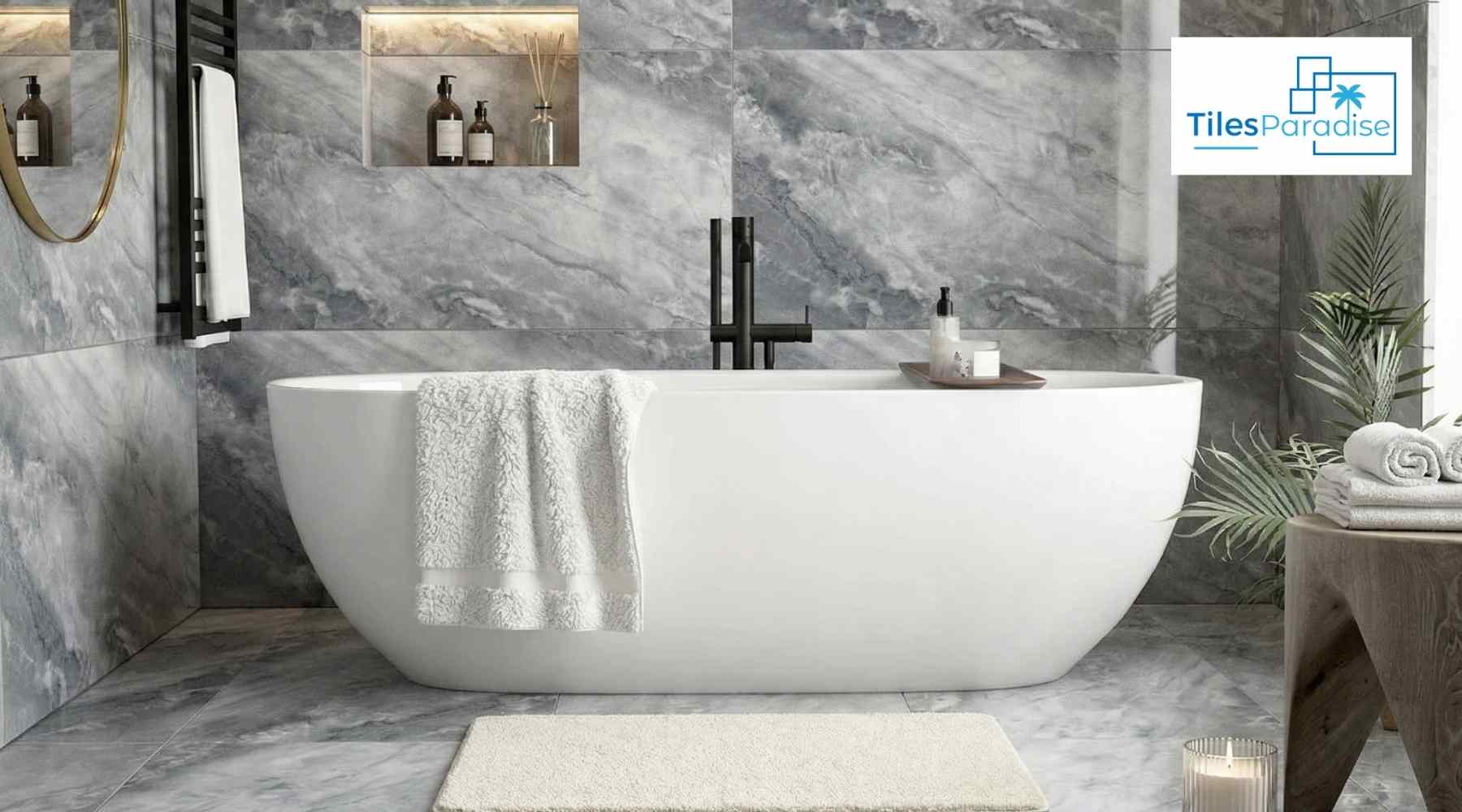
Choosing the right textured bathroom tiles can completely change how a bathroom feels, not just how it looks. Texture introduces shadow play, tactile depth, and a design presence that no flat gloss surface can replicate. Whether the goal is a calm spa-inspired retreat or a modern statement interior, textured tiles for bathroom spaces offer a practical and visual advantage that goes far beyond surface-level style.
Bathroom tiles textured with ribbed ridges, 3D relief patterns, or fabric-effect matte finishes are leading interior design preferences across the UK. The demand spans everything from compact en-suites in terraced homes to large-format wet rooms in new-build developments, and with the right guidance, finding the ideal tile for any project becomes far more straightforward.
What Makes a Tile "Textured"?
A tile is described as textured when its surface is not flat, and the face carries a physical dimension created either during manufacturing or through surface treatment. This is different from a printed stone or wood effect, which is purely visual. Bathroom textured tiles have a tactile quality: run a hand across the surface and the depth is felt, not just seen.
The key surface categories found in the UK market are:
-
Ribbed / Fluted — Linear raised ridges running vertically or horizontally across the tile face. Increasingly popular on bathroom feature walls and shower enclosures.
-
3D Relief — Sculpted geometric or organic patterns pressed into the tile body, creating shadow and movement under light.
-
Riven / Split-face — A naturally cleft surface that mimics the look of slate or stone, delivering rustic character with genuine anti-slip properties.
-
Fabric-effect / Textile — Woven or linen-inspired surfaces pressed in matte porcelain, combining a soft visual with fine surface grip.
-
Sugar / Crystal-effect — A granular, sparkling surface texture applied to the tile face, delivering subtle shimmer with a tactile quality distinct from standard gloss.
Understanding which category matches the intended application - wall, floor, or wet area- saves significant time and money during specification.

Textured Tiles for Bathroom Walls vs Floors
Not every texture is suitable for every surface. Applying the wrong tile in the wrong location is one of the most common and costly specification errors in bathroom renovation.
For walls, almost any texture type is appropriate. Fluted and 3D relief tiles perform particularly well as feature wall statements behind a freestanding bath or in a shower niche. White textured wall tiles in a ribbed or fabric finish add quiet depth to an otherwise plain space without introducing a busy pattern. The Fabric White Matt Textured Porcelain in 60x60cm is a strong example — the woven surface impression works equally well on bathroom walls and fireplace surrounds, with a clean matte finish that softens natural light.
For floors, slip resistance is the defining factor. Textured tiles inherently offer better traction than polished finishes, but the specific R rating must still be verified before installation. The Fabric Grey Matt Textured Porcelain in 60x60cm delivers a refined fabric texture with the underfoot grip needed for bathroom floors, and its neutral grey tone works across both contemporary and transitional interior schemes.
|
Surface |
Recommended Texture Type |
Minimum R Rating |
|
Bathroom floor (domestic) |
Matte, riven, fabric-effect |
R10 |
|
Shower floor / wet room |
Riven, sugar-effect, fine relief |
R11 |
|
Bathroom wall |
Fluted, 3D relief, fabric, sugar-effect |
Not applicable |
|
Feature wall (dry) |
Any |
Not applicable |
Understanding R Ratings for Textured Bathroom Floor Tiles
Slip resistance is one of the most under-discussed aspects of tile specification in UK bathroom projects, and one of the most important. The R rating system, derived from the German DIN 51130 ramp test, measures grip on a scale from R9 to R13.
-
R9 — Basic slip resistance; suitable only for dry domestic interiors
-
R10 — Recommended for domestic bathrooms with incidental water exposure; always use with a bath mat in shower exit zones
-
R11 — Suitable for wet rooms, shower floors, and family bathrooms with continuous moisture; the standard for most UK bathroom floor specifications
-
R12–R13 — Heavy-duty commercial and outdoor applications
For the majority of UK domestic bathrooms, R10–R11 textured porcelain is the practical specification range. Matte and fabric-effect surfaces typically achieve R10 or R11 naturally due to their surface profile, making bathroom textured tiles a safety advantage as much as a design one.
It is worth noting that the UK also uses the PTV (Pendulum Test Value) system, which measures slip risk under wet and dry conditions using a pendulum device. A PTV of 36 or above is the general recommendation for bathroom floor surfaces.

White Textured Bathroom Tiles: Bright, Versatile, Timeless
White textured bathroom tiles remain one of the most consistently requested specifications across UK residential and trade projects. The appeal is straightforward: white maximises light reflection in bathrooms where natural light is limited, while surface texture prevents the cold, clinical quality that plain gloss white can produce.
White textured wall tiles work in every bathroom style from minimalist new-builds to period renovations, where the goal is to modernise without losing warmth. A fabric-effect or fine ribbed surface introduces enough visual interest to work as a full-wall treatment, without requiring a contrasting accent tile to break up the monotony.
The Fabric White Matt Textured Porcelain in 60x60cm is particularly well-suited to full-height wall tiling in modern bathrooms, and its dual wall-floor certification means it can carry across the floor in an open-plan wet room layout for a seamless finish.
For a higher-contrast option, the Dazzle Sugar Effect in Silver introduces a crystalline, sparkling texture in a light silver-white tone — a specification that reads as white in ambient light while delivering genuine surface texture and a subtle shimmer that catches artificial bathroom lighting beautifully.
Sugar-Effect and 3D Tiles: Statement Texture for Modern Bathrooms
The sugar-effect finish represents one of the more distinctive texture categories available in the UK market. Unlike ribbed or fabric textures that create macroscopic surface patterns, the sugar effect is a fine granular texture applied across the tile face, closer in nature to a crystalline mineral surface than a pressed relief.
The Dazzle Sugar Effect in Black is a bold specification choice for feature walls, wet room surrounds, and bathroom floors in contemporary interiors. The large 60x120cm format minimises grout joints, which reduces visual interruption and produces a clean, high-end surface with a tactile quality that standard matte or gloss tiles cannot match. The same tile in Silver offers a lighter alternative for schemes where the sugar texture is desired without the dramatic contrast of black.
Both formats suit full-height bathroom wall applications as well as floor use, and the large tile format is particularly effective in compact UK bathrooms where reducing grout lines visually extends the floor area.
Textured Outdoor and Garden Tiles: Extending the Specification
Bathroom tiles textured with high-grip surfaces often share their technical credentials with outdoor paving, and in many UK projects, specifying a complementary outdoor tile alongside the bathroom finish creates a cohesive indoor-outdoor flow through bifold doors or garden room transitions.
The Crown Paver Grey Matt is a heavy-duty outdoor and garden tile with a substantial 20mm depth and matt textured surface engineered for external conditions. While distinct from bathroom tiles in its application, it is relevant for projects where the bathroom connects to a terrace or garden and a unified grey stone-effect palette is being maintained across both surfaces.

Tile Layout Patterns That Enhance Texture
The layout pattern chosen for bathroom textured tiles can either amplify or diminish the surface effect. Certain patterns are particularly well-suited to textured tile surfaces:
-
Vertical stack bond — Running ribbed or fluted tiles vertically in a straight stack emphasises the ridged texture and draws the eye upward, increasing the perceived height of the room.
-
Brick bond (offset) — A classic 1/3 or 1/2 offset suits fabric-effect and stone-effect tiles, producing a more organic, less regimented surface.
-
Large format straight lay — The correct approach for 60x120cm sugar-effect tiles; maximises the seamless surface and allows the texture itself to provide visual interest without competing patterns.
Herringbone Bathroom Tiles: Floor & Wall Ideas
Herringbone is one of the most requested layout patterns for UK bathroom tile projects, and it works exceptionally well with rectangular textured tiles. The chevron-like arrangement creates movement and directional flow across both floors and walls, and when applied to a matte or fabric-effect tile, the interlocking geometry interacts with the surface texture to produce a richly layered visual result.
For practical guidance on specification and budget planning for this layout, the Herringbone Bathroom Tiles guide covers pattern sizing, tile selection, and cost-per-metre considerations in full.
Half-Tiled Bathroom Style Ideas
Part-tiling, finishing the lower half of bathroom walls in tile and the upper half in plaster, panelling, or paint, is a popular approach in UK period properties and cottage-style interiors. Textured wall tiles are a natural fit for half-tiled schemes: the contrast between a textured tile dado and a smooth painted wall above creates a deliberate, designed transition rather than an unfinished compromise.
For complete style guidance and product recommendations across different budgets, the Half Tiled Bathroom Style Ideas covers height ratios, tile pairing, and grout colour selection in depth.
How to Choose Textured Tiles: A Practical Specification Checklist
Before purchasing, work through the following:
-
Surface location — Wall, floor, shower floor, or wet room? Each has different slip resistance requirements.
-
R rating — Confirm R10 minimum for bathroom floors; R11 for shower floors and wet rooms.
-
Tile format — Larger tiles (60x60cm, 60x120cm) suit open, contemporary layouts; smaller formats increase grout line density and can add natural grip on shower floors.
-
Finish type — Fabric-effect and riven finishes for understated texture; sugar-effect and 3D relief for statement surfaces.
-
Colour palette — White textured bathroom tiles maximise light; grey and black sugar-effect tiles suit high-contrast modern schemes.
-
Grout colour — For textured tiles, a grout tone close to the tile colour prevents grout lines from competing with the surface pattern; contrast grout can be used deliberately for a graphic effect.
-
Trade pack quantities — Always add 10–15% for cuts and breakages to the calculated square meterage.
Final Thoughts
Bathroom tile texture is no longer a secondary consideration reserved for accent walls or safety-conscious floor areas. Across the UK tile market, textured bathroom tiles are a central design element, selected for the depth, warmth, and tactile quality that flat surfaces simply cannot provide. From white textured wall tiles in a calm, fabric-effect matte to bold sugar-effect black large-format slabs, the range of available finishes means every bathroom specification can find a textured tile that fits.
Whether working on a single en-suite or fitting out multiple plots across a development, matching the right texture type to the right surface with the correct slip rating confirmed is the foundation of a specification that performs as well as it looks. For any questions on trade quantities, product availability, or technical details, the team at Tiles Paradise UK is ready to assist.
FAQ’s
-
Are textured tiles good for a bathroom?
When it comes to tiling your bathroom floor it is often a good idea to consider non-slip tiles. A textured tile will create a non slip surface that will make the bathroom a safer place for the whole family.
-
Are textured tiles difficult to clean?
Yes, textured tiles are generally harder to clean than smooth tiles because their pits, valleys, and grooves trap dirt, grime, and soap scum. While they offer better slip resistance and aesthetic appeal, they often require hand-scrubbing with brushes rather than simple mopping, particularly in high-traffic areas or showers.
-
Are textured tiles in style?
Textured tiles are going to be a strong trend when it comes to bathroom tiles, with a move in interiors towards tactile surfaces and finishes.
-
What are the benefits of textured tiles?
They can provide additional grip in wet areas such as kitchens and bathrooms, reducing the risk of slips. Texture in tiles adds dimension and depth to a room, bringing walls or floors to life and creating a cozy and sophisticated atmosphere.