





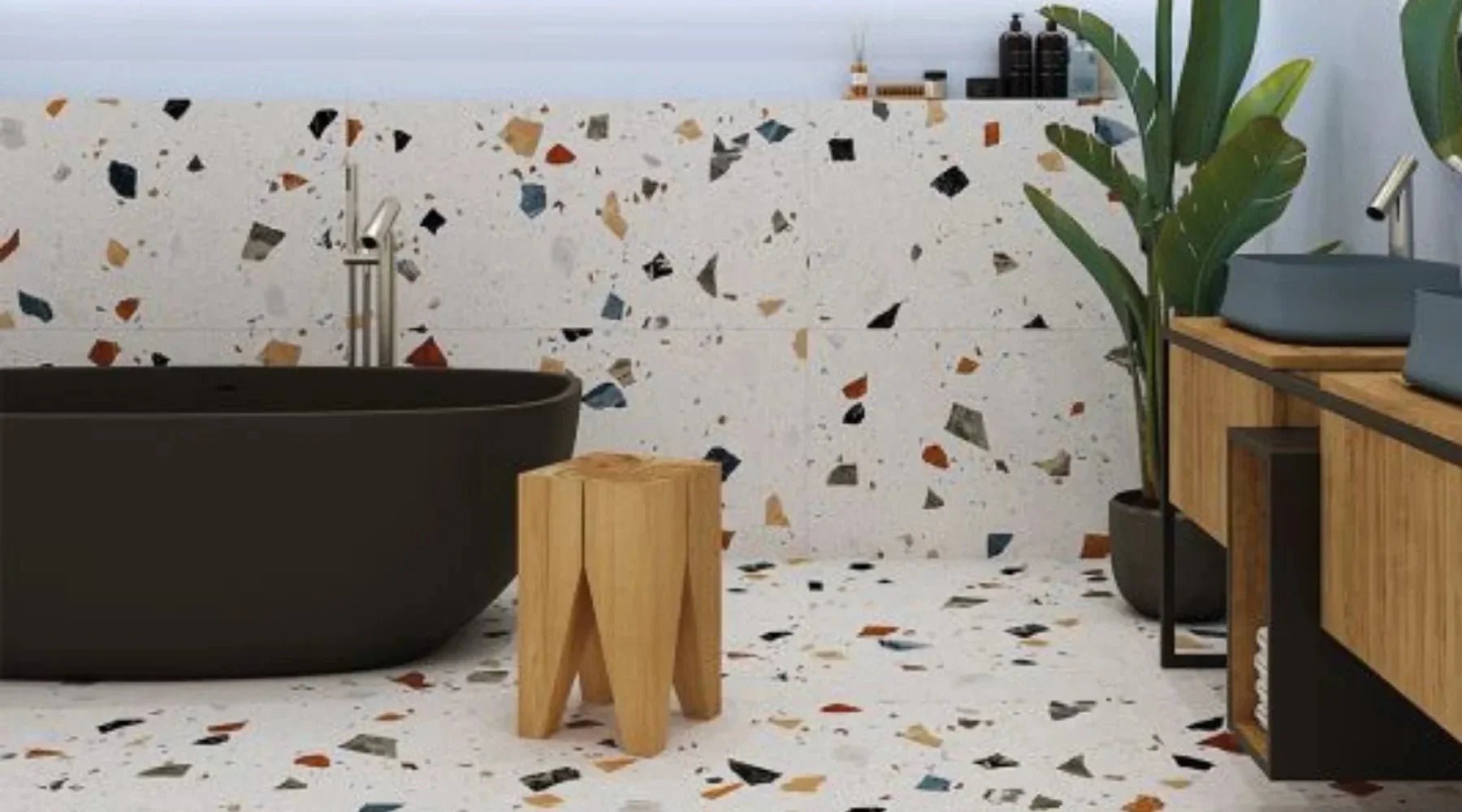
Deciding on the perfect ceramic tile in the bathroom is more than just a stylistic choice. It is a technical investment in home longevity. Because bathrooms are subject to high humidity, standing water, and varying foot traffic, understanding material performance is essential for a successful renovation.
This guide explores critical factors from mineral density to slip-resistant glazes to help select a tile that balances luxury with long-term performance.
What Are the Best PEI Ratings for Ceramic Bathroom Floor Tiles?
The Porcelain Enamel Institute (PEI) rating is the industry-standard measurement used to determine the abrasion resistance of a tile's glazed surface. When browsing ceramic bathroom tiles, the PEI scale, ranging from 1 to 5, dictates where a tile can be safely installed without risking surface dulling, scratching, or structural failure.
-
PEI 1 and 2 (Wall Applications): Ceramic options with a thinner glaze thickness and lower Vickers hardness. While offering beautiful decorative finishes, ceramic lacks the compressive strength to handle foot traffic. Best reserved for splashbacks or feature walls.
-
PEI 3 (Standard Residential Floors): The most common choice for residential bathroom floors. A PEI 3 rating indicates a tile can withstand daily barefoot or soft-sole shoe traffic. It provides an excellent balance of weight and durability, making installation easier than higher-rated materials.
-
PEI 4 (High-Traffic Family Bathrooms): For busy households with multiple users, a PEI 4 rating ensures a pigment layer is protected by a denser, more scratch-resistant glassy phase in the glaze. This prevents walking path wear patterns often seen in older bathrooms.
Selecting a tile with a PEI 3 or 4 ensures a floor maintains original visual aesthetic for a long duration, even in the face of dropped toiletries or heavy cleaning cycles.

How Do Slip Resistance Ratings (R-Value) Impact Bathroom Safety?
When moisture meets a smooth surface, safety becomes the primary concern. The slip resistance of a ceramic bathroom tile is measured via the R-Rating (Ramp Test) or the PTV (Pendulum Test Value). These metrics define the coefficient of friction provided by a tile's surface texture.
For general bathroom floors, an R10 rating is the recommended minimum. However, for wet room environments or walk-in showers where water pooling is frequent, an R11 or R12 rating provides superior traction. In technical terms, a PTV of 36+ in wet conditions is considered low slip potential.
Textured glazes, satin finishes, and structured surfaces offer higher mechanical grip, whereas highly polished gloss tiles may require an anti-slip chemical treatment to meet safety standards for elderly users or young children.
Should You Choose Matt or Gloss Ceramic Tiles for Small Bathrooms?
The surface finish of a tile dictates Light Reflectance Value (LRV). A high LRV (Gloss) reflects light around a room, which can make a 4-square-metre cloakroom feel significantly more spacious. Conversely, a low LRV (Matt) absorbs light, creating a grounded, contemporary atmosphere.
Comparison: Matt vs. Gloss Ceramic Surface Performance
|
Feature |
Gloss Ceramic Finish |
Matt/Satin Ceramic Finish |
|
Light Reflectance (LRV) |
80% to 95% (High) |
10% to 30% (Low) |
|
Slip Resistance |
Typically R9 (Lower) |
Typically R10 to R12 (Higher) |
|
Cleaning and Maintenance |
Easy to wipe; shows streaks |
Hides water spots and limescale |
|
Visual Texture |
Polished, Luxury, Bright |
Organic, Modern, Tactile |
|
Best Application |
Wall Areas and Dark Spaces |
Floor Areas and Wet Zones |
Why Does Water Absorption Rate (Porosity) Matter for Shower Tiles?
Porosity refers to the volume of open pores within a tile's clay bisque. While ceramic is generally more porous than porcelain, the glazing process seals the surface, making it highly water-resistant. The water absorption rate for ceramic typically ranges between 3% and 7%.
For tiles installed inside a shower, moisture resistance is critical. If a tile has a high absorption rate (non-vitreous, >7%), water can bypass grout and saturate a tile body, leading to efflorescence (unsightly salt deposits) or glaze delamination. Always ensure ceramic bathroom tiles are glazed and rated for permanent wet area exposure to maintain the structural integrity of walls.

What Are the Leading Ceramic Tile Color and Texture Trends?
The current market is moving toward tactile experiences and biophilic palettes. Below are the top-performing trends for 2026, focusing on patterned and effect-driven designs.
Birbin Monochrome Grey Satin Patterned Ceramic Wall & Floor Tiles
Upgrade any space with the timeless appeal of Birbin Monochrome Grey Satin 45x45cm Patterned Ceramic Wall & Floor Tiles.
-
Finish: Satin (Smooth, low-sheen).
-
Size: 45x45cm.
-
Best Application: Boutique-style floors or decorative feature walls.
Twilight Blue Matt Patterned Ceramic Wall & Floor Tiles
Create a bold statement floor using Twilight Blue Matt 20x20cm Patterned Ceramic Wall & Floor Tiles.
-
Finish: Matt (Anti-glare, high friction).
-
Size: 20x20cm.
-
Best Application: Small bathroom floors or rug-style layouts.
Portland Grey Matt Concrete Effect Ceramic Wall and Floor Tile
Achieve an industrial look with the durable Portland Grey Matt Concrete Effect 45x45cm Ceramic Wall and Floor Tile.
-
Finish: Matt (Tactile, industrial texture).
-
Size: 45x45cm.
-
Best Application: Modern, minimalist family bathrooms.
Twilight Grey Matt Patterned Ceramic Wall & Floor Tiles
Introduce subtle textures by installing Twilight Grey Matt 45x45cm Patterned Ceramic Wall & Floor Tiles.
-
Finish: Matt (Easy-clean, hides dust).
-
Size: 45x45cm.
-
Best Application: Large floor areas where subtle patterns add depth.
Everest Perla Marble Effect Ceramic Wall Tile
Elevate vertical surfaces with the luxury look of Everest Perla Marble Effect 50x25cm Ceramic Wall Tile.
-
Finish: Gloss (Reflective, luxury sheen).
-
Size: 50x25cm.
-
Best Application: Master bathroom walls to replicate high-end marble.
How Do Large-Format Ceramic Tiles Improve Maintenance and Hygiene?
The physical dimensions of a tile significantly influence the hygiene levels of a bathroom. Grout is the most vulnerable part of any tiling project; it is porous and prone to biofilm accumulation. By using large-format ceramic tiles, the linear footage of grout joints is reduced, leaving fewer places for mould and bacteria to thrive.
Using large bathroom tiles (such as 60x60cm formats) creates a monolithic effect that minimises visual clutter. This design choice is perfect for minimalist styles where the goal is to make a floor appear as one continuous surface, effectively expanding perceived boundaries of a room.
When Should You Use Porcelain Bathroom Tiles for Maximum Longevity?
In instances where the absolute lowest porosity is needed, porcelain bathroom tiles are the best alternative. With an absorption rate of less than 0.5%, porcelain offers extreme density and frost resistance, making it ideal for heavy-traffic wet rooms or bathrooms that transition into outdoor areas.
Final Thoughts
The secret to choosing the best ceramic tile in the bathroom lies in technical details. By prioritising a PEI 3+ rating for floors, an R10+ slip resistance for safety, and low-porosity glazes for shower zones, a space is created that is as durable as it is beautiful.
A choice between light-reflecting qualities of a gloss finish or the organic safety of a matt surface makes ceramic the most versatile and cost-effective material for a home sanctuary.
FAQ’s
-
Are ceramic tiles good for a bathroom?
Ceramic tiles are an excellent choice for bathroom walls and floors due to their glazed, non-porous nature and durability. They are resistant to moisture and stains, making them ideal for wet areas.
-
What's more expensive, porcelain or ceramic tiles?
Porcelain tile tends to be priced higher than ceramic tile due to its relatively superior durability and water resistance as well as requiring a more energy-intensive manufacturing process.
-
Are ceramic tiles waterproof?
For the most part, you can treat ceramic tiles as though they were waterproof. That said though, there is also a small amount of “water infiltration” that will occur if water is allowed to stand on ceramic tiling for too long. The main reason for this, is that ceramic tiles are actually slightly porous.
-
Which tiles are more expensive, ceramic or porcelain?
Porcelain tiles cost £14–£60 per m² compared to ceramic tiles at £10–£60 per m²