





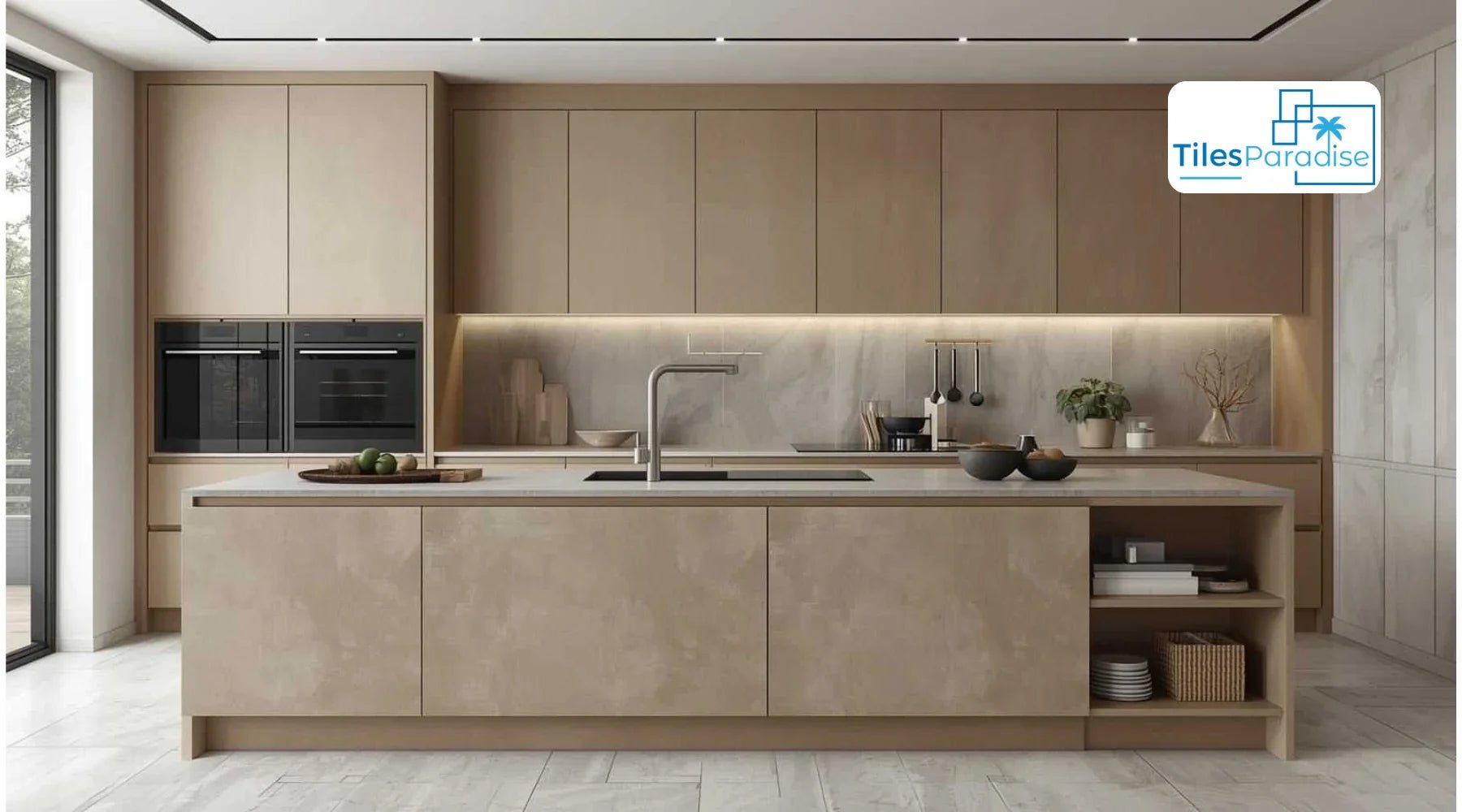
Choosing the right kitchen wall tile can feel overwhelming, but with the right guidance, it becomes one of the most rewarding decisions in a kitchen renovation. Whether searching for modern kitchen wall tiles ideas to match grey and white cabinets in small UK kitchens, or planning a complete style overhaul for a larger open-plan space, the tile sets the tone for everything else in the room.
From classic metro to large-format porcelain, from bold colour pops to subtle stone effects, there are kitchen wall tile options for every budget, taste, and layout. This guide covers all the essentials: colour pairing, size selection, finish types, layout patterns, and material choices, so the right decision for any kitchen is clear.
What Tile Colour Works Best for Grey and White Kitchen Cabinets?
Grey and white cabinetry is among the most popular kitchen cabinet combinations across UK homes in 2025, and the right tile colour either elevates or undermines the whole scheme. For white cabinets, white kitchen tiles keep the look clean and bright, while grey kitchen tiles introduce soft tonal contrast without breaking the neutral palette.
Adding a warm accent through cream kitchen tiles or beige kitchen tiles prevents the all-grey-and-white palette from feeling cold, especially in north-facing kitchens with limited natural light. For those wanting more personality, a single wall of blue kitchen tiles or green kitchen tiles works beautifully as a feature behind the hob or open shelving.
A practical rule for small UK kitchens: lighter tiles visually expand a compact space, while a single darker wall creates depth and dimension. Mixing both approaches in one room is entirely achievable with the right colour temperature.
Which Tile Size Creates the Best Effect in a Small Kitchen?
Tile size significantly affects how large or intimate a kitchen feels. In smaller kitchens, metro tiles in a classic brick-bond layout remain a favourite for good reason: the horizontal coursing draws the eye across the wall, making narrow spaces feel wider. For a more contemporary edge, medium-format 60x60cm square tiles reduce grout lines and create a calmer, more expansive backdrop.
Larger kitchens or open-plan dining areas benefit greatly from 60x120cm rectangular large tiles on feature walls, as fewer grout lines give a sleek, almost seamless finish. White porcelain kitchen tiles in large formats are especially popular in 2025 for achieving a premium look without complex layouts.
The key guideline: scale tile size to wall area, not floor area. A small backsplash can carry a large tile format provided grout joints are kept thin and even.
|
Tile Size |
Best For |
Layout Tip |
|
75x300mm Metro |
Small kitchens, splashbacks |
Horizontal brick-bond |
|
300x600mm |
Standard kitchens, all walls |
Vertical stack or offset |
|
60x60cm Square |
Modern kitchens, larger walls |
Grid or diagonal |
|
60x120cm Rectangle |
Open-plan, feature walls |
Vertical for height illusion |
Gloss, Matt or Textured: Which Kitchen Tile Finish to Choose?
Tile finish affects both how a kitchen looks and how easy it is to maintain. Gloss kitchen wall tiles reflect light brilliantly, which is ideal for small or dark kitchens, though fingerprints and splashes show more readily. Matt finishes absorb light for a softer, more muted effect that suits Shaker and country-style kitchens where a painted furniture look is the aim.
Textured and stone-effect tiles, such as marble-effect kitchen tiles or onyx kitchen tiles, add natural depth and visual richness without introducing pattern complexity. Polished porcelain kitchen floor tiles in a matching or complementary shade to the wall tiles create a pulled-together, cohesive scheme.
For UK kitchens prone to steam and condensation, a satin or silk finish offers a practical middle ground: less reflective than gloss but easier to wipe clean than a deeply textured matt.
How Do Tile Layout Patterns Change the Look of a Kitchen Wall?
The same tile laid in different orientations produces entirely different visual results. A standard horizontal brick-bond is classic and never dates, while a vertical stack elongates a wall and makes ceilings feel higher. Diagonal layouts add dynamism but require more cuts and are best left to experienced tilers.
Herringbone is experiencing a major resurgence in UK kitchens in 2025, particularly for backsplash areas using patterned kitchen tiles or slim rectangular formats. The zigzag arrangement adds movement and artisan character to an otherwise minimal scheme.
One important note: large-format tiles look best in simple grid or offset-by-a-third layouts, as complex patterns with oversized tiles can appear busy and reduce the impact of the tile surface itself.
Ceramic vs Porcelain Kitchen Tiles: Which Material Is Right?
Both ceramic kitchen tiles and porcelain kitchen tiles are excellent choices for kitchen walls, but they differ in density, water absorption, and cost. Ceramic tiles are fired at lower temperatures and absorb slightly more water, making them ideal for wall applications where impact resistance is less critical. Porcelain stoneware is denser and virtually non-porous, which is why best porcelain tiles for kitchen floors are consistently porcelain.
For kitchen floors, porcelain kitchen flooring outperforms ceramic in high-traffic, high-spill environments. Grey porcelain kitchen floor tiles and white porcelain kitchen floor tiles are consistently the top-selling floor tile categories in the UK, as both balance practicality with visual flexibility.
Where budget is a priority, ceramic tiles for walls combined with porcelain tiles for the floor is a widely used professional approach: ceramic keeps wall costs lower while porcelain delivers the floor durability that a busy UK kitchen demands.
Splashback Tile Ideas That Make a Statement Behind the Hob
The area behind the hob is the most viewed surface in any kitchen and deserves a considered design choice. A well-chosen splashback tile protects walls from grease and steam while acting as the room's focal point. Options range from a single large slab of porcelain to intricate mosaic arrangements.
Bold colour choices such as black kitchen tiles behind a white cabinet kitchen create a striking industrial contrast, while gold kitchen tiles bring warmth and luxury to neutral grey or cream schemes. Keeping the pattern simple on the hob splashback prevents it competing with decorative cabinets or open shelving displays.
Best Herringbone Metro Tiles for Kitchen Splashback
Herringbone layouts using metro-format tiles are arguably the most requested splashback design in UK kitchens right now. The 45-degree interlocking pattern adds texture and movement to a small surface without introducing colour complexity. White or soft grey metro tiles in herringbone are especially effective in small kitchens with grey and white cabinets, as the layout creates interest while the neutral colour maintains spaciousness. For full inspiration and tile recommendations, herringbone kitchen tile splashback ideas cover the full range of options, including colour combinations and grout line widths that affect the final result.
Kitchen Floor Tiles: Pairing the Right Porcelain with Wall Tiles
Selecting kitchen floor tiles that work harmoniously with wall tiles is essential to a finished result that feels designed rather than assembled. Light grey porcelain kitchen floor tiles under grey cabinetry create a tone-on-tone elegance, while white porcelain tile kitchen floors open up the space dramatically when paired with darker wall tiles.
Wood effect porcelain kitchen floor tiles bring warmth to an otherwise cool grey-and-white kitchen, particularly stone-effect or wood look porcelain tile in kitchen formats that mimic the grain and texture of natural oak or walnut. These combine the aesthetic warmth of real wood with the water resistance and durability of porcelain stoneware kitchen material.
Large porcelain kitchen floor tiles in formats of 60x60cm or 60x120cm reduce grout lines and make smaller kitchens appear considerably larger. Cream porcelain kitchen floor tiles in a matt finish are a particularly strong option for Shaker-style kitchens, where the overall look calls for warmth, texture, and understated elegance.
Popular porcelain floor tile options for UK kitchens:
• Grey porcelain floor tiles kitchen - tonal harmony with grey cabinetry
• White porcelain kitchen floor - maximises light in smaller rooms
• Wood effect porcelain tiles kitchen - warmth without maintenance of real wood
• Slate porcelain tile kitchen - textured, earthy feel for industrial or country styles
• Black ceramic kitchen floor tiles - bold contrast with white cabinetry
• Marble porcelain tile kitchen - luxury aesthetic at a fraction of natural stone cost
Anti-Slip Porcelain Kitchen Floor Tiles
Slip resistance is a genuine safety consideration in any kitchen floor tile choice, particularly in households with children or elderly residents. Porcelain tiles are rated by PEI and R-value (slip resistance), and kitchen floors should carry a minimum R10 rating for adequate wet-floor grip. Matt and textured porcelain finishes naturally provide better traction than polished porcelain tile in kitchen applications, making them the safer choice near sinks and prep areas. For a full breakdown of ratings, materials, and installation tips, non-slip porcelain kitchen floor tiles provides detailed guidance on making the safest and most durable flooring choice.
Which Tile Style Suits Different UK Kitchen Cabinet Colours?
Cabinet colour fundamentally determines the tile palette. Grey shaker cabinets pair naturally with white subway tiles for a classic look, or with stone-effect large-format tiles for a contemporary update. White handleless cabinets suit almost any tile colour, but dark feature tiles such as charcoal, navy, or forest green create the most dramatic contrasts.
For cream and off-white cabinets, a warm-toned tile palette with beige or sand tones prevents the overall look from feeling stark. Kitchens featuring both grey lower cabinets and white upper cabinets benefit from a backsplash tile that bridges both tones, such as a pale grey-veined white marble porcelain or a soft sage green in a gloss finish.
Exploring the full kitchen tiles collection by colour is the most efficient way to shortlist options: filtering by cabinet colour match narrows hundreds of choices down to a curated shortlist suited to the specific scheme.
What Are the Trending Tile and Cabinet Combinations in 2025?
The tile combinations generating the most interest in UK kitchen design in 2025 reflect a shift toward warmer neutrals and nature-inspired textures. The all-white kitchen is giving way to warm whites paired with natural stone or travertine-effect tiles. Grey continues to evolve, with lighter, warmer grey tones replacing the cooler blue-grey shades of the previous decade.
Key combinations trending across UK kitchen renovations:
1. Sage green wall tiles with warm white Shaker cabinets and brass hardware
2. Marble-effect large-format porcelain walls with dark grey handleless cabinetry
3. White glazed brick-bond metro tiles with navy blue lower cabinets
4. Concrete-effect grey tiles with pale oak and white upper cabinets
5. Terracotta or warm beige tiles with cream cabinetry and matte black fixtures
Grout colour is also having a design moment in 2025: dark charcoal grout with white tiles adds graphic definition, while tone-matching grout creates a seamless, minimal effect preferred in contemporary open-plan kitchens.
Practical Buying Guide for Kitchen Wall Tiles in the UK
Ordering kitchen tiles correctly avoids costly delays. Always add 10% to calculated square meterage for wastage, cuts, and future repairs. For complex patterns such as herringbone or diagonal layouts, increase that allowance to 15%. Tiles from different batch numbers can show colour variation, so ordering enough from a single batch is critical.
Check the PEI rating for any tile being considered for floor use (rating 3 or above for kitchen floors), and the slip resistance R-value for wet areas. Wall-only tiles carry no slip rating requirement but must be frost-resistant if being used in poorly insulated extensions or utility rooms adjacent to outdoor areas.
Requesting tile samples before committing is strongly advisable, particularly for larger tile formats or natural stone effects where individual tile variation can differ significantly from the product photography. Most UK tile suppliers dispatch samples within 2 to 3 working days, making it possible to test tiles against actual cabinet and worktop colours in the kitchen's natural lighting before purchasing.
Final Insights
Selecting kitchen wall tiles is not simply a matter of choosing a favourite colour or pattern. Tile format, finish, material, layout, and the specific cabinet and worktop combination all interact to produce the final result. Getting these decisions right, especially in smaller UK kitchens where every surface has a magnified visual impact, delivers a kitchen that feels considered, spacious, and genuinely personal.
From porcelain kitchen tiles and ceramic kitchen tiles to handmade metro and large-format stone effects, the range available for UK kitchens in 2025 is broader and more accessible than ever. Taking the time to match tile choice to cabinet colour, kitchen size, and personal style is the single investment that makes the biggest difference to the finished result.