





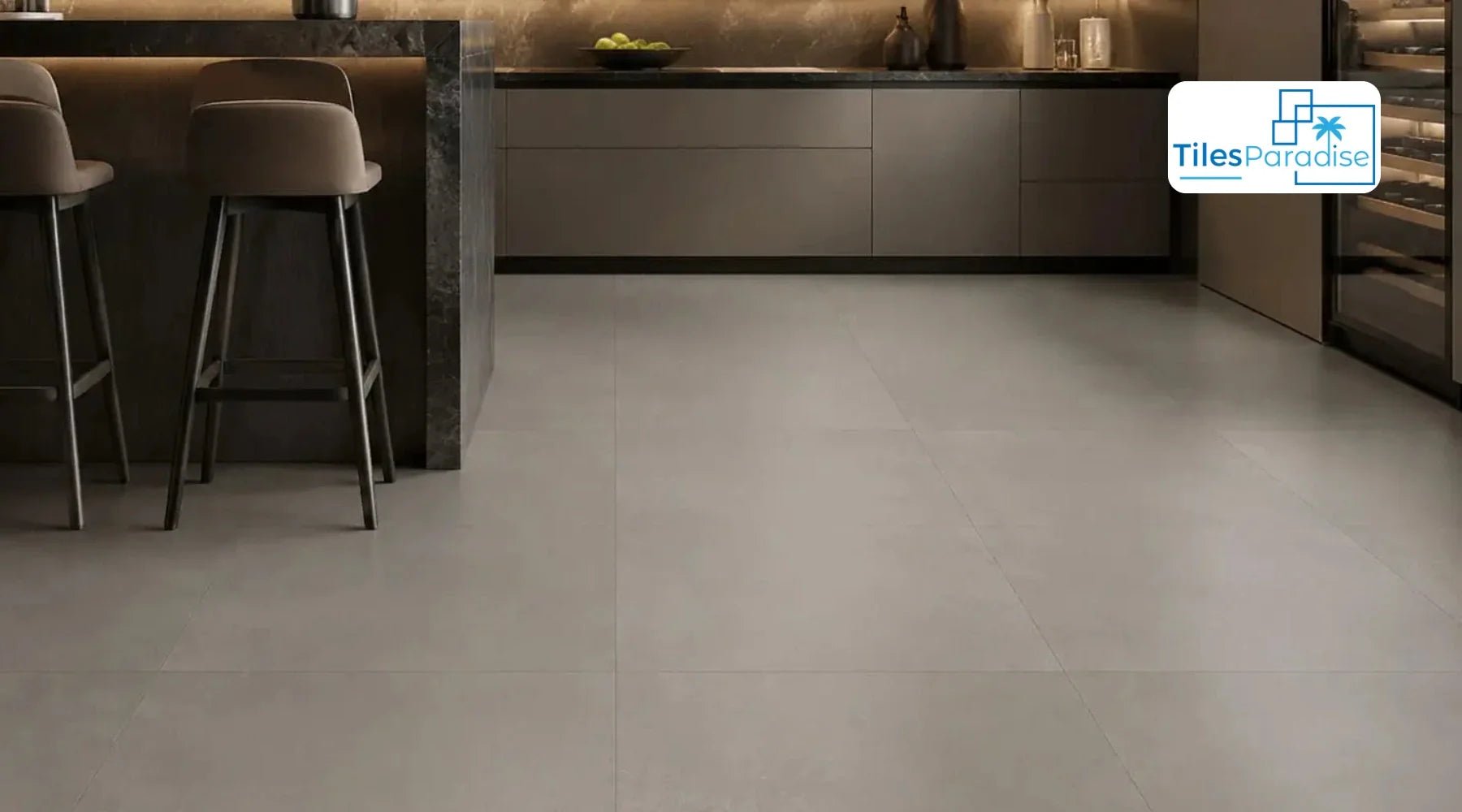
Anti-slip porcelain kitchen floor tiles solve the most common worry in a busy cooking space: a wet, slick surface underfoot. R10 and R11 rated porcelain kitchen tiles grip the foot even when water, oil, or sauce hits the ground.
This guide breaks down slip ratings, finishes, sizes, colours, cost, and fitting, so a confident choice gets made for a kitchen that stays safe and good looking for decades.
What Makes Porcelain Kitchen Floor Tiles So Durable?
Porcelain tile flooring is fired at extreme heat, giving a dense body with water absorption under 0.5%. That density makes hard-wearing floor tiles resist cracks from a dropped pan and shrug off heavy traffic. Quality kitchen floor tiles outlast laminate, vinyl, and most natural stone in a working kitchen.
As durable kitchen floor tiles, porcelain handles spilt wine, hot fat, and years of footfall without warping or fading. The dense surface stays frost-proof and colour-stable, which is why indoor porcelain tiles carry the same body right through, not a thin glaze that chips away.
Which Slip Rating Suits a Kitchen Floor?
Slip resistance is graded on the R scale. For most homes, slip-resistant kitchen tiles at R10 cover dry-to-occasional-wet zones, while R11 suits a kitchen with a back door, an island sink, or frequent splashes. Non-slip porcelain tiles with a textured surface raise grip without losing style.
|
R Rating |
Best Use In A Kitchen |
Surface Feel |
|
R9 |
Dry, low-splash dining and prep zones |
Smooth |
|
R10 |
Standard home kitchens, occasional moisture |
Light texture |
|
R11 |
Open-plan, back-door, frequent wet floor |
Textured |
|
R12 |
Commercial and heavy wet zones |
Coarse |
Matt, Polished, or Glazed: Which Finish Wins?
Finish drives both looks and grip. Matt porcelain tiles and textured surfaces give the safest footing, so a matt floor pairs well with a polished kitchen splashback. Polished porcelain tiles and glazed porcelain tiles shine bright but turn slick when wet, making them better on walls than on the floor.
• Matt: highest slip safety, easy clean floor tiles, low glare
• Polished: mirror shine, best for splashbacks and feature walls
• Glazed: rich colour and pattern, ideal above worktops
Which Tile Effects Match A Modern Kitchen Look?
Porcelain copies almost any material. Wood effect porcelain tiles bring farmhouse kitchen flooring warmth, stone effect porcelain tiles and concrete effect porcelain tiles suit contemporary kitchen flooring, and marble effect kitchen tiles deliver luxury veining without the upkeep. For deep drama, onyx effect tiles and patterned porcelain tiles add a feature floor.
From modern kitchen floor tiles to traditional kitchen tiles, the effect sets the room mood while keeping one easy-care surface underfoot.
What Tile Colour Works Best For A Kitchen?
Colour shapes how big and bright a room feels. Grey porcelain floor tiles hide dust between cleans, white porcelain kitchen tiles open up small rooms, and black porcelain floor tiles ground a bold scheme. Soft beige porcelain tiles and cream tones warm a cooler space.
Explore grey kitchen floor tiles, crisp white kitchen tiles, deep black kitchen tiles, warm beige kitchen tiles, and cream kitchen tiles to match cabinets and worktops. Accent shades like green kitchen tiles, blue kitchen tiles, and gold kitchen tiles suit splashbacks and feature walls.
What Tile Size Suits Kitchen Floor Tiling?
Size changes how open a floor reads. Large format porcelain tiles cut grout lines and make a room feel wider, so 60x60cm square tiles suit most homes, while 60x120cm rectangular tiles give a seamless open-plan finish. Rectified porcelain tiles have precision edges for the tightest grout joints.
Smaller plank shapes suit galley layouts and bold patterns, while big slabs reduce trip edges and clean faster. Matching the tile size to the room keeps a floor in proportion and lifts the whole kitchen flooring ideas plan.
Ceramic vs Porcelain Tiles: What Is The Difference?
Both are fired clay, but porcelain is denser, less porous, and tougher, making it the stronger floor choice. Ceramic stays a smart, budget-friendly pick for walls and lighter use, so ceramic kitchen tiles often cover splashbacks while porcelain takes the floor.
For a kitchen renovation, porcelain answers stain resistant tiles and water resistant floor tiles needs better than ceramic underfoot.
How Are Porcelain Kitchen Floor Tiles Installed?
Porcelain tile installation needs a flat, primed subfloor, the right tile adhesive for porcelain flooring, and a colour-matched grout for porcelain tiles. Underfloor heating compatible tiles in porcelain conduct warmth well, so porcelain underfloor heating tiles spread heat fast and hold it.
1. Level and prime the subfloor for kitchen floor tiling
2. Use a flexible S1 adhesive rated for porcelain and underfloor heating
3. Lay from the centre, keep even joints, then grout and seal the lines
How Much Does Porcelain Kitchen Floor Tiling Cost?
Budget covers tiles, adhesive, grout, and labour. Supply-only sits around £20 to £60 per m2 for premium kitchen tiles, while fitted floors run roughly £45 to £62 per m2, or near £90 per m2 with mid-range 9mm tiles and full labour.
|
Cost Item |
Typical UK Range |
|
Tiles (supply only, per m2) |
£20 to £60 |
|
Fitting / labour (per m2) |
£45 to £62 |
|
Standard tile thickness |
9mm (10mm+ for heavy traffic) |
How To Keep A Porcelain Floor Looking New?
Low maintenance flooring is the porcelain promise. A sweep and a pH-neutral mop keep scratch resistant tiles bright, with no sealing, waxing, or polishing needed across the life of the floor. Heavy traffic floor tiles in porcelain stay stain-free with simple weekly care.
Best Porcelain Tiles For Kitchen Splashback Behind Gas Hob
Behind a gas hob, heat rating and easy cleaning matter most. Heat-tolerant porcelain wipes clean of grease and resists scorching, and the full splashback heat ratings guide covers the right size and spec for a hob zone.
Best Herringbone Metro Tiles For Kitchen Splashback
Herringbone laid metro tiles add texture and movement above a worktop. For pattern and grout pairings, the herringbone splashback ideas post shows layouts that lift a plain wall.
Are Porcelain Floor Tiles Cold Or Slippery Underfoot?
Two worries stop most buyers, and both have clean answers. A textured matt surface fixes the slip fear, and underfloor heating turns a cool floor into a warm one in minutes, so comfort is never lost. Pair the floor with cabinet and kitchen wall tile colours for a finished, joined-up scheme.
Tile flooring solutions in porcelain also stay quiet underfoot once bedded on a sound adhesive, and high quality porcelain tiles resist scratches from chair legs and pet claws far better than soft flooring.
Final Insights
The safest kitchen floor pairs an R10 or R11 matt porcelain tile with a size that fits the room and a colour that matches the cabinets. That mix gives grip, easy cleaning, and a floor that lasts.
Match the floor to the cooking habits and the splashback to the style. With the right slip rating, finish, and fitting, a porcelain floor stays a sound, beautiful investment for many years of daily kitchen life.