





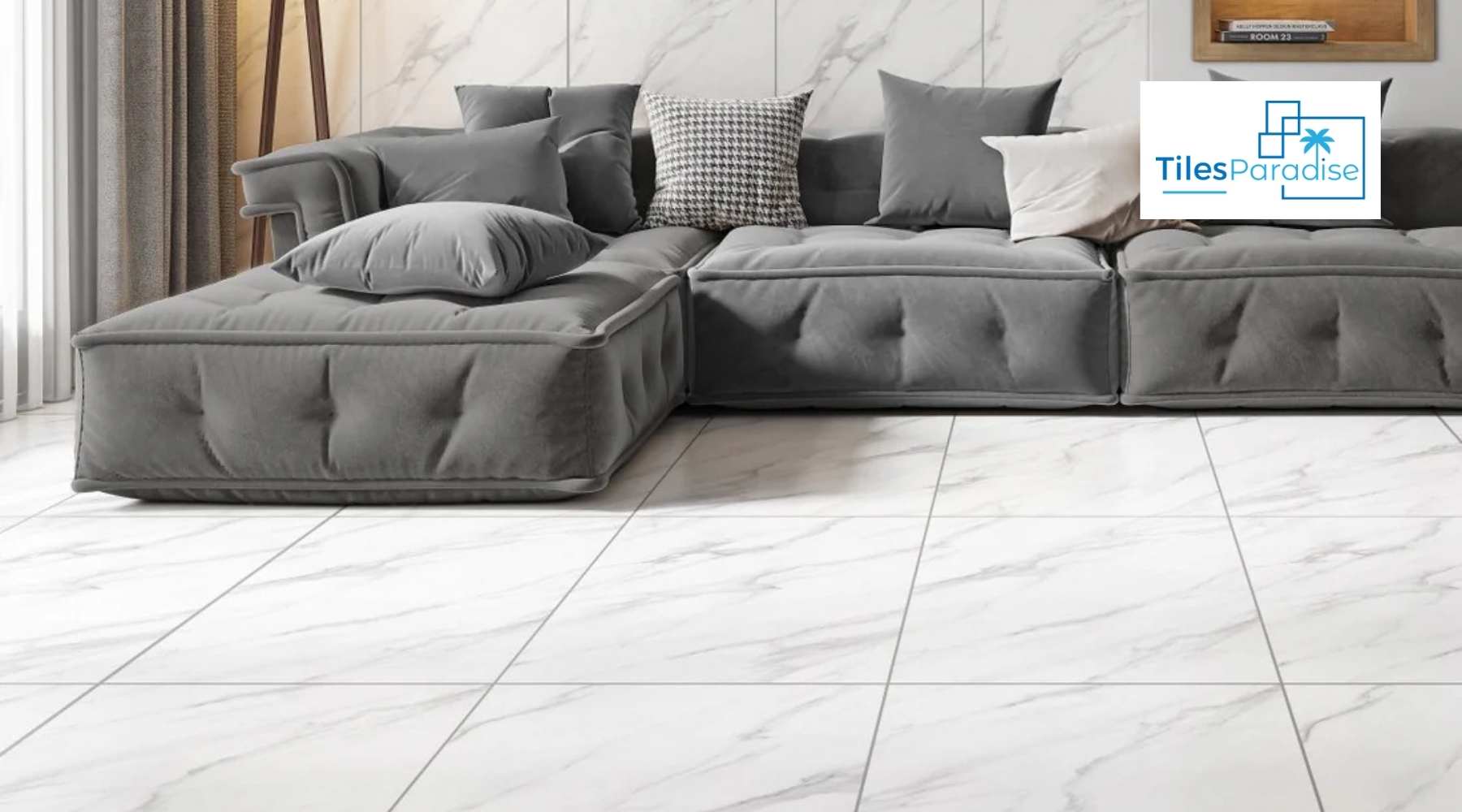
Choosing the right tile for a compact space is one of the most common challenges in home design. Whether planning a new bathroom refresh, a kitchen update, or a cloakroom makeover, small porcelain floor tiles for bathroom and kitchen settings deliver a combination of durability, water resistance, and visual versatility that few other materials can match. Getting size, finish, and layout right from the start saves both money and installation time.
From mosaic formats under 10cm to classic 30x30cm squares, small floor tiles give designers and homeowners precise control over pattern, grout line density, and spatial perception. This guide covers every decision point, from tile dimensions and body type to slip ratings and room-specific advice, so the right product reaches the right floor.
What Counts as a Small Floor Tile Size?
In the UK tile industry, any floor tile with a face dimension up to 30x30cm is generally considered small format. Common sizes include 10x10cm, 15x15cm, 20x20cm, and 30x30cm squares, alongside 10x20cm rectangular formats and hexagonal tiles in 15cm or 20cm widths. Porcelain floor tiles in this size range are the most popular choice because of low water absorption and consistent body density.
Mosaic sheets, typically 30x30cm mesh-backed panels carrying individual tesserae from 2.5cm to 5cm, sit at the smallest end of the scale. Small mosaic floor tiles suit curved surfaces, wet room floors, and decorative borders where flexibility in laying is essential.
|
Tile Size |
Format |
Best For |
|
10x10cm |
Square |
Mosaic effects, feature strips |
|
15x15cm |
Square |
Cloakrooms, small bathrooms |
|
20x20cm |
Square |
Bathrooms, kitchens, porches |
|
30x30cm |
Square |
Bathrooms, hallways, utility rooms |
|
10x20cm |
Rectangular |
Brick-bond layouts, wet rooms |
|
Hex 15/20cm |
Hexagonal |
Retro, boutique bathroom floors |
Why Porcelain Outperforms Ceramic on Small Bathroom Floors
Porcelain tiles fire at higher temperatures than ceramic, which results in a water absorption rate below 0.5%, making them the safer choice in wet rooms, en suites, and shower trays. For tile floor small bathroom applications, this low porosity means less risk of moisture ingress into the substrate over time. Premium bathroom tiles in porcelain body construction maintain colour consistency even if the surface chips, because the pigment runs through the full body.
Ceramic tiles absorb more moisture and suit lighter-traffic dry areas such as a guest bathroom used infrequently. For kitchens, hallways, and any bathroom with underfloor heating, full-body porcelain is the recommended specification. The denser body also accepts anti-slip surface treatments more effectively.
Which Finish Works Best for Small Bathroom and Kitchen Floors?
Matt and structured finishes dominate in safety-rated floor tile specifications because they achieve the R9, R10, and R11 slip resistance ratings required for wet areas. A matt finish diffuses light evenly, which helps compact spaces feel airy rather than clinical. Non-slip floor tiles in 20x20cm and 30x30cm formats carry R10 and R11 ratings, meeting the requirements for domestic bathrooms, kitchens, and outdoor thresholds.
Gloss tiles magnify natural light and work well as feature strips or in small cloakrooms with limited foot traffic. Lappato, a semi-polished finish, sits between matt and gloss, offering a subtle sheen without sacrificing too much grip. For a kitchen floor tile that hides minor grease marks while retaining traction, a satin or lappato porcelain in the 20x20cm to 30x30cm range is a practical choice.
Best Tile Layout Patterns for Small Bathroom Floors
Layout pattern affects perceived room width and length more than tile colour alone. For floor tile in small bathroom spaces, a diagonal 45-degree set widens the visual field by drawing the eye to the corners rather than along the walls. A brick-bond or running-bond offset breaks up the rigidity of straight grids, creating movement across the floor. Kitchen tiles and bathroom floors benefit equally from this approach.
Hexagonal tiles in 15cm or 20cm widths create a honeycomb pattern that works particularly well for small bathroom floor tile designs where a period or boutique aesthetic is desired. Using a contrasting grout colour on a small tile bathroom floor, such as charcoal grout with white hex tiles, reinforces the geometry and adds definition to the pattern.
For bathroom floor tile ideas for small bathrooms, the key rule is to keep the grout joint narrow. A 2mm to 3mm joint on a 20x20cm tile produces fewer lines per square metre and makes the floor feel less busy.
How Tile Colour Affects Perception of Floor Space
Light tones expand visual floor area while dark tones anchor a room and add drama. Small bathroom with black and white tile floor combinations remain one of the most searched bathroom floor tile ideas for small bathrooms in the UK because the contrast creates graphic interest without requiring large format tiles. White floor tiles in 20x20cm or 30x30cm formats reflect overhead lighting and open up narrow bathrooms effectively.
Warm neutrals, stone tones, and greige shades suit small kitchen floor tile ideas where continuity with cabinetry colour matters. Cool greys and blue-grey tones work well in bathrooms aiming for a spa-like feel. For a small floor tiles bathroom scheme with personality, patterned encaustic-effect porcelain or terrazzo-effect tiles in 20x20cm add visual texture without overwhelming the space.
Room-by-Room: Choosing Small Tiles for Bathroom, Kitchen, Hallway and Porch
Bathroom floor tiles for small bathrooms benefit most from 20x20cm or 30x30cm matt porcelain in neutral tones with R10 slip resistance. Tile flooring for small bathroom wet zones such as walk-in showers should use mosaic sheets or 10x10cm tiles to allow the floor to drain on a slight fall gradient. Floor tiles in porcelain body suit all domestic wet room applications.
For small tiles for kitchen floor settings, 30x30cm offers a balance between a scaled pattern and ease of cutting around cabinets and islands. Tiles for small bathroom floor areas that serve a dual cloakroom function need a PEI wear rating of at least 3 for light foot traffic. Hallway tiles in 30x30cm or a 30x60cm plank format handle heavier traffic and show fewer grout lines per run.
For a porch, small floor tiles for porch settings need an outdoor-rated porcelain with R11 anti-slip texture. Patio tiles R11 meet this requirement and coordinate with internal floor finishes to create a visual flow from outside to in. Floor tiles for small cloakroom spaces work best in 15x15cm or 20x20cm with a contrasting border to define the zone.
Material Options Beyond Porcelain: Terrazzo, Marble Effect and Onyx
Terrazzo-effect porcelain tiles bring the speckled aggregate look of poured terrazzo at a fraction of the cost, with none of the sealing maintenance of natural stone. In 20x20cm and 30x30cm formats, terrazzo tiles introduce colour and texture on a small floor without competing with wall finishes.
Marble-effect porcelain in smaller formats allows the characteristic veining to read as a complete vignette within each tile rather than being lost across a large slab. Marble effect floor tiles suit bathroom floor tile ideas for small bathrooms where a luxury aesthetic is the goal but budget and maintenance simplicity are also priorities.
Onyx-effect tiles introduce translucency and depth, replicating the backlit quality of natural onyx without requiring specialist installation. Onyx floor tiles in 30x30cm are a premium choice for feature bathroom floors or statement cloakroom designs.
Grout Joint Width, Slip Ratings and Subfloor Requirements
Grout joint width for small format tiles typically ranges from 2mm to 5mm. Narrow joints suit rectified porcelain where edge precision is guaranteed; wider joints suit natural-variation tiles where slight dimensional differences require accommodation. Using a flexible tile adhesive and grout is essential when installing over underfloor heating systems because thermal expansion puts stress on both tile and joint.
Slip resistance ratings in the UK follow the DIN 51130 R-value scale. R9 suits dry domestic areas; R10 suits bathrooms and kitchens; R11 suits porches, utility rooms, and covered outdoor areas. Outdoor floor tiles carry R11 or R12 ratings to meet external specification requirements.
|
R Rating |
Slip Resistance Level |
Recommended Location |
|
R9 |
Low |
Dry hallways, living rooms |
|
R10 |
Medium |
Bathrooms, kitchens |
|
R11 |
High |
Porches, utility rooms, covered patios |
|
R12 |
Very High |
Commercial kitchens, workshops |
How to Lay Large Format Porcelain Floor Tiles on a Concrete Subfloor with Underfloor Heating
Even when installing smaller format porcelain tiles, the preparation steps for a concrete subfloor with underfloor heating follow the same principles as large format work. The subfloor must be flat to within 3mm over a 2-metre span; any deviation causes tiles to rock, crack, or debond over time. A full, detailed installation walkthrough is available in how to lay porcelain floor tiles on concrete with underfloor heating.
Use a flexible S2 class adhesive to allow for the thermal movement created by heating cycles. Switch off the underfloor heating system at least 48 hours before tiling and keep it off for a minimum of 72 hours after grouting. Failure to follow this curing protocol is one of the most common causes of debonding in heated tile floors.
The key numbered steps for laying porcelain floor tiles on a concrete subfloor with underfloor heating:
1. Check subfloor flatness with a 2m spirit level and grind down high spots or fill low areas with self-levelling compound.
2. Dry lay a tile run from the centre of the room to check cut sizes at perimeter walls.
3. Apply flexible adhesive in a notched trowel back-butter technique to ensure full bed coverage above 95%.
4. Press tiles firmly, checking level across each joint with a rubber mallet.
5. Allow adhesive to cure fully (minimum 24 hours), then apply flexible unsanded grout in joints.
Matt Brown Porcelain Floor Tiles for Kitchen and Hallway
Matt brown porcelain tiles occupy a practical sweet spot between warmth and durability, making them one of the most specified finishes for kitchens and hallways. The earthy tone conceals everyday dust and minor marks between cleans, which matters in high-traffic corridors and active cooking spaces. Full guidance on selecting and installing this finish is covered in matt brown porcelain floor tiles for kitchen and hallway.
In a small kitchen, a 30x30cm matt brown tile in a straight lay produces a clean, unfussy floor that complements both handleless modern kitchens and shaker-style cabinetry. Wood effect tiles in warm oak or walnut tones offer a related aesthetic with a linear plank format, adding directional movement to narrow kitchen or hallway floors.
What to Check Before Buying Small Floor Tiles Online
Ordering tiles without confirming a few technical points leads to the two most common problems in tile projects: running out of stock mid-installation or buying tiles that fail inspection. Always confirm the porcelain tiles are from the same batch number (calibre or shade code) to avoid tonal variation across the floor.
Key checks before purchasing:
• Calculate floor area in square metres, then add 10% for cuts and waste (15% for diagonal layouts).
• Confirm the PEI wear rating is at least 3 for domestic floors and 4 for heavy-traffic areas.
• Check the slip resistance R-rating matches the intended room use.
• Verify water absorption for bathroom and kitchen use: under 0.5% for porcelain, under 3% for ceramic.
• Match the tile body thickness to the adhesive depth allowance in the floor build-up.
For outdoor applications, confirm the tile carries a frost resistance certification. Outdoor tiles need to withstand freeze-thaw cycles without surface spalling or substrate delamination.
Final Insights
Small floor tiles solve a precise design brief: they scale correctly to compact rooms, accommodate curved surfaces and drainage falls, and allow patterns that would be impossible with large slabs. Whether the priority is bathroom floor tile ideas for small bathrooms with slip-rated porcelain or small kitchen floor tile ideas with warm matt finishes, the material choice always comes back to the same fundamentals: body density, surface finish, slip rating, and correct installation.
Matching tile size to room scale, finish to function, and pattern to desired spatial effect produces floors that perform well and look proportionate for years. Explore the full range of floor tiles at Tiles Paradise, where 30x60cm formats, marble effect options, and non-slip tiles sit alongside the full small-format collection for every room in the home.