





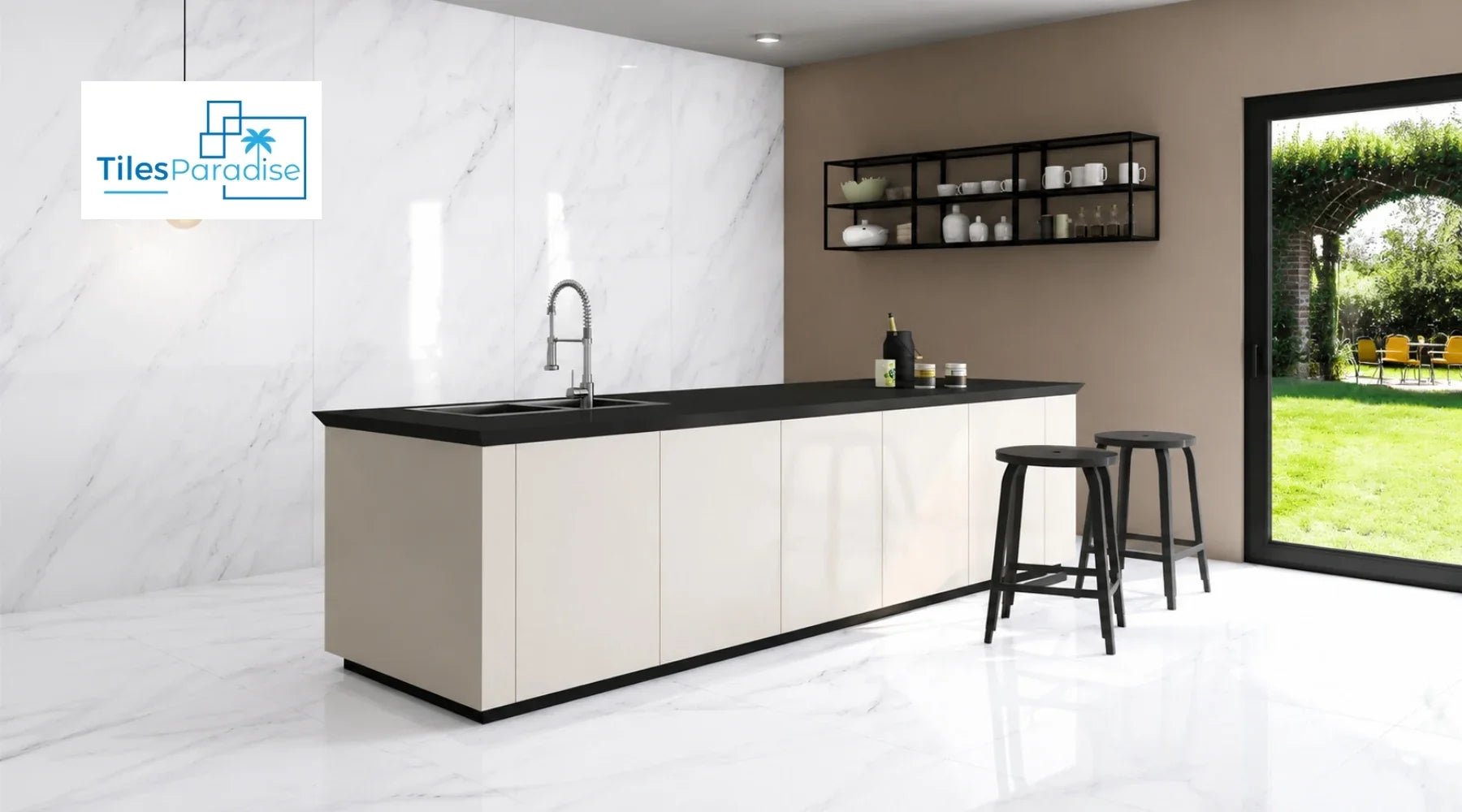
Choosing the best kitchen wall tiles for small kitchens is one of the most impactful decisions in a compact kitchen renovation. The right tile size, finish, and colour can visually open up a tight space, bounce light around the room, and create a design that feels considered rather than cramped.
From classic metro tiles to bold patterned kitchen tiles, the options available in the UK market have never been more varied or more suited to small-kitchen challenges. This guide covers everything needed to get the choice right the first time.
What Tile Size Works Best on Small Kitchen Walls?
Tile size is the single most misunderstood factor in small kitchen design. Many homeowners assume small rooms need small tiles, but larger format tiles actually reduce the number of grout lines, creating a cleaner, more continuous visual surface that reads as bigger.
A 60x120cm rectangular large tile used vertically on a kitchen wall draws the eye upward and adds height, while a 60x60cm square format laid in a grid keeps the space feeling structured and calm.
Small metro tiles remain a strong choice for splashbacks and feature areas precisely because the tight brick-bond pattern adds rhythm without overwhelming a narrow wall.
Gloss or Matt: Which Kitchen Wall Tile Finish Opens Up a Small Space?
Finish choice directly affects how light behaves on a wall surface. In a small kitchen with limited natural light, a gloss finish reflects both ambient and artificial light, making the room feel brighter and more open.
Matt tiles have their place in small kitchens too. A soft matt finish hides water marks and fingerprints better than high-gloss, which matters near a hob or sink. A satin or semi-gloss option sits between the two, offering a practical compromise for busy households.
The general rule: use gloss on the wall to gain light, and consider matt on the floor for safety and practicality.
Best Colours for Kitchen Wall Tiles in Small UK Kitchens
Light colours remain the most effective tool for making a small kitchen feel larger. White kitchen wall tiles are the classic choice for good reason: they reflect maximum light and provide a neutral backdrop that lets cabinetry, worktops, and fixtures do the design work.
Soft cream kitchen tiles and beige kitchen tiles add warmth without closing in the space, especially when paired with oak or shaker-style cabinets. For a bolder look, a single feature wall in green kitchen tiles or blue kitchen tiles creates depth without tiling the entire room.
|
Colour |
Effect on Small Space |
Best Paired With |
|
White |
Maximum light reflection |
Any cabinet colour |
|
Cream / Beige |
Warm, open feel |
Oak, shaker doors |
|
Pale grey |
Modern, airy |
Handleless cabinets |
|
Soft green |
Feature wall depth |
Brass hardware, white units |
|
Navy / deep blue |
Bold focal point |
Light floors, pale worktops |
Are Metro Tiles Still a Good Choice for Small Kitchen Walls?
Metro tiles have remained a staple of British kitchen design for decades; it is not hard to see why. Brick-bond and stack-bond patterns create strong directional lines that can be used deliberately: laid horizontally, metro tiles widen a narrow wall; laid vertically, they add height to a low-ceilinged space.
The classic white gloss metro tile range suits small kitchens particularly well because the bevelled edge catches the light and creates a subtle three-dimensional surface. Updated versions with handcrafted glazes or irregular edges bring artisanal character without the busy, pattern-heavy feel that can shrink a space.
For a contemporary update, grey metro tiles laid in a vertical stack bond deliver a clean, graphic look that photographs especially well in open-plan kitchen-diners.
Which Layout Patterns Make a Small Kitchen Wall Look Bigger?
Tile layout is a low-cost way to manipulate perceived proportions. The choice of pattern changes the visual weight of a wall without changing the tile itself.
1. Brick bond (offset): classic, draws the eye across the width of the wall
2. Vertical stack: tiles aligned column to column, adds ceiling height
3. Herringbone: diagonal direction adds energy; use sparingly in very small kitchens
4. Large format grid: fewest grout lines, calmest finish, best for maximising the sense of space
Grout colour also plays a role. Matching grout to tile colour creates a seamless, expansive surface. Contrasting grout highlights individual tiles, which adds character but can make a small wall feel busier. For small kitchens, a tone-on-tone grout almost always wins.
For a full breakdown of layout decisions alongside size and material choices, see the kitchen tiles size, finish, material and layout guide.
Ceramic vs Porcelain Kitchen Wall Tiles: Which is Right?
Both ceramic kitchen tiles and porcelain kitchen tiles perform well on kitchen walls, but the difference matters when choosing for a busy or steamy environment. Porcelain is fired at higher temperatures, producing a denser, less porous tile that resists moisture penetration more effectively.
For the wall behind a hob, a porcelain tile rated for heat exposure is the safer long-term investment. For a splashback away from the cooking zone, a high-quality ceramic tile delivers excellent durability at a lower price point.
|
Property |
Ceramic |
Porcelain |
|
Water absorption |
Moderate |
Very low |
|
Heat resistance |
Good |
Excellent |
|
Cost |
Lower |
Moderate to higher |
|
Weight |
Lighter |
Heavier |
|
Best use |
Splashbacks, feature walls |
Behind hob, wet zones |
Best Porcelain Kitchen Floor and Wall Tiles for Small Kitchens
Running the same porcelain tile from floor to wall is one of the most effective techniques for making a small kitchen feel continuous and larger. When the grout lines align between floor and wall, the eye moves through the space without interruption, removing the visual boundary that typically makes a room feel boxed in.
Large-format porcelain kitchen tiles in a stone or concrete effect work particularly well for this approach. Neutral tones in limestone, travertine, or soft greige keep the scheme cohesive while adding the tactile depth that plain white walls lack. Marble-effect porcelain in a matching format brings a luxury feel to small kitchens without the maintenance cost of natural stone.
For detailed advice on porcelain-specific considerations including slip resistance ratings and underfloor heating compatibility, see the kitchen floor tiles porcelain, slip, and UFH guide.
Best Porcelain Kitchen Floor Tiles UK
Porcelain remains the dominant choice for UK kitchen floors, driven by its low maintenance, frost resistance for open-plan spaces with outdoor access, and compatibility with underfloor heating. The most popular formats are the 60x60cm and 60x120cm rectangles, which cover large areas efficiently and are widely stocked by UK suppliers.
In small kitchens specifically, a large-format porcelain floor tile in a light stone effect or soft grey delivers the clean, uninterrupted surface that smaller mosaic or metro floor tiles cannot. Rectified edges allow for minimal grout joints (as narrow as 1.5mm), which further reduces visual interruption and simplifies cleaning.
Splashback vs Full Wall: How Much to Tile in a Small Kitchen?
A common question for small UK kitchens is whether to tile the full wall height or limit tiling to a splashback zone between the worktop and wall units. Both have merit, but the decision affects both budget and the visual outcome.
• Splashback only (typically 60-75cm height): cost-effective, easy to update, works well with wallpaper or painted plaster above
• Full wall to ceiling: creates a cohesive, high-impact look; eliminates the paint/tile join that can date a kitchen
• Half wall (dado height): structured and practical; pairs a workhorse tile below with a decorative finish above
In a small kitchen, tiling floor to ceiling on one wall, typically the cooking or sink wall, creates a focal point and draws the eye to a single surface rather than fragmenting the room. Keeping the remaining walls plain or lightly decorated prevents the space from feeling over-designed.
Trending Kitchen Wall Tile Designs for Small UK Kitchens
The strongest tile trends that align well with small kitchen needs. Warm neutrals in cream, putty, and soft terracotta dominate, replacing the cool greys that defined the previous decade. Tactile finishes with subtle texture add visual interest without the pattern weight that can make a small room feel busy.
Stone-effect marble effect kitchen tiles in a large format bring the organic warmth of natural materials without the maintenance. For a more dramatic look, onyx kitchen tiles and gold kitchen tiles are gaining ground on feature splashbacks, pairing confidently with dark cabinetry and brushed brass hardware.
For those wanting personality without a permanent commitment, patterned splashback tiles in a Moroccan, geometric, or Delft-inspired design offer an individual look that can be refreshed when style preferences change.
Do Kitchen Wall Tile Stickers Work as an Alternative?
Kitchen wall tile stickers and peel-and-stick alternatives offer a low-cost, renter-friendly option for updating a kitchen surface. In a small kitchen, patterned tile stickers applied to an existing tiled splashback can deliver a fresh look in a few hours without disruption, dust, or professional installation costs.
The limitations are real: adhesive products do not withstand sustained heat from a hob, are vulnerable to steam over time, and cannot replicate the durability or finish quality of ceramic or porcelain. For a kitchen wall covering instead of tiles, painted plaster board with a specialist kitchen-grade paint or a glass splashback panel are more durable long-term alternatives.
For permanent results and genuine longevity, the kitchen wall tile range remains the most practical investment for a UK small kitchen.
How to Tile a Kitchen Wall: Key Steps for a Perfect Finish
Tiling a kitchen wall in a small space requires precise planning before a single tile is fixed. Measuring the wall area accurately and calculating the number of tiles needed with a 10-15% waste allowance prevents costly shortfalls mid-project.
5. Clean and prime the wall surface; use tile backer board in wet or steam-heavy zones
6. Mark a level horizontal datum line as the starting point
7. Dry-lay tiles on the floor first to plan the layout and minimise cuts at visible edges
8. Use the correct adhesive for the tile weight and wall substrate
9. Apply tiles from the centre outward, checking level every three to four tiles
10. Allow adhesive to cure fully before grouting (typically 24 hours)
11. Finish with a silicone sealant bead at all internal corners and the worktop junction
For small kitchens, cutting tiles to fit around sockets and corners is inevitable. A wet saw or electric tile cutter produces cleaner edges than a score-and-snap tool, which matters when cuts are visible on a small wall.
Final Insights
The best kitchen wall tiles for a small kitchen are not simply the cheapest or the trendiest option on the market. Size, finish, colour, and layout all work together as a system. A large-format gloss tile in a warm neutral with tone-matched grout will do more for a compact kitchen than any single design trend.
Whether the goal is a bright, light-flooded cooking space or a bold, characterful room that punches above its square footage, the full kitchen tile collection at Tiles Paradise UK covers every style, format, and budget for UK homes.