





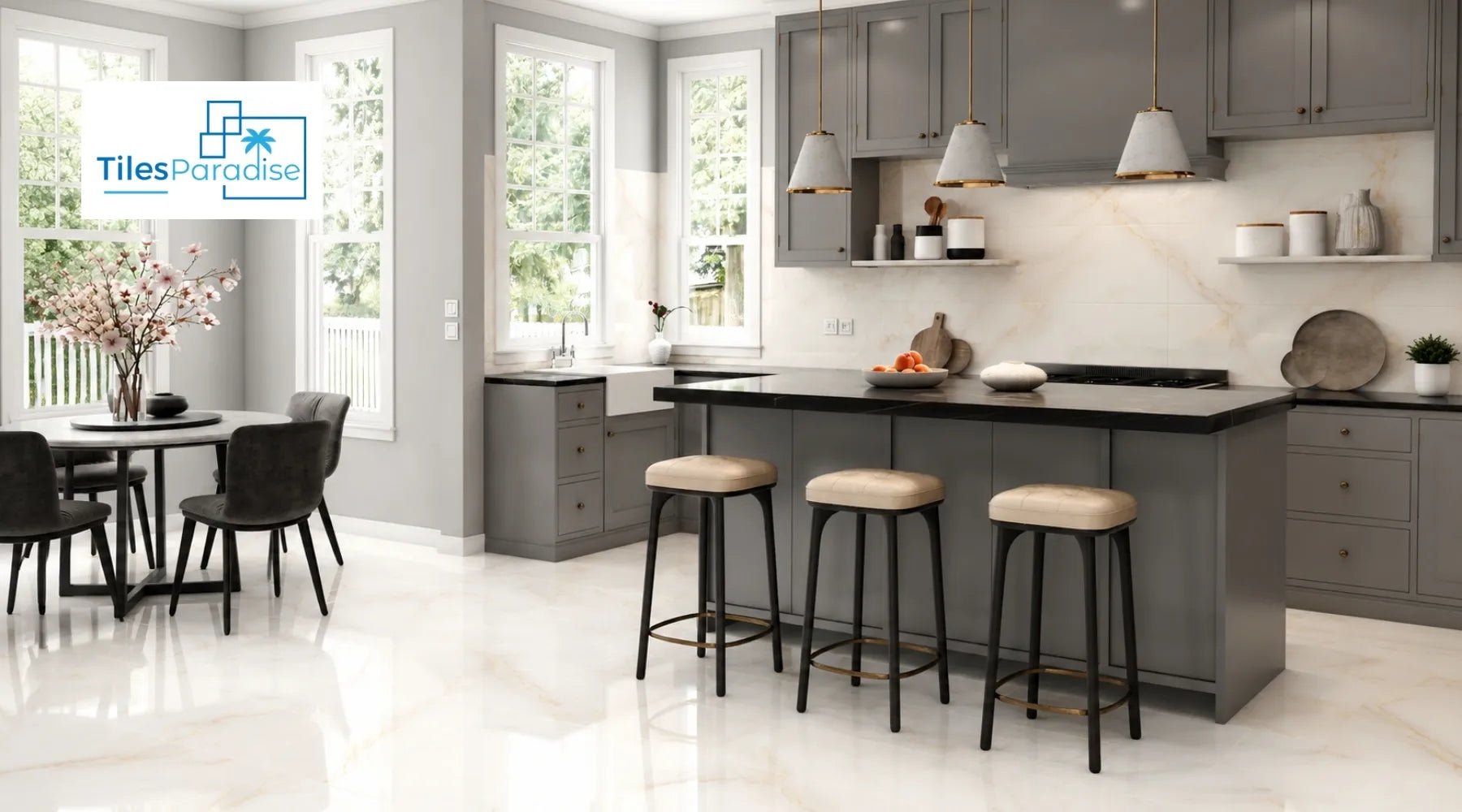
White kitchen tiles remain the most searched tile category in the UK, and for good reason. Whether planning a full renovation or refreshing a splashback, white gloss porcelain wall tiles for small kitchen splashbacks offer a precise solution to one of the most common kitchen design challenges: creating a bright, hygienic, and visually spacious cooking area without overwhelming a compact layout.
From classic metro styles to large-format porcelain slabs, the range of white kitchen tiles available today covers every finish, application zone, and grout pairing imaginable. This guide walks through every key decision, so the right tile for any kitchen is easy to identify.
What Makes White Kitchen Tiles a Timeless Choice?
White tiles reflect natural and artificial light more effectively than any other colour, making a kitchen feel larger and cleaner with minimal effort. A white kitchen with tiles creates a neutral canvas that works equally well with grey cabinetry, wood worktops, brass hardware, or bold accent colours.
Unlike trends that date quickly, white tiling in a kitchen is consistently valued by buyers and interior designers alike. The full range of kitchen tiles includes options suited to both period and contemporary kitchens, ensuring white never feels prescriptive.
Gloss vs Matt Finish: Which White Tile Works Better in a Kitchen?
Gloss white tiles reflect light across the surface, amplifying brightness in darker or smaller kitchens. Matt white tiles absorb light for a softer, more tactile result that suits open-plan and farmhouse-style layouts.
In practical kitchen environments, gloss finishes are easier to wipe clean after cooking splashes, while matt surfaces show fewer watermarks and fingerprints over time. For splashback zones directly behind hobs or sinks, gloss porcelain is the more hygienic and durable choice.
Porcelain outperforms ceramic in both density and moisture resistance, making it the preferred material for wall tiles in high-use kitchens. Browse the full selection of porcelain kitchen tiles for options across multiple finishes and formats.
How Tile Size Affects a Small Kitchen Layout
Tile size directly influences how a kitchen reads spatially. Smaller tiles, such as 10x20cm metro formats, create more grout lines and visual texture, which works well in traditional or compact kitchens. Larger formats, such as 60x60cm or 60x120cm rectangular tiles, reduce grout lines and give the impression of a more continuous, expansive surface.
For small kitchens, a 30x60cm or 60x120cm white porcelain wall tile laid vertically draws the eye upward, making ceiling height appear greater. The 60x120cm rectangular tiles range includes white and off-white options suited to contemporary small kitchen schemes.
|
Tile Size |
Best Application |
|
10x20cm Metro |
Traditional splashbacks, small feature walls |
|
30x60cm |
Mid-size walls, vertical stack patterns |
|
60x60cm Square |
Modern open-plan kitchens, floor continuity |
|
60x120cm Rectangular |
Large-format walls, minimal grout layouts |
White Metro Tiles in the Kitchen: Why the Classic Format Endures
The metro tile format, originally used in Paris and London Underground stations, has become the benchmark kitchen wall tile in the UK. Its 10x20cm brick-bond layout suits splashbacks, full walls, and alcove panels equally well. White metro tiles in a kitchen can be laid in straight bond, offset, herringbone, or vertical stack to create distinctly different visual results from one product.
Bevelled edges add depth and shadow, while flat-face versions produce a cleaner, more contemporary surface. The dedicated metro tile range covers both formats in white gloss and matt finishes.
Grout Colour Pairings for White Kitchen Wall Tiles
Grout colour is one of the most underestimated design decisions in any kitchen tile project. The wrong choice can flatten an expensive tile or date a layout within a few years.
• White grout with white tiles: seamless, clean, minimal. Risk of discolouration over time in cooking zones. Use epoxy grout to reduce staining.
• Light grey grout with white tiles: the most popular UK choice. Defines the tile shape without creating strong contrast. Forgiving in busy kitchens.
• Black or charcoal grout with white metro tiles: bold, graphic, and popular in industrial or monochrome kitchens. Creates a black and white kitchen tile effect without changing the tile itself.
• Terracotta or coloured grout: used sparingly to inject warmth or personality into a predominantly white kitchen.
For white brick kitchen tiles laid in herringbone, a mid-grey grout defines the pattern most clearly. For large-format white porcelain, a narrow 2-3mm grout line in white or cream maintains the seamless look.
Splashback Placement: Where White Tiles Perform Best
Splashbacks protect the wall surface directly behind cooking and food preparation areas, making material choice critical. White gloss porcelain is non-porous, impervious to cooking grease, and compliant with standard adhesive and grout systems used across UK kitchens.
Common splashback zones include the area between worktop and wall cupboards, the full chimney breast behind a range cooker, and the panel above and beside the hob. For a white subway tile backsplash in a kitchen, running the tiles 100mm above the worktop is standard, though extending to the underside of wall units is increasingly preferred. The kitchen wall tiles range covers the full spectrum of splashback-suitable white formats.
Black and White Kitchen Tiles: Contrast That Adds Character
Black and white kitchen tiles are consistently among the top-searched tile combinations in the UK. The pairing works at multiple scales: a black and white tile floor in the kitchen anchors the room, while black grout with white wall tiles creates graphic definition without changing the wall colour.
For wall applications, the contrast can be achieved by alternating black and white tiles in a checkerboard layout, using black accent tiles within a white field, or selecting white tiles with dark veining. The black kitchen tiles range pairs directly with the full white range to support contrast-led kitchen schemes.
A black and white tile kitchen floor works particularly well in Victorian, farmhouse, and maximalist-modern schemes. Black and white kitchen wall tiles in the same layout unify wall and floor treatments for a cohesive interior result.
Colour Pairings: What Goes With White Kitchen Tiles?
White kitchen tiles serve as the most versatile backdrop for cabinetry and accent colours. Common and effective pairings include:
• Grey and white kitchen tiles: pairing warm grey cabinetry with white metro tile walls creates a balanced, contemporary kitchen without relying on colour.
• Blue and white kitchen tiles: navy or mid-blue units behind a white subway tile backsplash in a kitchen is a classic combination popular in both coastal and Shaker-style layouts.
• Warm white with green kitchen tiles: sage green units against white tile walls are among the most searched kitchen combinations.
• Cream kitchen tiles alongside white: off-white or cream tiles add warmth to kitchens with limited natural light without the clinical feel of pure white.
Explore the grey kitchen tiles, blue kitchen tiles, green kitchen tiles, and cream kitchen tiles ranges for options that work alongside white in any kitchen scheme.
Are White Kitchen Tiles Still on Trend?
White tiles are not a passing trend. Competitor research and SERP analysis consistently show that white kitchen tiles hold the highest search volume of any kitchen tile category, and this has remained unchanged for over a decade in the UK market.
What shifts is how white is applied. Plain flat-face white tiles have given way to handcrafted glazes, textured surfaces, and warmer off-white tones. Zellige-inspired white tiles, fluted formats, and kit-kat mosaic layouts have expanded the ways white tiling in a kitchen can be expressed.
Pattern-led interpretations of white remain popular too. Patterned kitchen tiles and marble effect kitchen tiles in white and off-white tones allow kitchens with white tiles to feel distinctive rather than generic.
How to Maintain White Kitchen Tiles and Keep Grout Clean
One of the most common concerns raised by homeowners choosing white tiles is long-term maintenance. Gloss porcelain wall tiles are among the easiest kitchen surfaces to clean: a damp microfibre cloth and a diluted all-purpose cleaner removes the majority of cooking splashes.
1. Clean gloss white tiles weekly with a non-abrasive cloth and warm soapy water.
2. Seal grout lines annually, especially in splashback zones, to prevent discolouration and grease absorption.
3. For stubborn marks, apply a paste of bicarbonate of soda and water, leave for 10 minutes, then scrub gently with a soft brush.
4. Avoid bleach-based cleaners on coloured grout as they can cause fading over time.
White floor tiles in a kitchen require additional consideration. A satin or matt porcelain finish with a slip-resistant rating (R9 minimum) is advisable. Light-coloured or mid-grey grout performs better on kitchen floors than white grout, reducing visible dirt between cleans.
Best Porcelain Kitchen Floor Tiles UK
Porcelain kitchen floor tiles lead the UK market due to the material's low water absorption rate (under 0.5%), exceptional hardness (PEI rating 4-5), and compatibility with underfloor heating systems. Large-format white porcelain floor tiles in 60x60cm or 60x120cm formats are particularly effective in open-plan kitchens, creating a seamless visual flow between cooking and living zones. For a detailed guide on slip ratings, UFH compatibility, and tile specification for kitchen floors, visit the kitchen floor tiles porcelain guide.
Wood-effect and stone-effect porcelain in white and off-white tones perform the same technical functions while offering visual warmth. A white kitchen floor tiles choice in porcelain is one of the most durable and low-maintenance decisions any kitchen renovation can include.
Best Kitchen Wall Tiles for Small Kitchens
Small kitchens benefit from wall tiles that extend visual space without adding visual noise. White gloss tiles remain the most effective choice due to light reflectance. Vertical layouts using metro or brick tiles draw the eye upward, and large-format single tiles reduce the number of grout lines that can visually fragment a wall. For a full breakdown of tile selection, layout, and sizing strategies specific to compact spaces, see the kitchen wall tiles for small kitchens guide.
Keeping the wall tile and floor tile in the same colour family, such as white wall tiles and light-toned kitchen floor tiles, removes visual boundaries and makes a small kitchen appear significantly larger. Medium-format tiles in the 60x60cm square tile range offer a balanced option between large and small formats for mid-size wall areas.
Final Insights
White kitchen tiles offer a combination of practicality, design flexibility, and lasting relevance that no other tile colour matches at the same scale in the UK market. Whether the priority is light reflectance in a narrow galley kitchen, an easy-clean splashback surface for a busy household, or a neutral backdrop for rotating kitchen accessories and colour accents, white tiles in gloss porcelain deliver on every requirement.
The decision ultimately comes down to finish, format, grout colour, and application zone. Gloss porcelain in a metro or large-format layout handles the majority of UK kitchen wall and splashback scenarios. For a complete range across all materials, formats, and colour combinations, explore the full white kitchen tiles collection.