





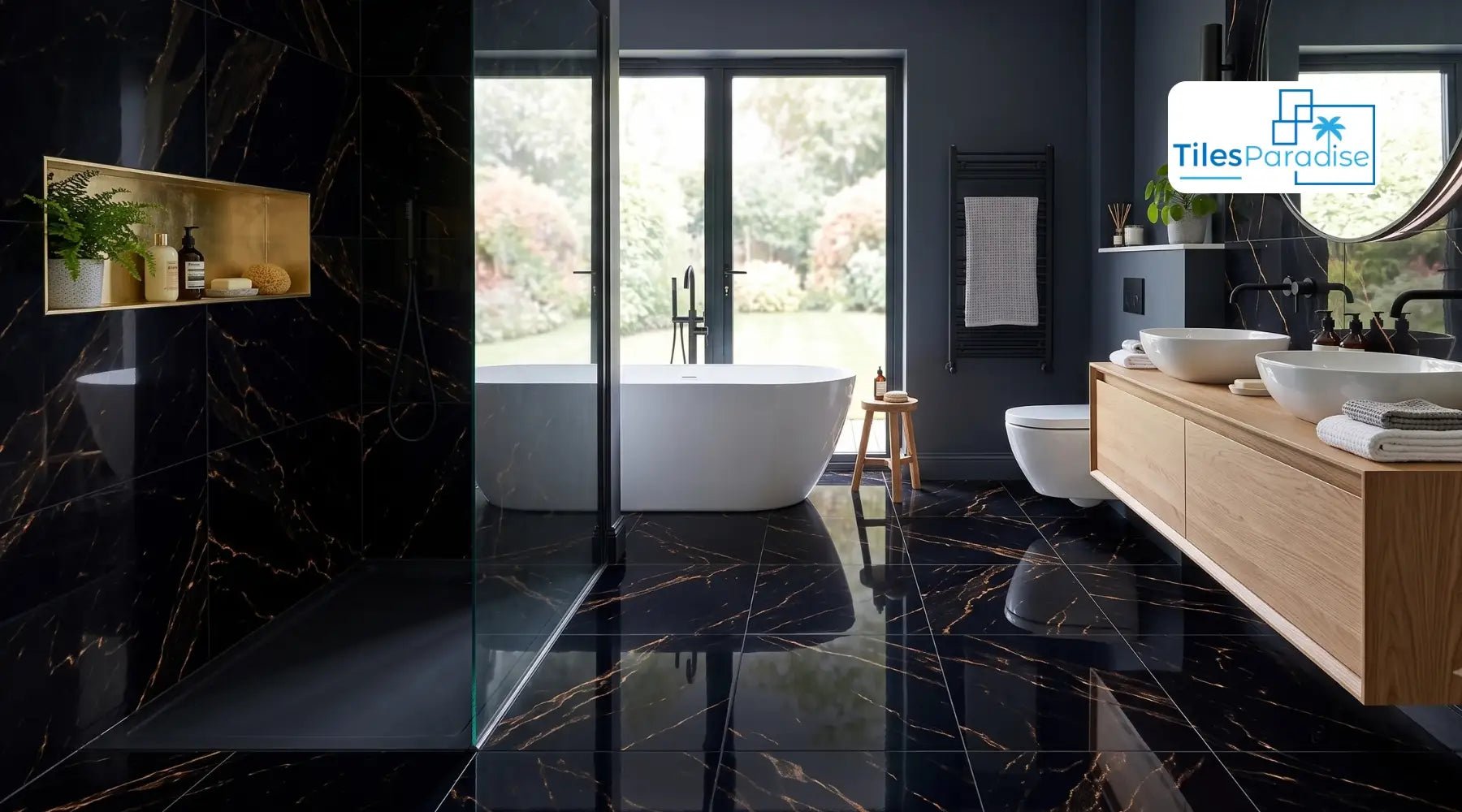
Marble floor tiles for hallways UK homes choose most often combine natural stone or marble effect porcelain with a finish built for daily wear, wet umbrellas and muddy shoes. Entrance halls take more punishment than any other room, so material choice affects long-term looks more than colour alone.
This guide breaks down finish types, slip resistance ratings, tile size and UK pricing, plus dedicated sections on marble bathroom flooring for a full-property view. Practical, UK-specific detail replaces generic marketing claims throughout.
What Are Marble Floor Tiles for Hallways UK Homes Choose?
Marble floor tiles for hallways combine genuine stone or porcelain with a surface built to resist scuffs, grit and standing moisture near a front door. Specialist marble and tiles suppliers list a broad tiles marble tiles selection, spanning genuine stone through to a browse marble tile range built for busy corridors. Options within the marble effect floor tiles collection replicate natural veining while adding scratch and stain resistance suited to UK entrance halls.
Honed or Polished Finish for a Hallway Floor?
Honed marble has a smooth matt surface produced by grinding rather than buffing, giving better grip and hiding scuffs better than a mirror-polished tile. Polished marble reflects more light and suits low-traffic show homes, but scratches and footprints show fast in a busy corridor. Most UK hallway installations favour honed or lightly textured surfaces, found across the marble effect tiles range and the wider porcelain tiles range.
What Slip Resistance Rating Do Hallway Floor Tiles Need?
UK flooring guidance rates grip using the R-scale, running from R9 (least resistance) to R13 (most resistance), alongside pendulum test values for wet and dry conditions. A hallway exposed to rain, wet shoes and pets should sit at R10 or above, matching the level typically specified for wet or transitional areas. Anti-slip options such as the Alhambra Grey Matt Anti-Slip porcelain tile meet this requirement while keeping a marble-inspired look, and the wider floor tiles range lists rating information per product.
What Tile Size Works Best for a Narrow Hallway?
Large marble tiles and rectangular formats cut down grout lines and visually widen a narrow hallway, with 600x1200mm and 600x600mm now standard across UK ranges, including options sold as marble effect tiles 600x600 for square layouts. A rectangular large format tile laid in a brick-bond pattern lengthens a narrow corridor, while square medium format tiles suit hallways opening into wider rooms. Marble mosaic tile borders and smaller basketweave formats add grip at doorways, and many marble tiles floor projects mix grey marble floor tiles as a large-format field with a mosaic threshold strip.
Which Marble Floor Tile Colours Suit UK Hallways?
Grey marble tiles, white marble floor tiles and white marble tiles remain the most requested shades for UK hallways, since pale tones reflect light in spaces that often lack windows. Black marble tiles and black and white marble tile checkerboard layouts suit period conversions and Victorian-style entrance halls. Warmer schemes reach for gold marble tiles, green marble tiles or beige marble tile tones, alongside statement pieces like the Black Gold Marble Effect tile and the Astro Green Polished tile.
● Grey marble tile floor for contemporary schemes
● White tile marble finishes for period hallways
● Green marble tiles for a bold accent floor or wall
● Beige marble tile tones for warm, neutral hallways
● White marble effect tiles paired with matching marble wall tiles for a coordinated run from floor to skirting
Real Marble or Marble Effect Porcelain for a Hallway?
A real marble tile floor delivers unique veining but needs periodic sealing to resist salt, grit and moisture tracked in from outside. Marble effect porcelain tiles replicate the same white marble tile or grey marble tile floor look with under 0.5% water absorption and no sealing requirement, including gold-toned options like Aurora Onyx Gold. Budget-conscious UK households increasingly pick porcelain for hallways precisely because entrance areas carry the highest staining risk in the home.
Do Marble Floor Tiles Work With Hallway Underfloor Heating?
Marble conducts and retains heat efficiently, making marble floor tile installations compatible with both electric and water-based underfloor heating systems common across UK hallways and open-plan entrances. A flexible tile adhesive and a gradual heat-up after installation prevent thermal shock and cracking. Hallways flowing into a kitchen tiles range or open living space, styled with tones such as Aurora Onyx Gold White, can run continuously across zones without a visible step in level.
How Much Do Marble Floor Tiles Cost in the UK?
Real marble tile floor prices in the UK typically range from £40 to £250 per square metre depending on origin, grade and finish, while marble effect porcelain tiles cost roughly £20 to £90 per square metre. Installation, adhesive, trims and sealing add to total project cost beyond the tile price itself. A large-format porcelain floor tiles range, including statement designs like Cosmos Black Blue Onyx, offers a lower-maintenance route to the same look for a fraction of natural stone pricing.
Marble Bathroom Floor Tiles: Finish and Slip Safety
Bathroom floors carry different risks to hallways, with standing water, bare feet and steam changing which finish and rating apply to marble bathroom tiles and marble tiles bathroom projects alike. Format, grout width and sealing schedule all shift once a floor moves from a dry hallway into a wet room.
Honed Marble Bathroom Floor Tiles UK
A marble bath tile floor or marble tile bathroom install typically carries an R10 or R11 rating, offering grip without the harsh texture of heavily brushed stone. Sealing before and after grouting protects the porous surface from shampoo, bath oil and everyday splashing. A full breakdown of finish, sealing schedule and format choice sits within the marble bathroom floor tiles guide.
Non-Slip Marble Effect Floor Tiles for Bathroom
Non-slip marble effect bathroom tiles and other bathroom marble tiles combine a textured porcelain surface with under 0.5% water absorption, removing the sealing requirement entirely. Smaller formats and mosaic layouts increase grout lines for extra grip around showers and bath surrounds. Further detail on ratings and product picks sits within the non-slip marble effect tiles article for bathroom flooring, alongside the premium bathroom tiles range for full-room coordination.
How to Maintain and Seal Marble Floor Tiles?
Real marble needs an impregnating sealer applied before and after grouting, then reapplied every 12 to 24 months depending on foot traffic. pH-neutral cleaners protect both marble and marble effect wall tiles, since bleach and acidic products etch natural stone and dull a polished surface over time. Matching marble effect wall tiles or a large-format Black Gold Marble Effect floor tile tie a hallway scheme together without extra cutting at skirting level, and the ceramic tiles selection offers a lower-cost alternative for adjoining utility spaces.
Final Insights
Marble floor tiles for hallways UK buyers select come down to three decisions: finish, slip rating and format. Honed or textured surfaces rated R10 and above suit wet, high-traffic entrances, while large-format tiles in grey, white or black reduce grout lines and visually widen narrow corridors.
Real marble adds unmatched veining but asks for periodic sealing, whereas marble effect porcelain delivers the same look with lower maintenance and a smaller budget. Matching flooring choices to household traffic, moisture exposure and existing colour schemes gives a hallway floor that performs well for years.