





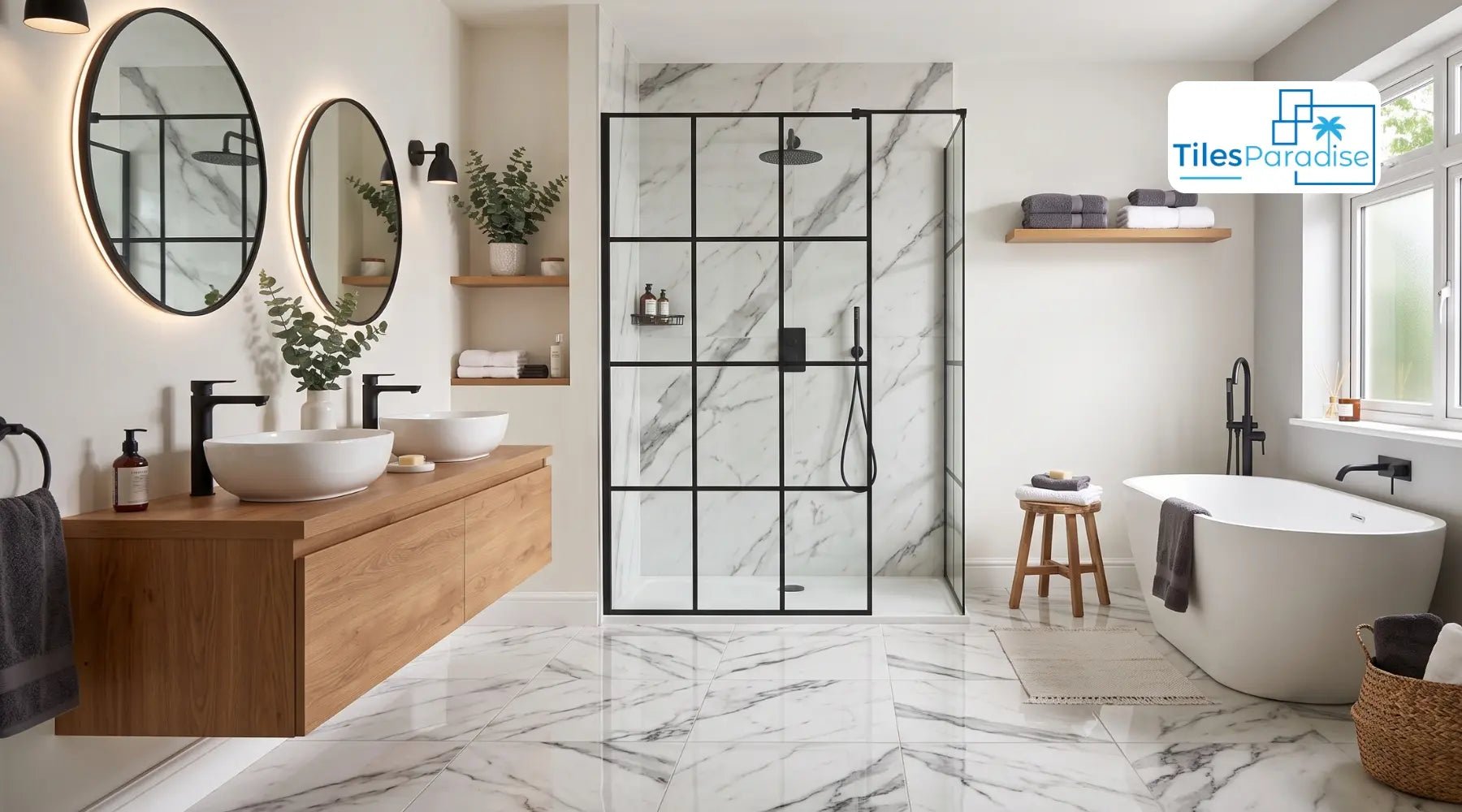
Bathroom floors need more than good looks, since safety matters as much as style. Non-slip marble effect floor tiles for bathroom spaces combine the elegance of natural veining with a textured surface built to handle wet feet without turning into a hazard.
This guide breaks down finishes, slip ratings, colours and sizes so a bathroom, kitchen or hallway gets the right porcelain choice from the start, with clear answers to the most common buying questions.
What Are Marble Effect Tiles Made Of?
Marble effect tiles are porcelain, not natural stone, made using high-resolution printing that copies the veining seen in white marble tiles, grey marble tiles and black marble tiles. Unlike quarried marble tile material, the porcelain body resists water absorption and never needs sealing. The full porcelain tile collection shows every finish and colourway available.
Tiles marble tiles searches often describe the same porcelain product, since marble and tiles blend into one search term for buyers comparing options online. The entity covers floor, wall and mosaic formats within the marble effect tile range, all sharing the same low-porosity body.
• Material: porcelain or ceramic body
• Finish: matt, polished or satin
• Format: 600x600mm, 600x1200mm or mosaic
• Water absorption: below 0.5 percent
Are Marble Effect Tiles Slippery When Wet?
Polished marble effect tiles look stunning but can feel slippery once water sits on the surface, a common worry with marble bathroom tiles and any marble tile bathroom project. Matt and textured finishes solve this by adding grip without losing the marble look. Anti-slip options inside the premium bathroom tiles range are rated specifically for wet feet.
A marble effect bathroom tiles project should always confirm the finish before ordering rather than relying on colour photos alone. Requesting a sample under household lighting gives a truer sense of shine and texture.
Which Slip Rating Suits Bathroom Floors?
UK bathrooms are judged using an R-rating scale that measures grip underfoot, and a higher number means safer footing in shower zones. A matt marble floor tile rated R10 or R11 beats a polished marble effect floor for wet rooms every time. Every option inside the floor tile range carries a published R-rating for quick comparison.
|
R-Rating |
Finish |
Best Use |
|
R9 |
Polished |
Feature walls, low-splash areas |
|
R10 |
Satin or semi-polished |
General bathroom floors |
|
R11 |
Matt or textured |
Showers and wet rooms |
Shower trays and wet room floors benefit most from the higher end of the scale, while a hallway or kitchen splashback can use a lower rating safely. The grey matt anti-slip tiles deliver R11 grip while keeping veining consistent from floor to wall.
Marble Effect Tiles vs Natural Marble Tiles: What Changes?
Real marble tile material is porous, needs periodic resealing, and can etch when acidic products touch the surface, while porcelain stays glazed and stain resistant. The look of white marble floor tiles or black marble tile veining now gets copied almost exactly through digital printing, so the visual gap has narrowed. Cost, weight and upkeep remain the biggest differences, and the ceramic tile options offer a lighter, lower-cost alternative too.
Marble tiles quarried from stone vary from block to block, so no two floors match precisely, while a marble effect porcelain tiles batch stays consistent across an entire order. Consistency matters most on large floors where colour matching affects the finished look.
Which Colours Work Best for Marble Effect Tiles?
Colour choice shapes how a room feels, and marble effect tiles now come in shades that match almost any interior scheme.
• White marble tiles and white tile marble finishes brighten small bathrooms and bounce natural light around the room.
• Grey marble tiles and grey marble floor tiles suit contemporary kitchens, hallways and open-plan living areas.
• Green marble tiles, seen in the green polished porcelain tile, add a bold accent wall.
• Black marble tiles and black and white marble tile pairings create striking floors, including the black gold marble tile and large black gold tile formats.
• Gold marble tiles bring warmth, visible in the gold onyx porcelain tile and white gold onyx tile designs, alongside the black blue onyx tile.
What Size Marble Effect Tiles Suit Small Bathrooms?
Large marble tiles in 600mm x 1200mm formats cut down grout lines and make a small bathroom feel wider, a trick used often with marble effect floor tiles. Fewer joints mean a large format marble floor tile usually reads better visually than a small one. The large format tile range and 60x60cm square tiles cover both scales for different room sizes.
Large marble tiles also reduce the number of cuts needed around fixtures, saving both material and labour time on site. Smaller formats still suit mosaic borders or shower trays where extra grip lines are useful.
Can Marble Effect Tiles Handle Kitchens and Wet Rooms?
Kitchens face grease, spills and heavy foot traffic, and a glazed marble effect porcelain tile handles all three without staining. Wet rooms need the same anti-slip approach as bathroom floors, paired with a fully tanked substrate underneath. The kitchen tile collection includes marble and other finishes rated for both spaces.
Best Porcelain Floor Tiles for Kitchens and Bathrooms
Porcelain outperforms ceramic in wet, high-traffic rooms because of lower water absorption and a denser body underfoot. A full breakdown of finishes, sizes and slip grades sits inside the porcelain floor tile guide for side-by-side room comparisons.
Wood Effect Porcelain Floor Tiles
Wood effect porcelain suits hallways and kitchens that want warmth without the upkeep of real timber, and pairs neatly beside a marble effect wall tiles feature. Plank sizes and finish options are covered in the wood effect tile guide.
How to Maintain Marble Effect Tiles Long Term?
Weekly cleaning with a pH-neutral solution keeps the glaze on marble floor tiles looking new without dulling the shine. No sealing is required because the surface stays non-porous, unlike natural marble tile care routines. The wall tile collection carries the same low-maintenance glaze across feature walls.
1. Sweep or vacuum loose grit before mopping to avoid surface scratches.
2. Use a pH-neutral cleaner rather than bleach or vinegar-based products.
3. Dry standing water in wet rooms promptly to protect grout lines.
What Grout Colour Suits Marble Effect Tiles?
Light grey grout blends seamlessly with white marble tiles and soft veining, while darker grout defines the pattern on a bold marble mosaic tile layout. Bright white grout can show dirt fast on a busy bathroom floor, so a soft tone usually ages better.
Matching grout to the base tone keeps a marble tile bathroom looking cohesive for years. Epoxy grout adds extra stain resistance in shower zones where standing water is common.
Are Marble Effect Tiles Worth the Cost in the UK?
Porcelain marble effect tiles cost less per square metre than quarried marble tile material, and installation runs faster without specialist sealing tools. Long-term savings come from skipping resealing, easier repairs and steady stock availability compared with natural stone batches. Tiles Paradise UK stocks the full range, from budget-friendly to premium finishes, for every room in a home.
Delivery timelines and stock consistency across the UK also affect total project cost, since delays add labour charges on site. Buying porcelain in one batch avoids shade variation between deliveries.
Final Insights
Choosing between natural marble tiles and tiles labelled as marble effect comes down to one trade: authenticity against practicality. Porcelain marble and tiles now deliver most of the same visual impact with far less upkeep, a shift suiting busy UK households.
Safety, size and finish decide the outcome more than style alone. Matching the correct slip rating to each room keeps a marble effect tiles bathroom looking sharp and staying safe for years to come.