





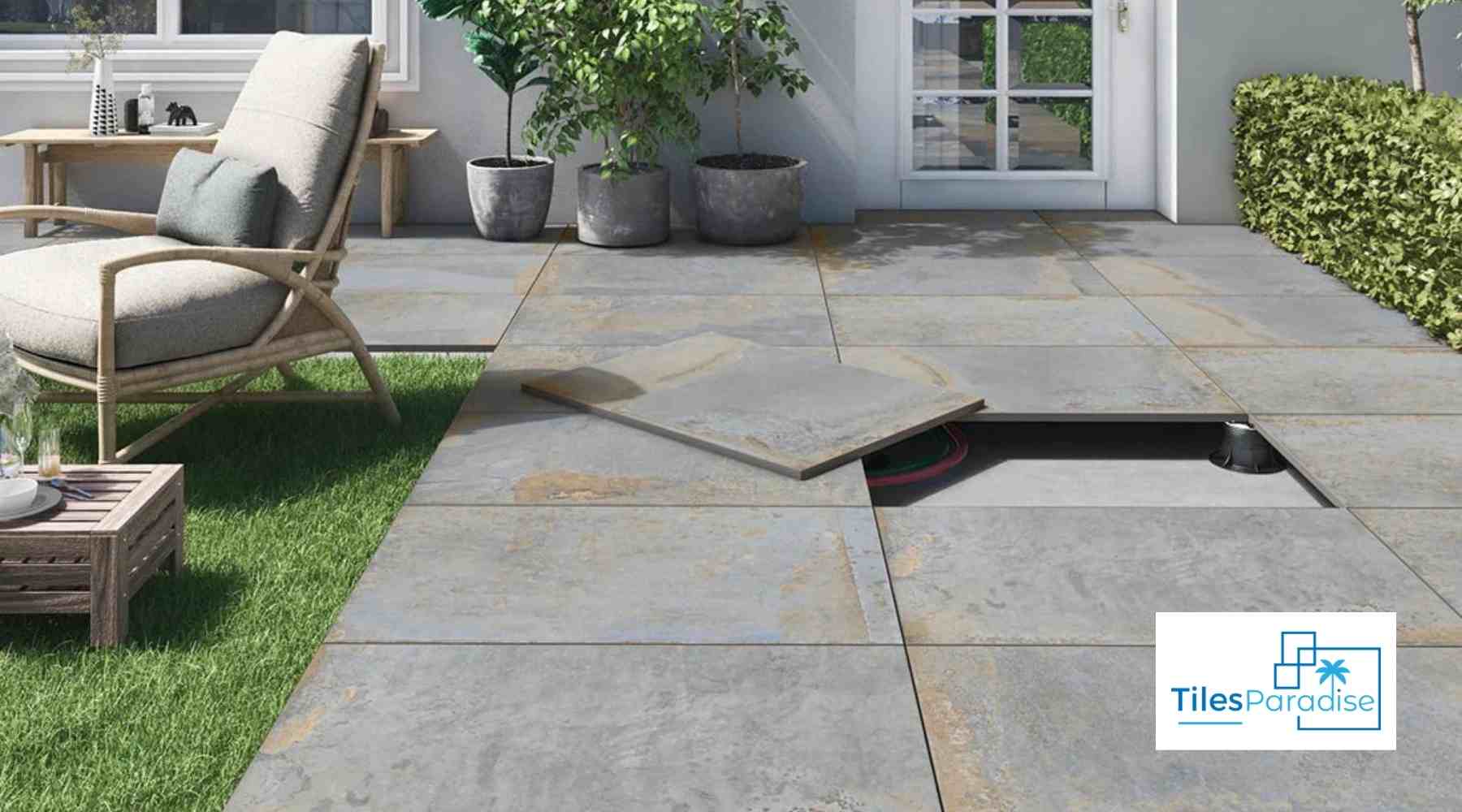
Transforming an outdoor space starts from the ground up, and choosing the right patio tile floor makes all the difference. Whether planning a garden retreat, a terrace for entertaining, or a poolside area, the best porcelain tile for outdoor patio floor combines long-term durability with genuine style. The right tile handles weather, foot traffic, and UV exposure without ever losing its look.
Patio tile flooring is not a one-size-fits-all decision. From material and finish to size and slip resistance, every detail shapes how a space performs and feels over the years. This guide covers everything needed to choose outdoor patio tile flooring with confidence.
Why Porcelain Outperforms Other Patio Tile Materials
Porcelain is the leading choice for outdoor patio floor tiles because of its near-zero water absorption rate, typically below 0.5%. That low porosity means no cracking during freeze-thaw cycles, no staining from rain or soil, and no fading under direct sunlight. It delivers the performance of natural stone without the annual sealing required with natural stone.
Unlike ceramic, porcelain is fired at higher kiln temperatures, making it denser and harder. The outdoor porcelain tile collection at Tiles Paradise UK includes frost-resistant, R11-rated options engineered specifically for British weather conditions. For anyone living in a climate with cold winters or wet summers, porcelain is the clear material winner.
What Does R11 Slip Rating Mean for Outdoor Floors?
The R rating system measures a tile's slip resistance on a scale from R9 to R13. An R11 rating confirms that a tile provides reliable grip on wet, sloped, or exposed outdoor surfaces, which is the minimum recommended for patios, garden paths, and terraces. Tiles rated below R9 pose a slip hazard when wet and are best reserved for dry interior use only.
Choosing an R11 or higher tile for patio floor tile installation is not optional for safety-conscious homeowners. The R11 outdoor porcelain patio tile range meets British and European slip resistance standards. Matte and textured finishes inherently perform better in wet conditions than polished or gloss surfaces.

20mm Thickness: Why It Matters for Patio Floors
Standard indoor tiles run 8 to 10mm thick. Outdoor patio tiles, however, need to withstand vehicular weight, ground movement, frost heave, and heavy furniture loads, which is why 20mm porcelain pavers have become the professional standard for exterior installations. The extra thickness prevents flexing, cracking, and tile displacement over time.
A 20mm tile can be laid directly onto compacted gravel or sand using a "lay and play" method, eliminating the need for full mortar beds in some applications. Options like the Paradise Paver Pearl Grey 40x80cm 20mm and Paradise Paver Beige 40x80cm 20mm deliver the thickness required for lasting garden and patio installations. Thinner tiles laid outdoors without proper substrate preparation are among the most common causes of early tile failure.
Popular Patio Floor Tile Formats and Size Guide
Large-format tiles create fewer grout lines, making outdoor patio floor tile ideas look cleaner and more contemporary. The 40x80cm and 60x90cm formats are among the most popular for modern patios because they visually enlarge a space and reduce maintenance. Smaller formats like 60x60cm work well for compact patios, courtyard gardens, or spaces with more complex layouts.
|
Tile Size |
Best For |
Visual Effect |
|
40x80cm |
Gardens, pathways, terraces |
Elongated, modern |
|
60x60cm |
Compact patios, balconies |
Classic, balanced |
|
60x90cm |
Large patio floors, pool surrounds |
Expansive, minimal grout |
The Sky Grey Matt Porcelain 60x60cm suits both residential and commercial patio projects, while the Nazione Black 60x90cm 20mm delivers a bold, large-format statement for contemporary designs.
Colour and Style: Matching Patio Tiles to Outdoor Spaces
Colour choice affects how a patio feels throughout the day. Light-toned tiles such as beige, pearl grey, and cream reflect heat, keeping the surface cooler underfoot during summer months. Darker tones like anthracite and black absorb more heat but create a dramatic, design-forward aesthetic that pairs well with modern architecture and dark garden furniture.
Neutral stone-effect finishes are the most versatile for outdoor patio flooring tiles because they complement brick, timber, render, and natural planting equally well. The Paradise Paver Gold Beige 40x80cm brings warmth to a garden setting, while the Crown Paver Grey 40x80cm and Crown Paver Pearl Grey offer a cooler, more contemporary palette. The Skyline Rock Porcelain Grey and Skyline Rock Beige replicate the texture of natural rock with the durability of engineered porcelain.

Wood and Natural Stone Look: Tile Flooring for Outdoor Patios
Wood patio floor tiles have surged in popularity because they deliver the warmth and character of natural timber without rotting, splintering, or requiring annual treatment. Porcelain wood-effect tiles replicate the grain, knot patterns, and tones of oak, walnut, and teak to a near-indistinguishable degree. Wood tile patio flooring is also significantly easier to clean than real decking.
Natural stone-look porcelain is another high-demand finish for floor tiles for outdoor patio use. Slate-effect, travertine-effect, and concrete-effect surfaces bring organic character to a space while remaining frost-proof and maintenance-free. Wooden patio floor tiles and stone-look finishes from the full outdoor floor tiles range cover every style from coastal to industrial.
Interlocking Patio Tile Flooring vs. Mortar-Set Installation
Interlocking patio tile flooring offers a tool-free installation method ideal for renters, temporary setups, or flat surfaces over existing concrete. Interlocking systems clip together without adhesive, allowing tiles to be repositioned or removed without damage to the substrate. The Crown Paver Beige 40x80cm 20mm works well in both mortar-set and raised pedestal systems for terraces and rooftop gardens.
Mortar-set installation remains the most structurally sound method for permanent patio tile installations. It bonds tiles to a prepared concrete substrate using an exterior-grade adhesive and provides the greatest long-term stability for high-traffic outdoor patio floor tile ideas. For areas subject to ground movement or frost heave, flexible exterior tile adhesive is essential to prevent joint cracking and tile lifting.
Outdoor Patio Rubber Floor Tiles and Alternative Materials
While porcelain dominates permanent patio installations, outdoor patio rubber floor tiles serve specific functional purposes. Rubber tiles are commonly used around children's play areas, gym spaces, rooftop terraces, and pool surrounds where cushioning and shock absorption are priorities. Made from recycled materials, rubber tiles offer UV resistance and drainage properties suited to high-moisture zones.
Composite decking tiles and PVC interlocking tiles also function as lightweight, low-cost alternatives for temporary or covered patios. However, for a permanent, high-value outdoor space, tile flooring for outdoor patio use in porcelain or natural stone consistently outperforms rubber and plastic alternatives in longevity, appearance, and resale contribution. Browse the complete patio floor tile selection to compare materials, finishes, and sizes in one place.
Porcelain Mosaic Floor Tiles
A Versatile Detail for Patios and Transition Spaces
Porcelain mosaic floor tiles introduce texture, pattern, and visual interest to areas where full-format tiles feel too plain. Commonly used as border features, step risers, pathway accents, or transition strips between indoor and outdoor zones, mosaic tiles add a handcrafted quality to otherwise uniform surfaces. The small format also allows mosaic installations to curve around pools, planters, and irregular patio edges with ease.
For detailed inspiration on using mosaic tiles in both interior and exterior applications, the mosaic floor tiles guide for bathrooms and kitchens covers pattern combinations, grout colour choices, and layout techniques that translate equally well to covered patio areas.
Best Porcelain Outdoor Floor Tiles
Combining Durability, Safety, and Design in One Material
The best porcelain outdoor floor tiles share four core properties: a PEI abrasion rating of IV or V, an R11 or higher slip resistance classification, a water absorption rate under 0.5%, and a frost-proof certification. Tiles meeting all four criteria are suitable for year-round outdoor use across all UK and Northern European climates without seasonal sealing or specialist maintenance.
For a deeper breakdown of top-performing options by budget, size, and finish, the best outdoor flooring and tiling guide provides specification comparisons and installation advice from outdoor tiling specialists.
Final Insights
Selecting the right outdoor patio tile flooring comes down to matching material properties to how a space is actually used. Porcelain remains the most reliable choice across all UK climates, combining slip resistance, frost-proofing, and design flexibility in a single durable material. Whether the priority is a sleek modern finish, a natural stone aesthetic, or bold wood-effect detail, the right tile exists to match it.
From 20mm garden pavers to large-format slabs and mosaic accents, a well-chosen patio tile floor adds genuine long-term value to any outdoor space. Choosing tiles rated for exterior use, with verified R11 slip resistance and low water absorption, ensures a surface that stays safe, attractive, and structurally sound through every season.
FAQs
-
Which tiles are best for a patio?
The best tile for an outdoor patio is 20mm thick porcelain, offering superior durability, frost resistance, and low maintenance. It is non-porous, slip-resistant (R11 or higher recommended), and resistant to fading, making it ideal for harsh weather. For natural, high-end options, slate or travertine are excellent, though they require sealing.
-
What is the best flooring for a patio?
The best patio flooring options include durable, low-maintenance porcelain tiles, natural stone like limestone and sandstone, and eco-friendly composite decking. Porcelain is considered ideal for its weather resistance and versatility, while composite decking is best for a long-lasting, splinter-free wood look.
-
Are patio tiles a good idea?
Outdoor porcelain tiles make for a versatile and reliable flooring for an outdoor patio, pool area, or garden path. Their durability, weather resistance, and low-maintenance requirements make them a standout option for outdoor spaces.
-
What type of tile for an outdoor patio?
The best tile for an outdoor patio is vitrified porcelain, chosen for its extreme durability, frost resistance, and low maintenance. Look for 20mm thick, slip-resistant (R11 or higher) porcelain tiles.
-
How thick are outdoor patio tiles?
Normally, 2cm thick Porcelain Tiles are used on all outdoor applications. 2cm (20mm) thick porcelain is obviously significantly stronger than 1cm (10mm) thick porcelain and will provide a more durable, longer-lasting paved area.