





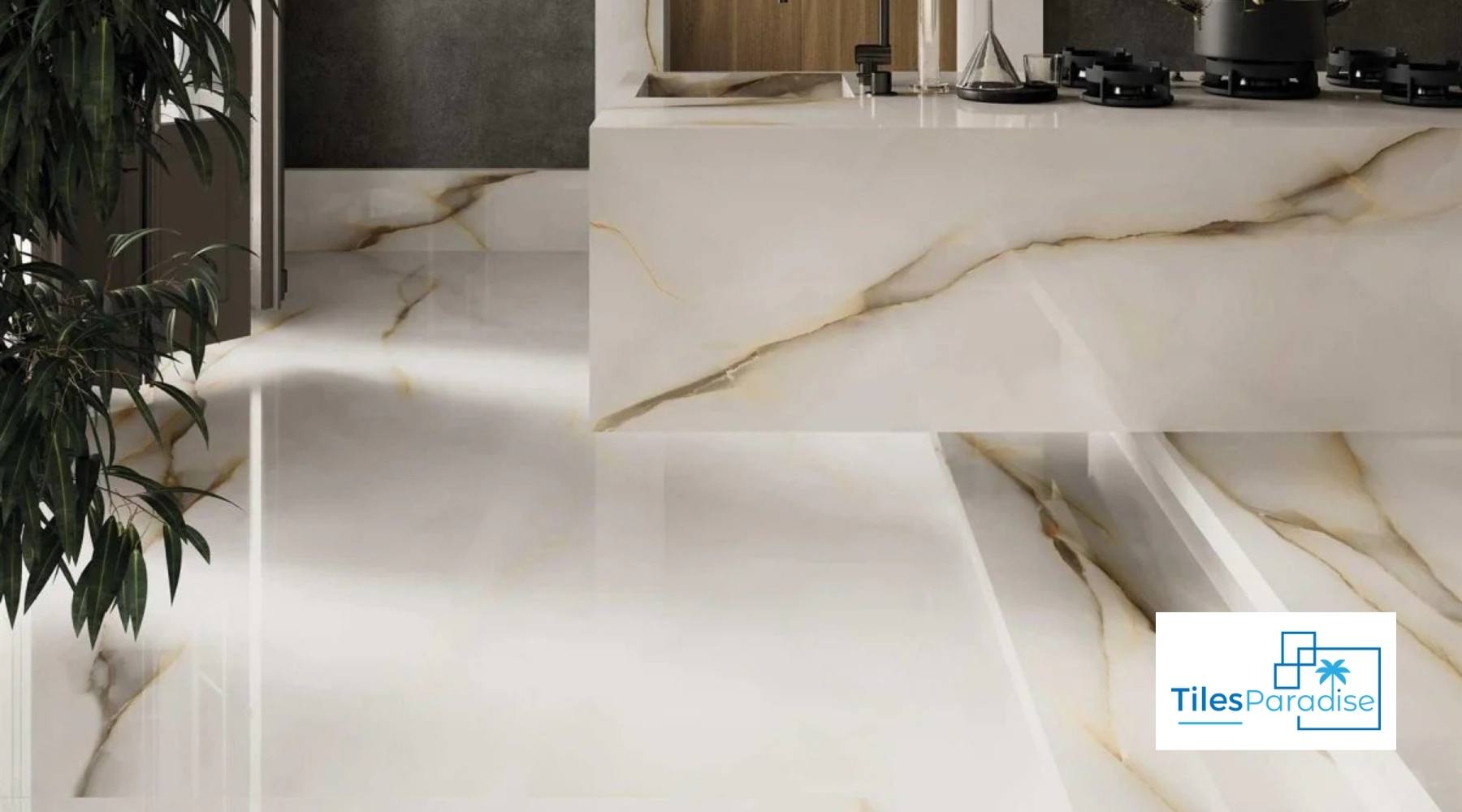
From hallway entrances to spa-inspired wet rooms, flooring mosaic tiles bring both artistic character and lasting functionality to any space. Whether planning a full renovation or upgrading a single room, porcelain mosaic floor tiles for bathrooms and kitchens remain the top choice for UK homeowners and trade buyers alike, combining water resistance, durability, and design flexibility in one compact format.
Mosaic floor tiling has seen a significant resurgence across UK residential and commercial projects, driven by demand for heritage-inspired patterns, geometric layouts, and slip-resistant surfaces in high-traffic areas.
Definition: According to Encyclopaedia Britannica, a mosaic is "the decoration of a surface with designs made up of closely set, usually variously coloured, small pieces of material such as stone, mineral, glass, tile, or shell" - applied onto a surface prepared with adhesive, rather than inlaid into it. (Source: Britannica - Mosaic, Art)
What Makes Mosaic Floor Tiles Different from Standard Tiles?
Mosaic floor tiles are small-format tiles, typically ranging from 10mm to 100mm per piece, arranged in repeating patterns and supplied on mesh-backed sheets for faster, more accurate installation.
Unlike large-format floor tiles, mosaic tiles create numerous grout lines across the surface, which naturally increase traction underfoot. This structural characteristic makes mosaic floor tile a practical choice for wet rooms, shower enclosures, and commercial areas where slip resistance is essential.
The mesh-backing system also allows the sheets to flex around curved surfaces, recesses, and awkward corners, a key advantage that large tiles simply cannot offer.

Which Materials Are Used for Mosaic Flooring Tiles?
Material choice directly affects durability, slip resistance, maintenance, and visual outcome. The most widely specified options in the UK include:
|
Material |
Key Features |
Best Application |
|
Porcelain |
Low porosity, high hardness, frost-resistant |
Bathrooms, kitchens, outdoor areas |
|
Ceramic |
Glazed finish, budget-friendly |
Indoor walls, light-traffic floors |
|
Natural Stone (Marble) |
Unique veining, premium aesthetic |
Feature floors, hallways |
|
Glass |
Light-reflective, water-resistant |
Splashbacks, wet room walls |
|
Onyx |
Translucent, luxury visual |
Statement feature floors |
Porcelain is fired at higher temperatures than ceramic, resulting in a denser, less porous body, making it the preferred material for floor mosaic tiles in moisture-heavy environments. Explore the full range of porcelain tiles and ceramic tiles available for mosaic applications in both residential and commercial projects.
What Patterns and Shapes Define Mosaic Tile Flooring?
Tile flooring mosaic design is one of the most versatile categories in the UK tile market. The shape of each tile piece determines how light interacts with the surface and how the overall pattern reads in a room. The most popular formats include:
-
Hexagon mosaic floor tiles — a contemporary favourite, especially in grey mosaic floor tiles and white mosaic floor tile colourways
-
Square grid mosaics — classic and clean, suit both modern and traditional interiors
-
Herringbone and chevron layouts — directional patterns that add movement and depth
-
Arabesque and Moorish shapes — intricate curved outlines suited to feature areas and borders
Black and white mosaic floor tiles remain a perennial bestseller in the UK, particularly in Victorian-style hallways, cloakrooms, and period property restorations. Floor tiles in these geometric and heritage patterns are available in a wide range of formats to suit both period and contemporary schemes.

How Do Slip Ratings Work for Mosaic Floor Tiles UK?
Slip resistance is one of the most important — and most frequently overlooked — attributes when specifying mosaic floor tiles for commercial and domestic wet areas. In the UK, two recognised rating systems apply:
R-Ratings (European Ramp Test, DIN 51130):
-
R9 — Low resistance, dry indoor areas only
-
R10 — Moderate resistance, light domestic wet areas
-
R11 — Good resistance, commercial kitchens, external entrances, bathrooms
-
R13 — Maximum resistance, pool surrounds and industrial wet zones
PTV (Pendulum Test Value) — British Standard / HSE:
-
PTV 36+ is the minimum recommended for all commercial applications and domestic wet rooms
One significant advantage of mosaic floor tile formats is the increased number of grout lines across the surface. Each grout joint adds additional grip, meaning that tiled mosaic floors inherently offer better traction than equivalent large-format tiles of the same material.
For commercial projects, including hospitality, retail, and healthcare spaces, always confirm both the R-rating and PTV score before specifying. Browse non-slip floor tiles with verified slip resistance ratings suited to both domestic and commercial use.
Where Are Mosaic Floor Tiles Best Used Indoors?
Mosaic bathroom floor tiles and mosaic kitchen floors account for the majority of UK residential installations, and for good reason. In bathrooms, the small tile format accommodates drainage gradients and curved shower trays that larger tiles cannot conform to. In kitchens, floor mosaic tiles provide an easy-to-clean, water-resistant surface that holds up to daily use without compromising on visual appeal.
Other high-performing indoor applications include:
-
Hallway and entrance floors — Victorian mosaic floor tiles and black and white mosaic floor tile patterns are a heritage-appropriate choice for period properties
-
Wet rooms and en-suites — grey mosaic floor tiles in matte porcelain with PTV 36+ ratings are a preferred specification
-
Commercial lobbies and hotel corridors — marble mosaic floor tile and marble-effect floor tiles deliver a high-end finish at scale
-
Retail and hospitality fit-outs — ceramic mosaic tile flooring in neutral tones supports broad design schemes

What Are Victorian-Style Mosaic Floor Tiles?
Victorian-style mosaic floor tiles refer to geometric ceramic tile patterns popularised during the Victorian and Edwardian eras, predominantly using black, white, grey, terracotta, and buff tones in repeating angular layouts. Today, Victorian mosaic floor tiles are available in both traditional hand-made formats and precision-cut modern reproductions, making them accessible for period restoration and contemporary interiors drawing on heritage aesthetics.
The most recognised layouts include octagon-and-dot, chequerboard, and encaustic geometric formats - all translating well into hallways, porches, and kitchen floors. Onyx floor tiles offer a modern counterpart to traditional stone mosaic floors with distinctive translucency and depth of tone.
Can Mosaic Tiles Be Used for Outdoor Floor Tiling?
Outdoor mosaic floor tiles must meet stricter performance requirements than indoor equivalents. Frost resistance, surface drainage, R11 or above slip ratings, and UV colour stability are all critical factors. Porcelain is the dominant material choice for outdoor mosaic flooring tiles due to its near-zero water absorption rate, preventing freeze-thaw damage through UK winters.
Mesh-backed mosaic sheets for outdoor use should be installed on a solid concrete substrate with exterior-rated adhesive and weather-resistant grout. For patios, garden paths, pool surrounds, and terrace areas, browse outdoor floor tiles and R11 patio tiles engineered for external UK conditions.
How Is Mosaic Vinyl Tile Flooring Different from Ceramic Mosaic?
Mosaic vinyl tile flooring, often supplied as Luxury Vinyl Tile (LVT) with mosaic or patterned print layers, offers a budget-accessible alternative to ceramic and porcelain mosaic floor tiles. The key differences are:
-
Installation: LVT uses a click-lock or self-adhesive system versus thin-set mortar for ceramic and porcelain
-
Underfoot feel: Vinyl is warmer and softer; ceramic and porcelain are firmer and cooler
-
Durability: Porcelain mosaic outperforms vinyl in high-traffic and wet commercial applications
-
Authenticity: Ceramic mosaic tile flooring provides genuine grout lines and surface texture; vinyl replicates the visual only
-
Cost: Mosaic vinyl tile flooring is generally cheaper per m² but carries a shorter lifespan in demanding environments
How to Grout and Maintain Mosaic Floor Tiles
Grout selection carries significant visual weight in any mosaic floor tiling project. Because mosaic tiles generate far more joints per square metre than large-format tiles, grout colour directly shapes the finished aesthetic. A contrasting grout, dark grey against a white mosaic floor tile, for instance, emphasises pattern geometry, while a tone-matched grout produces a quieter, more continuous surface.
For natural stone mosaics such as marble mosaic floor tile, periodic re-sealing is recommended to maintain water resistance. Day-to-day maintenance requires only sweeping and pH-neutral mopping; acidic or abrasive products should be avoided as they degrade both tile surface and grout lines.
Best Porcelain Floor Tiles for Kitchens and Bathrooms
When it comes to specifying the right floor tile for kitchens and bathrooms, porcelain consistently outperforms ceramic on every practical metric: lower water absorption (typically below 0.5%), harder surface rating (PEI Class 4 and above), and greater resistance to staining and impact.
For a detailed breakdown of top-performing options by room type and specification, visit the full kitchen and bathroom floor tile guide - covering finish types, tile sizes, grout compatibility, and installation tips for both trade and retail buyers.
Cheap Vinyl Floor Tiles Per M2 UK
For buyers exploring entry-level mosaic-look flooring on a restricted budget, vinyl floor tiles with encaustic, Victorian-inspired, or geometric print layers offer a cost-effective starting point, particularly for rental properties and light commercial use.
For a full pricing guide covering LVT grades, wear layer thickness, and expected cost per m² across the UK market, refer to the vinyl floor tiles UK prices guide, which compares self-adhesive and click-fit options across quality tiers.
Final Insights
Flooring mosaic tiles continue to rank among the most versatile and enduring floor covering choices available in the UK, from the timeless geometry of black and white mosaic floor tiles in a Victorian hallway to the cool precision of grey mosaic floor tiles in a contemporary wet room.
With material options spanning porcelain, ceramic, natural stone, glass, and onyx, and formats ranging from hexagon mosaic floor tiles to marble mosaic floor tile sheets, the specification possibilities are wide enough to meet both residential and commercial project demands.
Selecting the right mosaic floor tile comes down to matching material performance to the environment - slip rating for wet areas, frost resistance for outdoor use, PEI class for traffic levels, and grout compatibility for long-term finish quality. Getting all four right is what separates a beautiful floor that lasts decades from one that requires early remediation.